
 English
  Español

Tips for More Effective Studying
Nihongo Online School > Tips for More Effective Studying > JLPT N2 grammar list & patterns explained
JLPT N2 grammar list & patterns explained

2025/11/25

Director: Kotaro Muramoto
Principal of Nihongo Online School
In September 2019, he founded "Nihongo Online School". Since then, has been teaching Japanese online lessons, with a total of over 1,000 students.
He has designed an individualized curriculum based on student’s needs and study goal. And is conscious of making the classes speech-centered in order to improve students’ speaking skills.
The school asks students to submit homework assignments worth 2 hours per lesson to improve faster. By supporting students with these features, students are able to efficiently improve Japanese language skills.
Mastering JLPT N2 grammar requires understanding over 150 distinct grammar patterns.
This comprehensive guide covers the essential JLPT N2 grammar points you need to pass the exam, with real examples and practice quizzes to reinforce your learning.
Contents
- 1 How many JLPT N2 grammar points do you need to learn?
- 2 What JLPT N2 grammar patterns must you master?
- 3 Best ways to practice JLPT N2 grammar effectively
- 4 JLPT N2 grammar: Full list with examples & quizzes
- 4.1 ~を始めとして (wo hajimetoshite)
- 4.2 ~に従って (ni shitagatte)
- 4.3 ~だらけ (darake)
- 4.4 ~ばかりだ (bakari da)
- 4.5 ~ようとしている (you to shite iru)
- 4.6 ~ものなら (mono nara)
- 4.7 ~を頼りに (wo tayori ni)
- 4.8 ~を問わず (wo towazu)
- 4.9 ~を除いて (wo nozoite)
- 4.10 ~を巡って (wo megatte)
- 4.11 ~を元に (wo moto ni)
- 4.12 ~に他ならない (ni hoka naranai)
- 4.13 末に vs 挙句(sueni vs kyuku)
- 4.14 ~の上で (no ue de)
- 4.15 ~げ (ge)
- 4.16 ~気味(きみ)(kimi)
- 4.17 ~からして (kara shite)
- 4.18 ~にしては (ni shite wa)
- 4.19 ~といえば (to ieba)
- 4.20 ~向き/向け (muki/muke)
- 4.21 ~っぽい (ppoi)
- 4.22 ~がち (gachi)
- 4.23 ~きり (kiri)
- 4.24 ~つつある (tsutsu aru)
- 4.25 ~というものでもない (to iu mono de mo nai)
- 4.26 ~てまで (te made)
- 4.27 ~くらいなら (kurai nara)
- 4.28 ~と言っても (to itte mo)
- 4.29 ~わたって (watatte)
- 4.30 ~に当たって (ni atatte)
- 4.31 ~どころではない (dokoro de wa nai)
- 4.32 ~にもかかわらず (ni mo kakawara zu)
- 4.33 ~甲斐があって (kai ga atte)
- 4.34 ~あまり (amari)
- 4.35 ~だけマシ (dake mashi)
- 4.36 ~とはいうものの (to wa iu monono)
- 4.37 ~を中心に (wo chuushin ni)
- 4.38 ~を契機に (wo keiki ni)
- 4.39 ~を込めて (wo komete)
- 4.40 ~に基づいて (ni motozuite)
- 4.41 ~割に (wari ni)
- 4.42 ~わけではない (wake de wa nai)
- 4.43 ~わけだ (wake da)
- 4.44 ~限り (kagiri)
- 5 Prepare for JLPT N2 with tutored grammar lessons

How many JLPT N2 grammar points do you need to learn?
You need to master approximately 150-180 core JLPT N2 grammar patterns to pass the exam.
The official JLPT guidelines don’t publish an exact count, but successful test-takers consistently report studying 150+ distinct patterns. When you account for variations (like ~がち vs ~っぽい, or 上で vs 際に), the practical number sits around 170-180.
What JLPT N2 grammar patterns must you master?
JLPT N2 grammar patterns fall into several interconnected categories:
- Conditional & hypothetical: ~なら, ~たら, ~ば, ~ものなら
- Contrast & opposition: ~のに, ~にもかかわらず, ~どころか, ~ばかりか
- Causality & result: ~ため, ~から, ~せいで, ~結果, ~末に, ~挙句
- Time & sequence: ~ている, ~た後, ~きり, ~うちに, ~につれて, ~ごとに
- Manner & similarity: ~ように, ~として, ~同様に, ~ながら, ~つつ
- Emphasis & intensity: ~ばかりだ, ~がち, ~っぽい, ~あまり, ~ほど
- Existence & possibility: ~わけではない, ~ばかりではない, ~にほかならない
- Subtlety & nuance: ~にしては, ~といえば, ~からして, ~とは, ~ことに
Best ways to practice JLPT N2 grammar effectively
Recommended JLPT N2 Grammar Books
The most trusted resources for JLPT N2 grammar are:
Shin Kanzen Master N2 Grammar
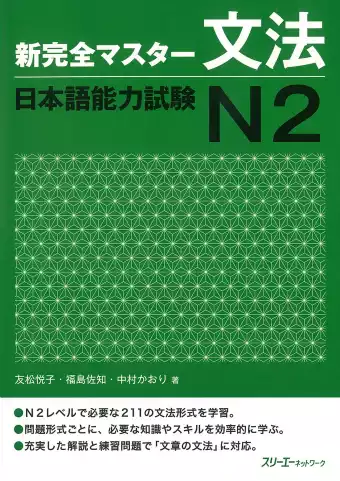
The industry standard. Organized by pattern difficulty with clear explanations in English/simple Japanese and abundant practice problems.
Try N2 Grammar
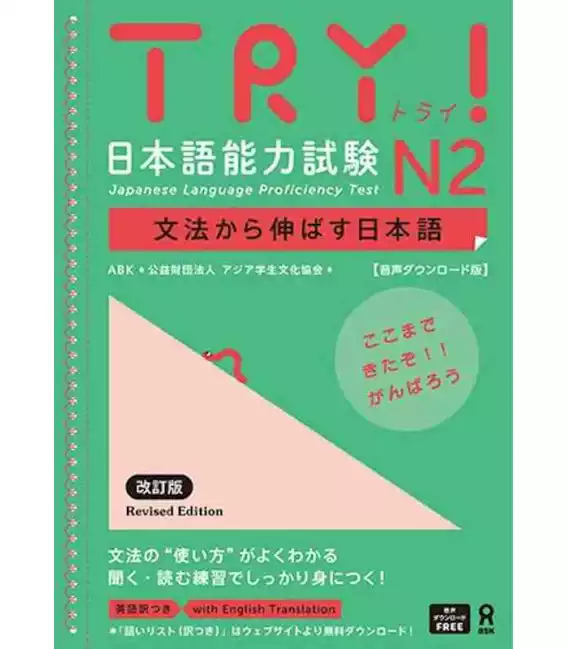
Excellent for practical application. Includes realistic exam-style questions and answer explanations.
Nihongo Sou Matome N2 Grammar
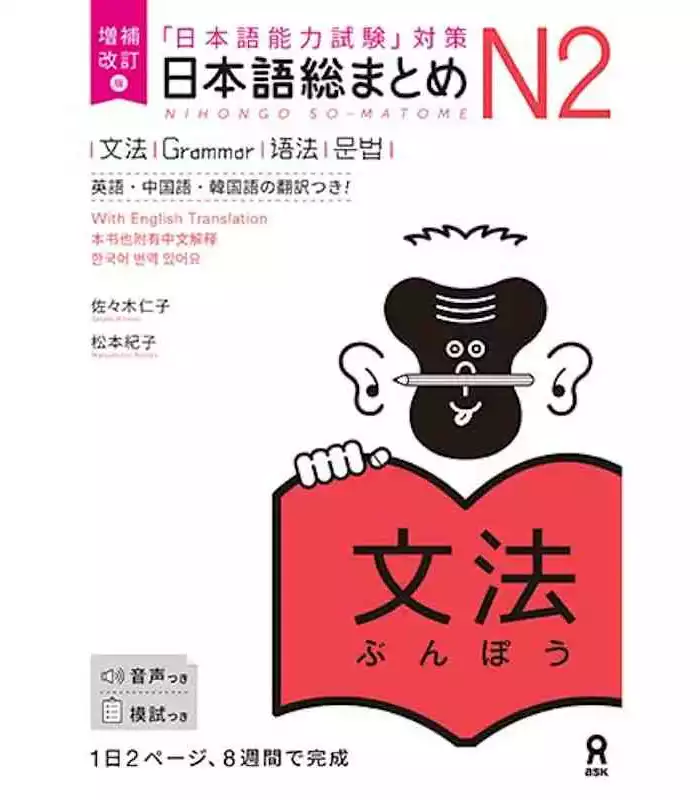
Compact, visual approach perfect for busy learners. Heavy use of charts and minimal text make these ideal for quick reviews.
See also the top books for JLPT N2 preparation
Youtube channels for JLPT N2 grammar
Free video learning complements textbooks effectively. Top Youtube channels include:
Nihongo no Mori
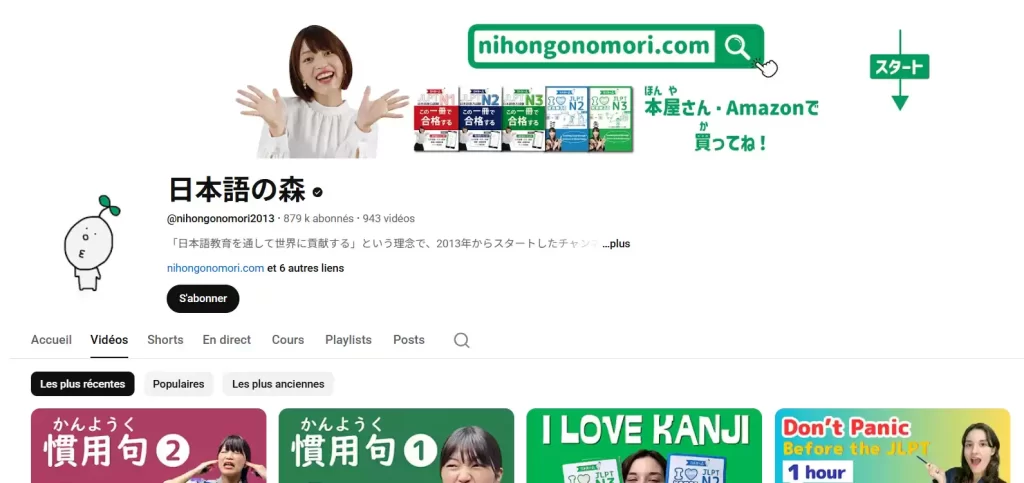
Systematic grammar lessons with authentic examples
See Youtube channel
K Japanese Channel

Breaks down complex patterns with clear visuals
日本語クラス (Nihongo Class)
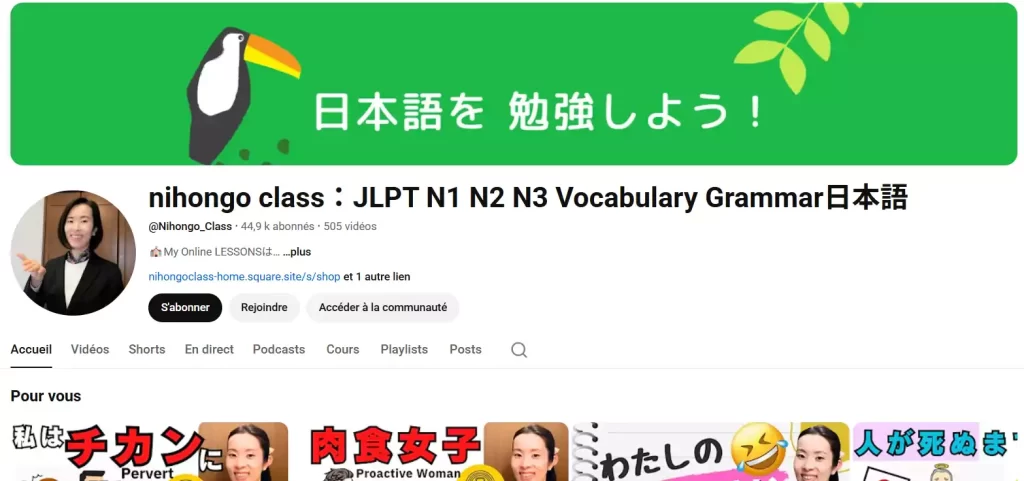
Live problem-solving sessions with 50+ grammar questions per video
See Youtube channel
Japanese with Yuka
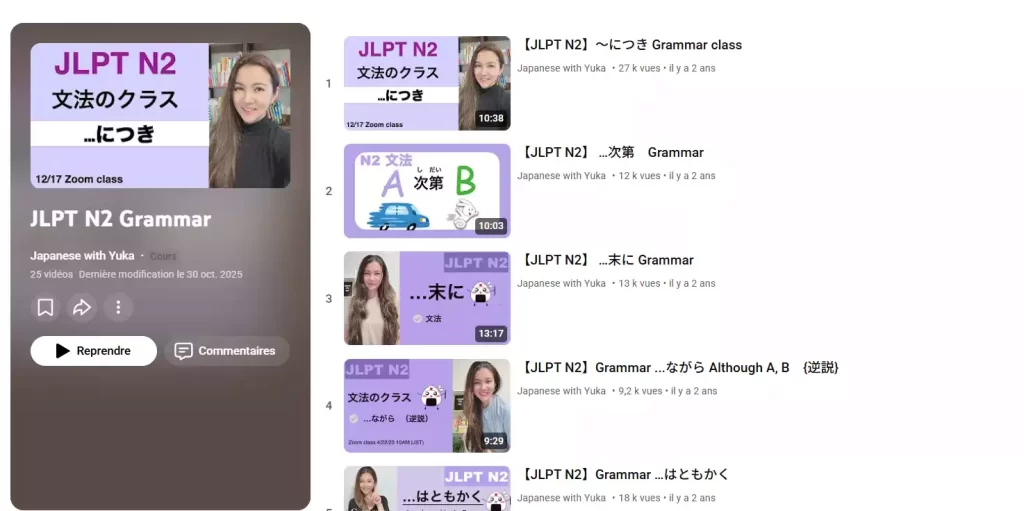
Conversational approach showing grammar in real dialogue
See Youtube channel
Combining JLPT N2 grammar practice through books with YouTube reinforcement creates a powerful study loop. Watch a 10-minute grammar explanation on YouTube, then drill it using textbook exercises.
JLPT N2 grammar: Full list with examples & quizzes
~を始めとして (wo hajimetoshite)
Meaning:
Starting with; including X as the primary example; with X being the most representative.
This pattern lists examples, emphasizing that the first item is the most important or representative. The speaker implies “and many others like this.”
Example:
京都には清水寺を始めとする多くの観光地があります。
Kyoto has many tourist attractions, starting with Kiyomizu Temple.
Quiz 1:
「京都の観光地は清水寺____、伏見稲荷大社や金閣寺など多くがあります。」
a) を始めとして
b) を中心に
c) を皮切りに
d) を筆頭に
Quiz 2:
「日本の伝統工芸品は西陣織____、様々な種類が存在します。」
a) を始めとして
b) を筆頭に
c) を中心に
d) を手始めに
~に従って (ni shitagatte)
Meaning:
In proportion to; as X increases/changes, Y follows; in accordance with
Shows that two things change together in a synchronized way.
Example:
年を取るに従って、目が悪くなってきた。
As I’ve gotten older, my eyesight has worsened.
Quiz 1:
「気温が上昇するに____、冷房の消費電力量も急速に増加している。」
a) 従って
b) 応じて
c) 伴って
d) つれて
Quiz 2:
「医学的な新発見に____て、医療技術も日々進化していきます。」
a) 従い
b) 従って
c) 合わせて
d) 沿って
~だらけ (darake)
Meaning:
Full of (usually negative); covered/filled with; nothing but
Indicates something undesirable appears excessively throughout an object or situation.
Example:
子どもは泥だらけになって遊んでいた。
The child was playing, covered in mud.
Quiz 1:
「子どもが公園で遊んでいたため、服は泥____になってしまった。」
a) だらけ
b) まみれ
c) だけ
d) ばかり
Quiz 2:
「その企画書は誤字____で、まともに読めたものではありません。」
a) だらけ
b) まみれ
c) ばかり
d) ばっかり
~ばかりだ (bakari da)
Meaning:
Only; nothing but; merely (emphasizing negative continuation)
Emphasizes that a negative situation continues with no improvement or change in sight.
Example:
最近仕事が増えるばかりだ。
Lately, work just keeps increasing (with no end in sight).
Quiz 1:
「最近、仕事の失敗が増える____で、成功の経験がほぼありません。」
a) ばかり
b) だけ
c) ばかりだ
d) ほど
Quiz 2:
「物価が上昇する____で、給料は変わらないままです。」
a) ばかり
b) だけ
c) ばかりだ
d) のに
~ようとしている (you to shite iru)
Meaning: About to; on the verge of; in the process of doing
Describes an action that is imminent or in the middle of occurring.
Example: ピアノのコンサートが始まろうとしています。 The piano concert is about to begin.
Quiz 1:
「彼は今、重大な発表をしよう____しています。会場は静まり返っています。」
a) と
b) として
c) ために
d) とき
Quiz 2:
「雨が降ろう____しているので、傘を持って出かけてください。」
a) と
b) として
c) とき
d) ために
~ものなら (mono nara)
Meaning:
If one should; if it happens that; even if (implying hypothetical danger)
Used to warn about hypothetical negative consequences. Often appears with potential verbs.
Example:
1分でも遅れようものなら、部屋に入れてもらえません。
If you’re even a minute late, you won’t be allowed to enter the room.
Quiz 1:
「1分でも遅れよう____なら、契約は自動的に無効になります。」
a) もの
b) こと
c) ほう
d) わけ
Quiz 2:
「その秘密が漏れよう____なら、大変なことになるでしょう。」
a) もの
b) こと
c) ほう
d) わけ
~を頼りに (wo tayori ni)
Meaning:
Relying on; depending on; with X as one’s support/guide
Indicates dependence on something external for achieving a goal or surviving a situation.
Example:
カーナビを頼りに目的地まで行きます。
I’ll navigate to the destination relying on the GPS.
Quiz 1:
「新卒の彼は、先輩のアドバイスを____りに独立した業務を任されました。」
a) 頼
b) 宛
c) 当て
d) 拠
Quiz 2:
「地震の時、彼女は私の腕を____りに立ち上がった。」
a) 頼
b) 宛
c) 拠
d) 当て
~を問わず (wo towazu)
Meaning:
Regardless of; without distinction of; independent of
Indicates that a rule applies equally regardless of the specified category.
Example:
このお店は昼夜を問わず開いています。
This shop is open 24 hours regardless of day or night.
Quiz 1:
「このセミナーは、初心者か上級者かを____わず、誰でも参加できます。」
a) 問
b) 選
c) 聞
d) 気
Quiz 2:
「昼夜を____わず、工事が24時間続いています。」
a) 問
b) 選
c) 気
d) 限
~を除いて (wo nozoite)
Meaning:
Except for; excluding; apart from; with the exception of
Specifies what is NOT included in a statement.
Example:
店内は喫煙席を除き禁煙です。
The store is non-smoking except for the smoking section.
Quiz 1:
「土日祝日を____いて、毎日9時から23時まで営業しています。」
a) 除
b) 取り除き
c) 外し
d) 抜き
Quiz 2:
「緊急時を____いて、このドアを開けることは禁止です。」
a) 除き
b) 取り除き
c) 外し
d) 抜かし
~を巡って (wo megatte)
Meaning:
Around/surrounding (as in “controversy surrounding”); over; concerning
Indicates the central issue that causes debate, conflict, or discussion.
Example:
その問題を巡って様々な意見が出ています。
Various opinions are being expressed regarding that issue.
Quiz 1:
「その領土問題を____って、両国の対立がさらに深まっています。」
a) 巡
b) 回
c) 関し
d) 沿い
Quiz 2:
「プロジェクトの予算削減を____って、部門間で激しい議論が起きています。」
a) 巡って
b) 回って
c) 関して
d) 沿って
~を元に (wo moto ni)
Meaning:
Based on; on the foundation of; taking X as a basis
Shows that something is created, decided, or formed using X as the source material or reasoning.
Example:
このドラマは実話を元にして作られたそうです。
I heard this drama was created based on a true story.
Quiz 1:
「その映画は実在した事件を____にして制作されました。」
a) 元
b) 本
c) 基
d) 根
Quiz 2:
「去年の売上データを____に、今年の目標を設定しました。」
a) 元に
b) 基に
c) 根に
d) 本に
~に他ならない (ni hoka naranai)
Meaning:
It is nothing other than; is none other than; is exactly
Emphasizes that something is definitively one specific thing, with no other explanation.
Example:
私が合格したのは皆さんの努力に他ならない。
My passing was nothing other than the result of everyone’s efforts.
Quiz 1:
「彼の成功は、毎日の訓練に____ありません。」
a) 他ならない
b) 他にならない
c) 他でない
d) 別でない
Quiz 2:
「この事件の原因は、管理体制の不備に____のです。」
a) 他ならない
b) 他ならぬ
c) 他でない
d) 外ならない
末に vs 挙句(sueni vs kyuku)
Meaning:
After a long period; as a result of prolonged effort/struggle
Both mean “after” but differ in emotional tone.
末に (sueni): Neutral; used when results are positive or for natural processes
Example:
散々迷った末にトヨタの車を買うことにした。
After much deliberation, I decided to buy a Toyota.
挙句(きゅく): Negative tone; emphasizes hardship or disappointing outcomes
Example:
14時間も待った挙句、結局林さんは来なかった。
After waiting 14 hours, Hayashi ultimately didn’t come.
Quiz 1:
「長年交渉してきた結果、____にようやく合意に達しました。」
a) 末に
b) 挙句に
c) 結果
d) 末端に
Quiz 2:
「あれこれと悩んだ____に、結局何もしないまま時間が経ってしまった。」
a) 末に
b) 挙句に
c) 末端に
d) うえに
~の上で (no ue de)
Meaning:
On the basis of; with the condition that; after (confirming something)
Shows that one action is preceded by or dependent upon another condition.
Example:
車は妻と話し合った上で何を買うか決めます。
After discussing with my wife, I decide what car to buy.
Quiz 1:
「十分な市場調査をした____で、初めて新製品を発売すべきだ。」
a) 上
b) 上で
c) 下で
d) ところで
Quiz 2:
「法律を正しく理解した____、初めてそれを適用できる。」
a) うえで
b) あとで
c) ところで
d) ことで
~げ (ge)
Meaning:
Appearing to be; looking like; -like; seeming
Describes what someone appears to be feeling or their outward appearance.
Example:
トムくんは得意げな顔で友達に100点のテストを見せている。
Tom shows his 100-point test to his friend with a proud-looking face.
Quiz 1:
「彼は得意____な顔で賞状を見せびらかしていた。」
a) 気
b) げ
c) そう
d) ぽい
Quiz 2:
「深く考えこん____顔をして、彼はしばらく何も言わなかった。」
a) だ
b) げな
c) そうな
d) ぽい
~気味(きみ)(kimi)
Meaning:
Tendency toward; prone to; slightly; somewhat
Indicates a mild or developing state that leans in a particular direction.
Example:
最近疲れ気味です。
Lately, I’ve been feeling somewhat tired.
Quiz 1:
「最近、疲れ____なので、医者に診てもらおうと思っています。」
a) 気味
b) 気分
c) ぎみ
d) 気
Quiz 2:
「このアプリケーションは動作が遅れ____です。アップデートが必要ですね。」
a) 気味だ
b) 気分
c) 傾向
d) 状態
~からして (kara shite)
Meaning:
From the fact that; judging by; just from; based on
Indicates the basis for a judgment or inference.
Example:
彼の話し方からして関西の人だろう。
Judging from his way of speaking, he’s probably from Kansai.
Quiz 1:
「彼の話し方____、関西地方の出身だろう。」
a) から
b) からして
c) からいえば
d) からみて
Quiz 2:
「タイトル____、この本は初心者向けではないようだ。」
a) から
b) からして
c) からいえば
d) からみて
~にしては (ni shite wa)
Meaning:
For; considering that; despite being; all things considered
Expresses a judgment or comparison that takes the subject’s circumstances into account.
Example:
彼の成績は学生にしては、とても優秀だ。
Considering he’s a student, his grades are excellent.
Quiz 1:
「学生にしては、このレポートは____できていますね。」
a) 悪く
b) 良く
c) 普通に
d) 十分に
Quiz 2:
「お値段にしては、商品の品質が____ですね。」
a) 低い
b) 高い
c) 普通
d) 良い
~といえば (to ieba)
Meaning:
If you ask; when it comes to; that reminds me; speaking of which
Used to explain or introduce a topic, often with a question word.
Example:
医者として働く上で何が大切かといえば、患者を思いやる気持ちです。
If you ask what’s important when working as a doctor, it’s compassion for patients.
Quiz 1:
「医者として大切なことといえば、患者の話をよく聞くことだ。」
a) のみ
b) として考えられる
c) 必要性
d) 全員が同意
Quiz 2:
「秋といえば、紅葉がきれいな季節です。」
a) の代表的な特徴
b) 必ずそう
c) のすべて
d) を必要とする
~向き/向け (muki/muke)
Meaning:
Suited for; designed for; targeting
Shows that something is appropriate for or intended for a specific group.
Example:
この車は10人乗れるので大家族向きです。
This car seats 10, so it’s suited for large families.
Quiz 1:
「このゲームは、大人向け____です。子どもには難しすぎます。」
a) 向き
b) 向けです
c) 向ける
d) 向かい
Quiz 2:
「外国人向け____の日本語教科書が必要です。」
a) 向き
b) 向けの
c) 向かいの
d) 向ける
~っぽい (ppoi)
Meaning:
-like; -looking; apt to; tendency to; seems to
Indicates resemblance or tendency. Can refer to appearance OR frequency.
Example (appearance):
この服は子どもっぽい。
These clothes look childish.
Example (frequency):
彼は忘れっぽい。
He tends to forget things.
Quiz 1:
「彼は怒りっぽいので、細心の注意が必要です。」
a) すぐに怒る傾向がある
b) 怒りたい気持ちがある
c) 怒っている
d) 怒りやすい
Quiz 2:
「このスープは水っぽくて、あまり美味しくありません。」
a) 水のような状態
b) 水が混ざっている
c) 水っぽさが特徴
d) 水を加えた
~がち (gachi)
Meaning:
Apt to; prone to; tend to; inclined to
Indicates something happens frequently but not always, often despite the person’s intentions.
Example:
林さんはテストのときに自分の名前を書くのを忘れがちだ。
Hayashi tends to forget to write his own name during tests.
Quiz 1:
「妹は去年は病気がちだったが、今年はとても健康だ。」
a) よく病気になる傾向
b) 病気が好き
c) 病気である
d) 病気になりやすい
Quiz 2:
「電車は時間通りに来るがバスは遅れ____だ。」
a) がち
b) っぽい
c) だけ
d) ばかり
~きり (kiri)
Meaning:
Since (and hasn’t changed); all the while; only; nothing but
Shows an action completed in the past with no change, or exclusivity.
Example:
うちの猫は外に出た切り1ヶ月帰ってこない。
My cat went outside a month ago and still hasn’t come back.
Quiz 1:
「うちの猫は外に出た____、もう1ヶ月帰ってこない。」
a) きり
b) っきり
c) 切り
d) きっぱり
Quiz 2:
「母はお医者さんにつきっ____で、一日中付き添っています。」
a) きり
b) きい
c) っきり
d) きっぱり
~つつある (tsutsu aru)
Meaning:
In the process of; in the midst of; gradually; progressively
Shows an ongoing change or gradual transformation.
Example:
桜の花がさきつつあります。
The cherry blossoms are gradually blooming.
Quiz 1:
「桜の花がさきつつ____ます。」
a) あり
b) ある
c) あった
d) あります
Quiz 2:
「事故の原因は少しずつ分かりつつ____ます。」
a) あり
b) ある
c) いく
d) います
~というものでもない (to iu mono de mo nai)
Meaning:
It’s not necessarily that; not always true that; can’t say that
Indicates that something isn’t always true despite surface appearances.
Example:
日本に住めば日本語が上手になるというものでもない。
Living in Japan doesn’t necessarily mean you’ll become fluent in Japanese.
Quiz 1:
「日本に住めば日本語が上手になる____でもない。」
a) こと
b) もの
c) ことでもない
d) わけでもない
Quiz 2:
「結婚したら幸せになれる____でもありません。」
a) こと
b) もの
c) ことはない
d) わけではない
~てまで (te made)
Meaning:
Even going so far as to; to the extent of; even resorting to
Shows extreme or drastic action to achieve something.
Example:
徹夜してまで勉強できません。
I can’t study even to the extent of pulling an all-nighter.
Quiz 1:
「徹夜してまで____することはできません。」
a) 勉強する
b) 勉強
c) 勉強したい
d) 勉強に
Quiz 2:
「カンニングしてまで____したくない。」
a) 合格する
b) 合格したい
c) 合格は
d) 合格に
~くらいなら (kurai nara)
Meaning:
Rather than; if only; I’d rather; would be better off
Compares two options, often implying the first is undesirable.
Example:
あいつと結婚するくらいなら死んだほうがましだ。
I’d rather die than marry that guy.
Quiz 1:
「あいつと結婚するくらいなら____の方がましだ。」
a) 死ぬ
b) 幸せになる
c) 恋をする
d) 付き合う
Quiz 2:
「つまらない映画を見るくらいなら、本を読んだ____がいいです。」
a) ほう
b) まし
c) 方
d) けど
~と言っても (to itte mo)
Meaning:
Even if you say; although; it’s true but; even though claiming
Introduces a concession or mild contradiction.
Example:
勉強したと言っても10分だけだけどね。
I say I studied, but it was only 10 minutes.
Quiz 1:
「勉強したと言っても、____だけですよ。」
a) 10分
b) 毎日
c) 完璧に
d) ちゃんと
Quiz 2:
「日本語ができるって言っても、____ぐらいだけですよ。」
a) 挨拶
b) 完璧に
c) 勉強した
d) 上手に
~わたって (watatte)
Meaning:
Across; throughout; spanning from A to B
Shows geographic or temporal extent.
Example:
東京から北海道に渡って雨が降りました。
Rain fell spanning from Tokyo to Hokkaido.
Quiz 1:
「長時間にわた____実験を行いました。」
a) って
b) て
c) った
d) てきた
Quiz 2:
「このプロジェクトは3ヶ月にわた____実施されます。」
a) って
b) た
c) る
d) てきた
~に当たって (ni atatte)
Meaning:
At the time of; upon; when; on the occasion of (usually special events)
Introduces a significant occasion requiring preparation or decision-making.
Example:
出場選手として選ばれた試験で結果を残したい。
Now that I’ve been selected as a contestant, I want to produce results in the competition.
Quiz 1:
「出場選手として選ばれた試合に当たって、____するつもりです。」
a) 全力を尽くす
b) 準備をする
c) 考えている
d) 参加する
Quiz 2:
「留学するに当たって、____を作りました。」
a) パスポート
b) 計画
c) 決定
d) 友達
~どころではない (dokoro de wa nai)
Meaning:
In no position to; can’t afford to; not the situation for
Indicates that circumstances make something impossible or inappropriate.
Example:
花見どころではなかった。
It wasn’t a situation for viewing flowers (due to bad weather).
Quiz 1:
「仕事が忙しくて、旅行に行く____ではありません。」
a) ところ
b) どころ
c) 所
d) ところでは
Quiz 2:
「それどころではなく、失業の危機にさらされている。」
a) 旅行どころではなく
b) 状況の認識ミス
c) その程度ではなく、もっと深刻
d) 旅行の話は無視
~にもかかわらず (ni mo kakawara zu)
Meaning:
Despite; notwithstanding; in spite of; yet
Shows that something happens contrary to what’s expected based on preceding circumstances.
Example:
お忙しいなかにもかかわらず、メールをくださいありがとうございます。
Thank you for emailing me despite your busy schedule.
Quiz 1:
「お忙しいにもかかわらず、メールをくださいありがとうございます。」
a) 関わらず
b) かかわらず
c) ところへ
d) はずが
Quiz 2:
「雨が降っているにもかかわらず、____に行きました。」
a) 旅行
b) 帰宅
c) 傘を持つ
d) 天気を確認
~甲斐があって (kai ga atte)
Meaning:
It was worth; the effort paid off; thanks to the effort
Shows that effort resulted in positive outcomes.
Example:
努力は甲斐があって、N2に合格できた。
Thanks to my efforts, I was able to pass N2.
Quiz 1:
「毎日よく運動した甲斐があって、____ました。」
a) 太った
b) 痩せた
c) 疲れた
d) 忙しくなった
Quiz 2:
「頑張った甲斐があって、N2に____できました。」
a) 不合格
b) 合格
c) 受験
d) チャレンジ
~あまり (amari)
Meaning:
So much that; out of (emotion); due to excess of
Shows that intense emotion leads to an action.
Example:
悲しみのあまり、学校を休みました。
I was so sad that I took a day off from school.
Quiz 1:
「悲しみのあまり、学校を____てしまいました。」
a) 休む
b) 休んで
c) 行く
d) 去る
Quiz 2:
「驚きのあまり、コップを____てしまった。」
a) 落とし
b) 落とした
c) 落とす
d) 落として
~だけマシ (dake mashi)
Meaning:
At least; better than; it’s something; could be worse
Accepts a situation as tolerable relative to worse alternatives.
Example:
熱が出ないだけマシだ。
At least I don’t have a fever (things could be worse).
Quiz 1:
「熱が出ないだけ____だよ。チケット取るの大変だから。」
a) まし
b) マシ
c) 幸い
d) 救い
Quiz 2:
「席が悪いけど、行くことができるだけ____だ。」
a) まし
b) マシ
c) 幸い
d) 儲け
~とはいうものの (to wa iu monono)
Meaning:
Although I say; it’s true that but; while it’s true; granted that
Introduces a concession before presenting an opposing view.
Example:
ピアノを買ってもらった。とはいうものの、全然弾きません。
I was given a piano, but I don’t play it at all.
Quiz 1:
「学校は毎日入っています。とはいうものの、勉強は全然____。」
a) わかりません
b) わかっています
c) 大事です
d) 進みます
Quiz 2:
「ピアノを買ってもらいました。とはいうものの、練習は____してません。」
a) する
b) している
c) しました
d) していた
~を中心に (wo chuushin ni)
Meaning:
Centered on; centered around; with X as the main focus
Identifies the primary or central element.
Example:
このプロジェクトは若い世代を中心に進められています。
This project is being carried out primarily with young generations.
Quiz 1:
「このプロジェクトは若い世代を中心に____されています。」
a) 進める
b) 進められ
c) 進んでいる
d) 進まれ
Quiz 2:
「アジア諸国を中心に経済が____しています。」
a) 成長
b) 成長して
c) 成長
d) 成長し
~を契機に (wo keiki ni)
Meaning:
On the occasion of; as a result of; taking the opportunity of
Shows that an event or happening triggers a change or new action.
Example:
結婚を契機に、仕事を始めました。
I started working on the occasion of my marriage.
Quiz 1:
「結婚を契機に、仕事を____ました。」
a) 始め
b) 始め
c) 始めました
d) 辞めました
Quiz 2:
「お母さんの病気を契機に、看護師になろうと____ました。」
a) 決心
b) 決め
c) 考え
d) 思い
~を込めて (wo komete)
Meaning:
With; pouring X into; putting one’s heart into; embedding emotion in
Shows that feeling or intention is embedded in an action.
Example:
バレンタインに心を込めてお菓子を作る。
I make candy with my heart on Valentine’s Day.
Quiz 1:
「愛を込めてお菓子を____ました。」
a) 作る
b) 作りました
c) 焼きました
d) 送りました
Quiz 2:
「感謝の気持ちを込めてプレゼントを____ました。」
a) 選び
b) 選びました
c) 贈りました
d) あげました
~に基づいて (ni motozuite)
Meaning:
Based on; on the basis of; in accordance with
Shows that something is done following a principle, rule, or source.
Example:
白を基本とした设計です。
It’s a design based on white as the foundation.
Quiz 1:
「法律に基づ____て判断します。」
a) い
b) いて
c) く
d) かせ
Quiz 2:
「この計画は専門家の意見を基づ____て作られました。」
a) い
b) いて
c) く
d) かせ
~割に (wari ni)
Meaning:
For its; considering; compared to; despite being
Expresses that something doesn’t match expectations given the circumstances.
Example:
安い割に美味しい。
For its cheap price, it’s delicious.
Quiz 1:
「このホテルは高い割に、サービスが____ですね。」
a) いい
b) 悪い
c) 普通
d) 高い
Quiz 2:
「N2の試験は難しい割に、受験者が____。」
a) 多い
b) 少ない
c) 限定的
d) 不定
~わけではない (wake de wa nai)
Meaning:
It’s not that; it’s not necessarily true that
Negates an assumption or expectation.
Example:
N2に合格したからといって、日本語が完璧なわけではない。
Passing N2 doesn’t mean my Japanese is perfect.
Quiz 1:
「得意といっても、できないわけ____ありません。」
a) では
b) でもなく
c) ではなく
d) だけ
Quiz 2:
「忙しい____なく、時間管理が下手です。」
a) からこそ
b) だからこそ
c) だけが
d) わけでは
~わけだ (wake da)
Meaning:
That’s why; which explains; no wonder; the reason is
Provides the logical explanation or reason for something.
Example:
昨日は雨だったわけだ。だからぬれて帰ってきたんだ。
It was rainy yesterday. That’s why I came home wet.
Quiz 1:
「昨日は雨だったわけだ。だからぬれて帰ってきたんだ。」
a) ことだ
b) わけだ
c) ようだ
d) ほかない
Quiz 2:
「勉強したから合格したというわけですね。」
a) 理由説明
b) 仮定
c) 結論
d) 疑問
~限り (kagiri)
Meaning:
As long as; to the extent that; within the limits of
Indicates the scope or boundary of an action or condition.
Example:
私の知る限り、このプロジェクトはまだ始まっていません。
As far as I know, this project hasn’t started yet.
Quiz 1:
「可能な限り、早く____します。」
a) 返信
b) 返信する
c) 返信したい
d) 返信できる
Quiz 2:
「このクーポンは今月末までの____有効です。」
a) 限定
b) 限り
c) 限界
d) 限定で
Prepare for JLPT N2 with tutored grammar lessons

While self-study with textbooks and YouTube videos is valuable, mastering JLPT N2 grammar patterns requires structured guidance. The nuances between similar patterns, like 末に vs 挙句, or ~ものなら vs ~なら, are sometimes difficult to internalize without expert instruction.
Nihongo Online School offers structured JLPT N2 grammar lessons designed specifically for this level’s demands including live instructor sessions, interactive quizzes, progress tracking and flexible scheduling. The lessons can be focused on JLPT N2 grammar, but also on N2 kanji and overall exam preparation.
If you’re unsure whether you should take the N3 or N2 level, our Japanese teacher can also advise you on the best path to take!