
 English
  Español

Course
Nihongo Online School > Course

Structured Online Japanese Course with Private 1-on-1 Lessons
- For complete beginners and learners around JLPT N5–N4 level.
- Learn with the same qualified teacher through private 1-on-1 lessons, guided self-study, and continuous feedback.
- Choose a flexible learning pace, including a 3-month intensive option with up to 5 lessons per week.
- Build practical Japanese for studying, living, and working in Japan, with the option to earn a Certificate of Completion after completing 150 hours of study.
Our Pricing for the Private Japanese Lessons and the Courses
90-Day Japanese Program for Living & Working in Japan — 50 Private Lessons (4 Lessons/Week)
Most Popular: 150 hours of Nihongo Kick off Course: 50 hours of online & 100 hours of offline lessons
Second Favorite: 3 month with 25 online lessons plan (+homework)
▶︎You can select a plan based on your preferred lesson frequency (1–4 lessons per week) and course duration (3 or 6 months). After completing your course, you will receive a Certificate of Completion.
| 60min/lesson | 1 lesson/week (4 lessons/month) |
2 lessons/week (8 lessons/month) |
3 lessons/week (12 lessons/month) |
4 lessons/week (16 lessons/month) INTENSIVE |
|
| 3 Months | lessons total | 15 | 25 | 35 | 50 |
| fee | 72,000 JPY | 120,000 JPY | 168,500 JPY | 240,000 JPY | |
| 6 Months | lessons total | 25 | 50 | 70 | — |
| fee | 120,000 JPY | 240,000 JPY | 336,000 JPY | — | |
| One-time registration |
25,000 JPY (level check + preparation of the resources) *This is for the level check and the preparation of the resources for you. If the course is extended, no registration fee is needed. |
| Payment method |
Credit Card or bank transfer Flexible payment options are available. Course fees can be paid in full or split into up to 3 installments. |
Choose a study plan based on your learning goals, schedule, and preferred pace. Your teacher will personalize your lessons and guided self-study based on your current Japanese level and goals.
How Students Improved Through the Private Japanese Online Lesson
Bon san
6-Month Study Plan
Beginner → Elementary
(Approx. JLPT N5 → N4)

“If I go to a restaurant and someone next to me speaks Japanese, I may not understand everything, but I can catch many keywords. For example, I can understand he’s explaining about the work.”
Ben san
12-Month Study Plan
Beginner → Pre-Intermediate
(Approx. JLPT N5 → N3+)

“The good points are being able to practice my speaking with someone who can help me with my mistakes.”
Mishal san
3-Month Intensive Study Plan
Complete Beginner → Beginner
(Approx. JLPT N5)

“Wanted to apply to Kudan Japanese language school, but they need 150 of N5 level Japanese language certificate to get admission. The staffs are extremely polite and willingly to help when you’re in need.”
Murthy san
60-Hour Study Plan
Elementary → Pre-Intermediate
(Approx. JLPT N4 → N3)

This year, he will be travelling to Japan for the first time.
In Japan, I (the teacher) hope that he will have a lot of input and out and be able to demonstrate the results of his studies so far.
Paul san
Long-Term Study Plan
Beginner → Upper-Intermediate
(Approx. JLPT N5 → N2)

His goal of studying at an anime vocational schools in Japan is almost coming through.
Erika san
3-Month Intensive Study Plan
Complete Beginner → Beginner
(Approx. JLPT N5)

She was able to steadily acquire Japanese because she learned slowly at her own pace.
We are able to offer make-up lessons if we were notified in advance, so she seemed to be satisfied with that system.
Your Japanese Learning Roadmap
Build your Japanese step by step from complete beginner through Beginner (JLPT N5) and Elementary (JLPT N4) toward Pre-Intermediate (JLPT N3). Your teacher supports both your private lessons and guided self-study to help you progress consistently.

Example: Students starting from Beginner (JLPT N5) can typically progress to Pre-Intermediate (JLPT N3) in about 12 months through regular private lessons and consistent review.
| Current Level → Target Level | Private Lessons | Guided Self-study | Typical Duration |
|---|---|---|---|
| Complete Beginner → Beginner (JLPT N5) | 50–75 hours | About 2 hours per lesson hour | About 6 months |
| Beginner (JLPT N5) → Elementary (JLPT N4) | 50–75 hours | About 2 hours per lesson hour | 4–6 months |
| Elementary (JLPT N4) → Pre-Intermediate (JLPT N3) | 50–75 hours | About 2 hours per lesson hour | 4–6 months |
Every learner progresses at a different pace, but our structured curriculum, personalized 1-on-1 lessons, and guided self-study provide a clear pathway toward higher JLPT levels.
Create Your Japanese Learning Roadmap
Based on your current level, target level, learning goal, and timeline, you can create a personalized Japanese learning roadmap with estimated lesson hours, a recommended pace, learning phases, and materials.
Create Your Roadmap →Student’s interview helps you get a sense of lessons
Our lessons are characterized by many opportunities for students to engage in conversation as the main focus of the lesson.
Our instructors, who have practical experience in the field, help students to establish “expressions used at daily life” and “basic grammatical expressions” through conversation.
Students can express their ideas and enjoy themselves while developing Japanese language skills that can be used in daily life and business.
Successfully got a job in Japan
Jackly san from The.U.S
12 month course (75 lessons + 2 hours of homework each lessons)
6 month Japanese course
Bon san from Hong Kong
6 month course (50 lessons + homework)
Your Proof of Structured Japanese Learning

Certificate of Completion
After completing our structured 150-hour Japanese program, you will receive a Certificate of Completion documenting your study with Nihongo Online School. The program combines private 1-on-1 lessons and guided self-study to help you build a solid foundation in Japanese toward JLPT N5 / CEFR A1-level proficiency. If you plan to use your Japanese study record for school admission, please check the latest requirements directly with your school before applying to study in Japan.
Connect with People
Through Japanese

When you’re in Tokyo, you’re welcome to join our occasional lunches or casual meetups with members of the Nihongo Online School team.
It’s a great opportunity to use your Japanese naturally while connecting with people in Japan.
Whenever you’re in Tokyo, you’re always welcome to join us for lunch or a casual meetup.
Textbook: Teacher select most appropriate text for you to improve Speaking skills
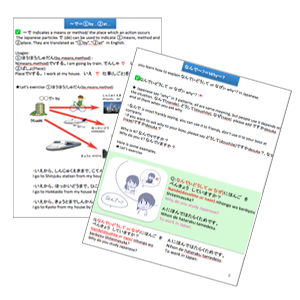 ORIGINAL TEXT (PDF)
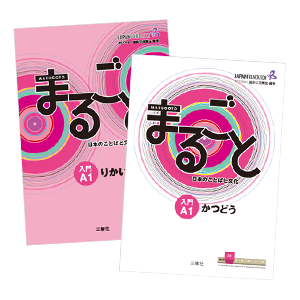 MARUGOTO
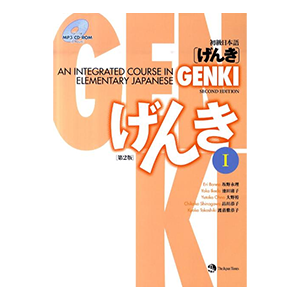 GENKI
GENKINihongo Course for Beginner (JLPT N5 level) – 50 online lesson & 100 Hours of homework
Lesson (50H)
| Topic | Lesson No. | What you Can-do | |
|---|---|---|---|
| 1 | Review (Pronunciation, Reading &Writing of Hiragana, Katakana) |
1 | Review basic (pronunciation, reading & writing of Hiragana, Katakana), basic phrases |
| 2 | |||
| 2 | Hello | 3 | Exchange greetings Give a simple self introduction |
| 4 | |||
| 3 | What is it ? | 5 | Ask something’s name, and express who the things belong to |
| 6 | |||
| 4 | Please give me this one. | 7 | Ask someone the location Do some shopping |
| 8 | |||
| 5 | What time is it ? | 9 | Talk about your schedule to someone (time, day of the week) |
| 10 | |||
| 6 | Do you go to Japan? | 11 | Go out with your friends by vehicle |
| 12 | |||
| 7 | Shall we go toghter? | 13 | Ask your frined to join Talk about your daily routine |
| 14 | |||
| 8 | Excuse me | 15 | Ask someone you don’t know how to say in Japanese. |
| 16 | |||
| 9 | How are you ? | 17 | Talk about your daily life |
| 18 | |||
| 10 | I like Japan! | 19 | Talk about your likes and dislikes/strengths and weaknesses. |
| 20 | |||
| 11 | Let me introduce my country | 21 | Give a simple introduction of your country, city you live in |
| 22 | |||
| 12 | How long do you stay in Japan? | 23 | Talk about number, time, term, frequency |
| 24 | |||
| 13 | How was the festival? | 25 | Talk about your past experience |
| 26 | |||
| 14 | I want to drink beer | 27 | Talk about what you want to do |
| 28 | |||
| 15 | Please take me to the Tokyo | 29 | Give a simple request, instructions to someone |
| 30 | |||
| 16 | Let me introduce my family | 31 | Talk briefly about your family and job |
| 32 | |||
| 17 | Please tell me how to use this | 33 | Give a explanation of the place, things, people |
| 34 | |||
| 18 | What’s wrong with it? | 35 | Give a explanation of rule and regulations |
| 36 | |||
| 19 | What is your hobby? | 37 | Talk about your hobbies Talk about what you can and can’t do |
| 38 | |||
| 20 | I’ll go on a diet from tomorrow. | 39 | Talk about the changes of scene, situation |
| 40 | |||
| 21 | What will you do on summer vacation? | 41 | Have a casual conversation with your close friends |
| 42 | |||
| 22 | I think so too. | 43 | Give a simple opinion, impressions and expectation |
| 44 | |||
| 23 | What kind of apartment do you like? | 45 | Give a detailed explanation about things and person |
| 46 | |||
| 24 | How do I get there? | 47 | Give a explanation about direction and how to use something |
| 48 | |||
| 25 | Could you help me? | 49 | Ask somebody to do something for you |
| 50 |
If 25H…we will end our course in around “How was the festival?”
If 15H…we will end our course around “Excuse Me”
This is an estimation. You can extend, cut, and elaborate some courses as you like.
HOMEWORK (100H)
The teacher gives you 2 hour of homework per lesson as follows:
- Make a sentences using all of key grammars that you have learned in the lesson.(60min)
- Read the key grammar aloud and record. (40min)
- Answered 5-7 quizzes about grammar.(20min)
*While learning hiragana and katakana, you will be given other homework.
How to start Beginner Course (JLPT N5 level)
- 1:1 lessons with Japanese teacher via Teams or Zoom based on study plan
- Fee: Total 265,000JPY (Registration fee + lesson fee) if you take
4 lessons/week > take 3 month to complete
3 lessons/week > take 4 month to complete
2 lessons/week > take 6 month to complete * recommend
1 lessons/week > take 12 month to complete
*each lessons is 60 min - Certificate (When you complete this course, school issue certificate)
- Following step
- Submit Formal application sheet (Tell us your favorite lesson date and time)
- Make payment by Flywire
- Course starts (Teacher give you contact by Teams or Zoom before class start)
*If you want to take trial lesson first, please let us know.
Nihongo Course for Pre~Intermediate (JLPT N4~N3 level) – 50 online lesson & 100 Hours of homework
Lesson (50H)
| Topic | Lesson No. | What you Can-do | |
|---|---|---|---|
| 26 | Where should I throw out the garbage? | 1 | Ask for the explanation of the other person. Explain your situation and reason. Explain the reasons and circumstances and make a polite request. Ask advice and instructions. |
| 2 | |||
| 27 | You can make anything,right. | 3 | Express what you can and cannot do using verbs. Express the situation what you can see or hear. |
| 4 | |||
| 28 | Drinking tea… | 5 | Express the continuous actions that are performed at the same time. Express daily habitual actions. Express several reasons in one sentence. |
| 6 | |||
| 29 | I left something. | 7 | Describe the state of things Describe the state that has completed. Express regret about the inconvenient situation. |
| 8 | |||
| 30 | I will reserve a ticket | 9 | Explain the state of things using “There is”. Understand and make Instructions about the things such as preparations should be done in advance for the future. |
| 10 | |||
| 31 | I think I will start using the Internet. | 11 | Express your plan, and schedule using Intentional form |
| 12 | |||
| 32 | You mightbe sick | 13 | Give advice Use conjectural expressions |
| 14 | |||
| 33 | What does this mean? | 15 | Understand instructions and commands. Give a message or convey the remarks of another person. |
| 16 | |||
| 34 | Please do as I do | 17 | Describe standards and norms Express context of the two movements Explain the state of performing in a certain action, or describing daily habitual behavior. |
| 18 | |||
| 35 | If you go to a travel agency, you can find out | 19 | Express the assumptions that is necessary to realize a certain matter. Make decisions under certain conditions or seek advice or instructions. |
| 20 | |||
| 36 | I make the effort to use my brain and body | 21 | Mention state goals and endeavors. Describe changes in human ability and the situation of things. |
| 22 | |||
| 37 | It is made on reclaimed land | 23 | Use passive expressions to talk about actions received from people and experiences that you feel annoying. Explain the situation and facts objectively using passive expressions. |
| 24 | |||
| 38 | I like putting things in order | 25 | Mention the likes and dislikes of some actions, good and bad points, Teport that you have forgotten what to do. Confirm if the person have the information or no. Emphasize the part you want to convey. |
| 26 | |||
| 39 | I’m sorry to be late | 27 | Express the emotion or situation caused by a certain thing together with its cause. Describe events together with their causes (natural disasters, accidents, etc.). Explain politely the reason, make excuses, and explain the circumstances. |
| 28 | |||
| 40 | I am worried if my son has made any friends or not | 29 | Incorporating a question into a part of the sentence makes it clear that you are wondering. You can say that you can give it a try. |
| 30 | |||
| 41 | Could you keep my parcel | 31 | Use the expression of giving and receiving that understands the relationship of up and down and intimacy. You can make a polite request. |
| 32 | |||
| 42 | What will you spend your bonus on? | 33 | For can be used to state the purpose. Describe the application, evaluation, required time, cost, etc. |
| 34 | |||
| 43 | He looks kind | 35 | Infer and describe the state from the signs and appearance of changes. State that you have finished the desired action and returned to the original place. |
| 36 | |||
| 44 | Do it like in this photo,please | 37 | Express undesirable states of motion or degree. Express the degree of difficulty of an action. |
| 38 | |||
| 45 | Though I practiced very much | 39 | Describe how to deal a certain situation assuming it. Express the feelings of disappointment and dissatisfaction of the speaker when the expected result is not achieved. |
| 40 | |||
| 46 | He should be there soon | 41 | Describe the action focusing on each stage of “before”, “in progress”, and “after”. Express the feeling that it has not been too long after the action. |
| 42 | |||
| 47 | I heard that she got engaged | 43 | You can convey information obtained from a third party as is. Describe the judgment based on the situation comprehensively grasped through your five senses. |
| 44 | |||
| 48 | Let me take leave,please | 45 | Express compulsory actions, acceptance and permission. Request permission making a careful statement. |
| 46 | |||
| 49 | Would you please convey my message? | 47 | Understand respect expression and properly use the words based on human relationships such as “hierarchy relationship” and “friendship”. |
| 48 | |||
| 50 | I am sincerely grateful to you | 49 | Understand the whole system of honorifics based on human relationships of “hierarchy relationship” and “friendship”, and be able to use humble words appropriately. |
| 50 |
If 25H…we will end our course in around “I like putting things in order”
If 15H…we will end our course around “What does this mean?”
This is an estimation. You can extend, cut, and elaborate some courses as you like.
Nihongo Course for Pre-Advanced (JLPT N3~N2 level) – 50 online lesson & 100 Hours of homework
Lesson (50H)
| Topic | Lesson No. | What you Can-do | |
|---|---|---|---|
| 1 | What a waste! | 1 | Learn how to express feelings of being impressed or surprised. |
| 2 | |||
| 2 | What are the key points when running a course? | 3 | Learn how to express intention and determination. |
| 4 | |||
| 3 | I couldn’t help but miss Japanese food. | 5 | Practice expressing impulses. |
| 6 | |||
| 4 | In terms of income, it is harder than when I was working as an office lady. | 7 | Understand the reasons behind results. |
| 8 | |||
| 5 | I couldn’t decide whether to quit or continue. | 9 | Learn alternative ways to say “cannot do.” |
| 10 | |||
| 6 | The law regarding visually impaired people and guide dogs has been revised. | 11 | Be able to clearly indicate the target of an action or object. |
| 12 | |||
| 7 | Someone went somewhere and never came back. | 13 | Describe the process or ongoing state of an event. |
| 14 | |||
| 8 | While preserving flavors loved since long ago, new ones are also being created. | 15 | Express the feeling that two things seem to happen at the same time. |
| 16 | |||
| 9 | I never buy something I really want without first picking it up and checking it myself. | 17 | Explain things in a logical sequence. |
| 18 | |||
| 10 | I ended up spending several months in a hectic way. | 19 | Understand expressions that indicate time or specific points. |
| 20 | |||
| 11 | For someone who failed, it is often surprisingly easy to accept. | 21 | Understand things from different perspectives. |
| 22 | |||
| 12 | It’s not impossible to grow vegetables even in Tokyo. | 23 | Be able to partially negate statements. |
| 24 | |||
| 13 | Unfortunately, at first, most people will not believe you. | 25 | Use expressions of contrast effectively. |
| 26 | |||
| 14 | When it comes to food presentation, it is currently the most highly rated in Japan. | 27 | Make hypothetical statements and express their results. |
| 28 | |||
| 15 | Unexpected effects may appear. | 29 | Express the feeling of “cannot deny.” |
| 30 | |||
| 16 | You should say, “I don’t understand, please teach me.” | 31 | Give advice or warnings to others appropriately. |
| 32 | |||
| 17 | Only about 10% of what is visible above the water surface is the whole. | 33 | State something with certainty. |
| 34 | |||
| 18 | Regardless of vocabulary or grammar knowledge, the biggest difference is the speed of conversation. | 35 | Use expressions to give examples effectively. |
| 36 | |||
| 19 | Not only announcements, but even important personal information can be easily seen. | 37 | Explain contrasts between two things. |
| 38 | |||
| 20 | As long as people don’t try to understand each other, it is impossible to create a “new country.” | 39 | Use expressions to limit or specify things. |
| 40 | |||
| 21 | Review | 41 | Review what you have learned so far. |
| 42 | |||
| 22 | Review | 43 | Review what you have learned so far. |
| 44 | |||
| 23 | Review | 45 | Review what you have learned so far. |
| 46 | |||
| 24 | Review | 47 | Review what you have learned so far. |
| 48 | |||
| 25 | Review | 49 | Review what you have learned so far. |
| 50 |
