
 English
  Español

Tips for More Effective Studying
Nihongo Online School > Tips for More Effective Studying > Learn JLPT N4 adjectives: List & tips to crush the exam
Learn JLPT N4 adjectives: List & tips to crush the exam

2025/09/27

Director: Kotaro Muramoto
Principal of Nihongo Online School
In September 2019, he founded "Nihongo Online School". Since then, has been teaching Japanese online lessons, with a total of over 1,000 students.
He has designed an individualized curriculum based on student’s needs and study goal. And is conscious of making the classes speech-centered in order to improve students’ speaking skills.
The school asks students to submit homework assignments worth 2 hours per lesson to improve faster. By supporting students with these features, students are able to efficiently improve Japanese language skills.
Learning JLPT N4 adjectives includes understanding whether adjectives end in -i or -na, memorizing their meanings, and knowing how to use them correctly in context.
This guide covers a complete JLPT N4 adjectives list with examples and some tips to help you in your JLPT adjective N4 practice routines.
Contents
- 1 How much vocabulary do you need to know for JLPT N4?
- 2 How many adjectives do you need to know for JLPT N4?
- 3 How advanced are JLPT N4 adjectives?
- 4 Do all JLPT N4 Japanese adjectives end in -i or -na?
- 5 JLPT N4 adjectives list you need to remember
- 6 What are the best books to prepare JLPT N4 adjectives?
- 7 Others tips to improve your JLPT N4 adjective practice

How much vocabulary do you need to know for JLPT N4?
To pass the JLPT N4 exam, you need to know approximately 1,500 vocabulary words. This represents a significant step up from the 800 words required for JLPT N5.
These words primarily include nouns, verbs, and adjectives as the core vocabulary, and pronouns, suffixes, adverbs and common expressions for natural communication. Combined with JLPT N5 vocabulary, you’ll have around 2,300 total words for intermediate Japanese proficiency.
How many adjectives do you need to know for JLPT N4?
There is no official adjective list from JLPT organizations, but most educational sources agree on approximately 45 new adjectives to know for the JLPT N4 exam.
However, this list can expand to over 130 adjectives when you include all the terms that appear in real JLPT N4 tests, textbooks, and study materials.
How advanced are JLPT N4 adjectives?
JLPT N4 adjectives represent intermediate beginner level vocabulary. The majority are concrete descriptors for colors, sizes, temperatures, textures, and basic emotional states.
However, N4 significantly expands into abstract territory with adjectives describing character traits, work attitudes, social appropriateness, and complex emotional states.
Do all JLPT N4 Japanese adjectives end in -i or -na?
Almost all JLPT N4 adjectives follow the standard -i or -na pattern. The vast majority of N4 adjectives conform to these two main categories, with only a few exceptions.
While Japanese grammar technically includes some archaic forms, for JLPT N4 purposes, you can safely assume adjectives will be either i-adjectives or na-adjectives. This consistency makes learning adjective patterns much more manageable as you progress from basic N5 na-adjectives to the expanded JLPT N4 adjectives.
JLPT N4 adjectives list you need to remember

I-Adjectives
| Kanji | Furigana | Romaji | English | Example |
| 青い | あおい | aoi | blue | 青い空(あおいそら)- blue sky |
| 赤い | あかい | akai | red | 赤い花(あかいはな)- red flower |
| 明るい | あかるい | akarui | bright, cheerful | 明るい部屋(あかるいへや)- bright room |
| 甘い | あまい | amai | sweet | 甘いケーキ(あまいケーキ)- sweet cake |
| 浅い | あさい | asai | shallow | 浅い川(あさいかわ)- shallow river |
| 厚い | あつい | atsui | thick | 厚い本(あついほん)- thick book |
| 暑い | あつい | atsui | hot (weather) | 暑い日(あついひ)- hot day |
| 温かい | あたたかい | atatakai | warm | 温かいお茶(あたたかいおちゃ)- warm tea |
| 危ない | あぶない | abunai | dangerous | 危ない道(あぶないみち)- dangerous road |
| 新しい | あたらしい | atarashii | new | 新しい車(あたらしいくるま)- new car |
| 悪い | わるい | warui | bad | 悪い天気(わるいてんき)- bad weather |
| 忙しい | いそがしい | isogashii | busy | 忙しい日(いそがしいひ)- busy day |
| 痛い | いたい | itai | painful | 痛い頭(いたいあたま)- painful head |
| 美しい | うつくしい | utsukushii | beautiful | 美しい景色(うつくしいけしき)- beautiful scenery |
| うまい | – | umai | tasty, skillful | うまい料理(うまいりょうり)- tasty food |
| 嬉しい | うれしい | ureshii | happy | 嬉しいニュース(うれしいニュース)- happy news |
| うるさい | – | urusai | noisy | うるさい音(うるさいおと)- noisy sound |
| 薄い | うすい | usui | thin, weak | 薄い紙(うすいかみ)- thin paper |
| 大きい | おおきい | ookii | big | 大きい家(おおきいいえ)- big house |
| 多い | おおい | ooi | many, much | 多い宿題(おおいしゅくだい)- a lot of homework |
| 美味しい | おいしい | oishii | delicious | 美味しい食べ物(おいしいたべもの)- delicious food |
| 面白い | おもしろい | omoshiroi | interesting, fun | 面白い映画(おもしろいえいが)- interesting movie |
| 重い | おもい | omoi | heavy | 重い荷物(おもいにもつ)- heavy luggage |
| 遅い | おそい | osoi | slow, late | 遅い電車(おそいでんしゃ)- late train |
| 可笑しい | おかしい | okashii | strange, funny | 可笑しい話(おかしいはなし)- funny story |
| 辛い | からい | karai | spicy, hot | 辛い料理(からいりょうり)- spicy food |
| 軽い | かるい | karui | light | 軽い鞄(かるいかばん)- light bag |
| 可愛い | かわいい | kawaii | cute | 可愛い猫(かわいいねこ)- cute cat |
| 硬い | かたい | katai | hard | 硬いパン(かたいパン)- hard bread |
| かっこいい | – | kakkoii | cool, good looking | かっこいい人(かっこいいひと)- cool person |
| 悲しい | かなしい | kanashii | sad | 悲しい映画(かなしいえいが)- sad movie |
| 黄色い | きいろい | kiiroi | yellow | 黄色い花(きいろいはな)- yellow flower |
| 厳しい | きびしい | kibishii | strict, severe | 厳しい先生(きびしいせんせい)- strict teacher |
| 汚い | きたない | kitanai | dirty | 汚い服(きたないふく)- dirty clothes |
| 黒い | くろい | kuroi | black | 黒い猫(くろいねこ)- black cat |
| 暗い | くらい | kurai | dark | 暗い部屋(くらいへや)- dark room |
| 詳しい | くわしい | kuwashii | detailed | 詳しい説明(くわしいせつめい)- detailed explanation |
| 細かい | こまかい | komakai | small, fine, detailed | 細かいお金(こまかいおかね)- small change |
| 怖い | こわい | kowai | scary | 怖い映画(こわいえいが)- scary movie |
| 寒い | さむい | samui | cold | 寒い冬(さむいふゆ)- cold winter |
| 寂しい | さびしい | sabishii | lonely | 寂しい夜(さびしいよる)- lonely night |
| 涼しい | すずしい | suzushii | cool | 涼しい風(すずしいかぜ)- cool wind |
| 少ない | すくない | sukunai | few, little | 少ないお金(すくないおかね)- little money |
| 凄い | すごい | sugoi | amazing, great | 凄い技術(すごいぎじゅつ)- amazing technology |
| 素晴らしい | すばらしい | subarashii | wonderful | 素晴らしい景色(すばらしいけしき)- wonderful scenery |
| 狭い | せまい | semai | narrow | 狭い道(せまいみち)- narrow road |
| 正しい | ただしい | tadashii | correct | 正しい答え(ただしいこたえ)- correct answer |
| 高い | たかい | takai | expensive, high, tall | 高い建物(たかいたてもの)- tall building |
| 楽しい | たのしい | tanoshii | fun, enjoyable | 楽しいパーティー(たのしいパーティー)- fun party |
| 茶色い | ちゃいろい | chairoi | brown | 茶色い犬(ちゃいろいいぬ)- brown dog |
| 小さい | ちいさい | chiisai | small | 小さい子供(ちいさいこども)- small child |
| 近い | ちかい | chikai | near, close | 近い駅(ちかいえき)- nearby station |
| 冷たい | つめたい | tsumetai | cold (object) | 冷たい水(つめたいみず)- cold water |
| つまらない | – | tsumaranai | boring | つまらない本(つまらないほん)- boring book |
| 強い | つよい | tsuyoi | strong | 強い人(つよいひと)- strong person |
| 遠い | とおい | tooi | far | 遠い国(とおいくに)- distant country |
| 長い | ながい | nagai | long | 長い道(ながいみち)- long road |
| 眠い | ねむい | nemui | sleepy | 眠い時間(ねむいじかん)- sleepy time |
| 苦い | にがい | nigai | bitter | 苦い薬(にがいくすり)- bitter medicine |
| ぬるい | – | nurui | lukewarm | ぬるいお茶(ぬるいおちゃ)- lukewarm tea |
| 早い | はやい | hayai | early, fast | 早い電車(はやいでんしゃ)- early train |
| 恥ずかしい | はずかしい | hazukashii | embarrassed | 恥ずかしい話(はずかしいはなし)- embarrassing story |
| 低い | ひくい | hikui | low | 低い声(ひくいこえ)- low voice |
| 酷い | ひどい | hidoi | terrible, awful | 酷い天気(ひどいてんき)- terrible weather |
| 広い | ひろい | hiroi | wide, spacious | 広い公園(ひろいこうえん)- spacious park |
| 太い | ふとい | futoi | thick | 太い木(ふといき)- thick tree |
| 古い | ふるい | furui | old | 古い家(ふるいいえ)- old house |
| 深い | ふかい | fukai | deep | 深い海(ふかいうみ)- deep sea |
| 細い | ほそい | hosoi | thin | 細い道(ほそいみち)- thin road |
| 欲しい | ほしい | hoshii | want | 欲しい物(ほしいもの)- thing I want |
| 不味い | まずい | mazui | bad-tasting | 不味い料理(まずいりょうり)- bad-tasting food |
| 丸い | まるい | marui | round | 丸いボール(まるいボール)- round ball |
| 珍しい | めずらしい | mezurashii | rare, unusual | 珍しい動物(めずらしいどうぶつ)- rare animal |
| 難しい | むずかしい | muzukashii | difficult | 難しい問題(むずかしいもんだい)- difficult problem |
| 安い | やすい | yasui | cheap | 安い服(やすいふく)- cheap clothes |
| 易しい | やさしい | yasashii | easy | 易しい問題(やさしいもんだい)- easy problem |
| 優しい | やさしい | yasashii | kind | 優しい人(やさしいひと)- kind person |
| 柔らかい | やわらかい | yawarakai | soft | 柔らかい布団(やわらかいふとん)- soft futon |
| 弱い | よわい | yowai | weak | 弱い風(よわいかぜ)- weak wind |
| よろしい | – | yoroshii | good (polite) | よろしい返事(よろしいへんじ)- good reply |
| 若い | わかい | wakai | young | 若い人(わかいひと)- young person |
| 白い | しろい | shiroi | white | 白い雪(しろいゆき)- white snow |
| 短い | みじかい | mijikai | short | 短い時間(みじかいじかん)- short time |
Na-Adjectives
| Kanji | Furigana | Romaji | English | Example |
| 安心 | あんしん | anshin | peace of mind | 安心な場所(あんしんなばしょ)- safe place |
| 安全 | あんぜん | anzen | safe | 安全な道(あんぜんなみち)- safe road |
| 大事 | だいじ | daiji | important | 大事な会議(だいじなかいぎ)- important meeting |
| 不便 | ふべん | fuben | inconvenient | 不便な場所(ふべんなばしょ)- inconvenient place |
| 複雑 | ふくざつ | fukuzatsu | complex | 複雑な問題(ふくざつなもんだい)- complex problem |
| 反対 | はんたい | hantai | opposition | 反対な意見(はんたいないけん)- opposing opinion |
| 変 | へん | hen | strange | 変な音(へんなおと)- strange sound |
| 久しぶり | ひさしぶり | hisashiburi | long time | 久しぶりな再会(ひさしぶりなさいかい)- reunion after a long time |
| いっぱい | – | ippai | full | いっぱいなコップ(いっぱいなコップ)- full cup |
| 一生懸命 | いっしょうけんめい | isshoukenmei | very hard | 一生懸命な学生(いっしょうけんめいながくせい)- hardworking student |
| 自由 | じゆう | jiyuu | free | 自由な時間(じゆうなじかん)- free time |
| 十分 | じゅうぶん | juubun | enough | 十分な時間(じゅうぶんなじかん)- enough time |
| 簡単 | かんたん | kantan | simple, easy | 簡単な問題(かんたんなもんだい)- simple problem |
| 危険 | きけん | kiken | dangerous | 危険な場所(きけんなばしょ)- dangerous place |
| 無理 | むり | muri | impossible | 無理な注文(むりなちゅうもん)- impossible request |
| 盛ん | さかん | sakan | popular, prosperous | 盛んなスポーツ(さかんなスポーツ)- popular sport |
| 親切 | しんせつ | shinsetsu | kind | 親切な人(しんせつなひと)- kind person |
| たいてい | – | taitei | usually | たいていな日(たいていなひ)- usual day |
| 楽しみ | たのしみ | tanoshimi | looking forward to | 楽しみな旅行(たのしみなりょこう)- trip to look forward to |
| 丁寧 | ていねい | teinei | polite | 丁寧な言葉(ていねいなことば)- polite words |
| 適当 | てきとう | tekitou | suitable | 適当な服(てきとうなふく)- suitable clothes |
| 特別 | とくべつ | tokubetsu | special | 特別な日(とくべつなひ)- special day |
| 残念 | ざんねん | zannen | regrettable | 残念なニュース(ざんねんなニュース)- regrettable news |
| きれい | – | kirei | beautiful, clean | きれいな花(きれいなはな)- beautiful flower |
| 有名 | ゆうめい | yuumei | famous | 有名な人(ゆうめいなひと)- famous person |
| 好き | すき | suki | like | 好きな食べ物(すきなたべもの)- favorite food |
| 嫌い | きらい | kirai | dislike | 嫌いな食べ物(きらいなたべもの)- disliked food |
| 大好き | だいすき | daisuki | love very much | 大好きな歌(だいすきなうた)- beloved song |
| いや | – | iya | unpleasant | いやな気持ち(いやなきもち)- unpleasant feeling |
| 上手 | じょうず | jouzu | skillful | 上手な料理(じょうずなりょうり)- skillful cooking |
| 下手 | へた | heta | unskillful | 下手な絵(へたなえ)- poor drawing |
| 便利 | べんり | benri | convenient | 便利な店(べんりなみせ)- convenient store |
| 静か | しずか | shizuka | quiet | 静かな部屋(しずかなへや)- quiet room |
| 賑やか | にぎやか | nigiyaka | lively | 賑やかな祭り(にぎやかなまつり)- lively festival |
| 楽 | らく | raku | easy, comfortable | 楽な仕事(らくなしごと)- easy job |
| 大変 | たいへん | taihen | hard, terrible | 大変な仕事(たいへんなしごと)- difficult job |
| 失礼 | しつれい | shitsurei | rude | 失礼な態度(しつれいなたいど)- rude attitude |
| 大丈夫 | だいじょうぶ | daijoubu | okay, fine | 大丈夫な状態(だいじょうぶなじょうたい)- okay condition |
| 駄目 | だめ | dame | no good | 駄目な計画(だめなけいかく)- bad plan |
| 暇 | ひま | hima | free time | 暇な時間(ひまなじかん)- free time |
| 元気 | げんき | genki | healthy, energetic | 元気な子供(げんきなこども)- energetic child |
| いろいろ | – | iroiro | various | いろいろな色(いろいろないろ)- various colors |
| 丈夫 | じょうぶ | joubu | strong, durable | 丈夫な靴(じょうぶなくつ)- durable shoes |
| 真面目 | まじめ | majime | serious | 真面目な学生(まじめながくせい)- serious student |
| 熱心 | ねっしん | nesshin | enthusiastic | 熱心な先生(ねっしんなせんせい)- enthusiastic teacher |
| 真っ直ぐ | まっすぐ | massugu | straight | 真っ直ぐな道(まっすぐなみち)- straight road |
| 必要 | ひつよう | hitsuyou | necessary | 必要な物(ひつようなもの)- necessary thing |
| 立派 | りっぱ | rippa | excellent, splendid | 立派な建物(りっぱなたてもの)- splendid building |
| 大切 | たいせつ | taisetsu | important, precious | 大切な友達(たいせつなともだち)- precious friend |
| 結構 | けっこう | kekkou | fine, enough | 結構な料理(けっこうなりょうり)- fine cooking |
| 大勢 | おおぜい | oozei | many people | 大勢な人(おおぜいなひと)- many people |
| 心配 | しんぱい | shinpai | worry | 心配な気持ち(しんぱいなきもち)- worried feeling |
What are the best books to prepare JLPT N4 adjectives?
The best books to prepare JLPT N4 adjectives focus specifically on vocabulary building with practice exercises. Here are three excellent options to consider.
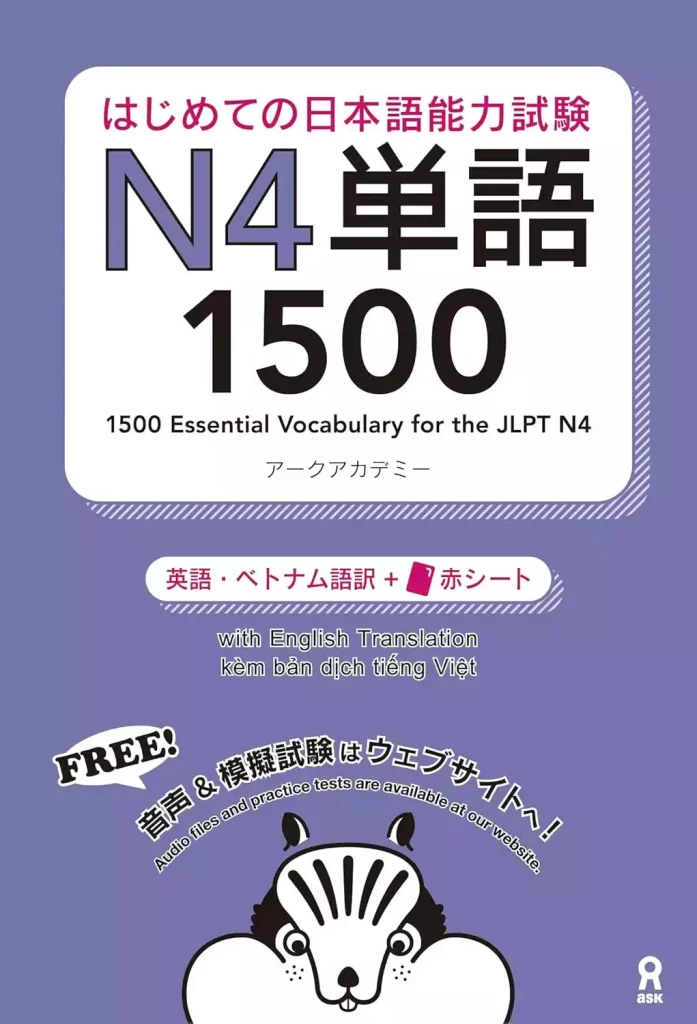
- 1500 Essential Vocabulary for the JLPT N4 provides systematic thematic learning with downloadable audio, making it ideal for students who prefer structured study with multimedia support.
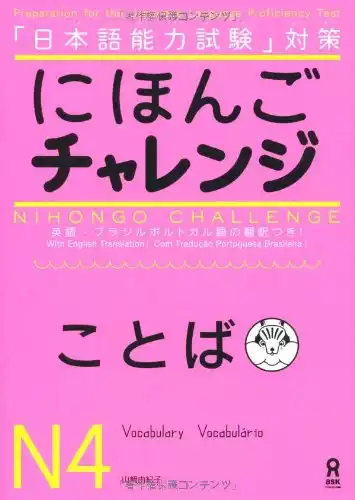
- Nihongo Challenge Kotoba (Vocabulary) N4 focuses on real-world situations with abundant illustrations and JLPT-format practice tests, perfect for learners who want practical vocabulary they can immediately use in daily conversations.
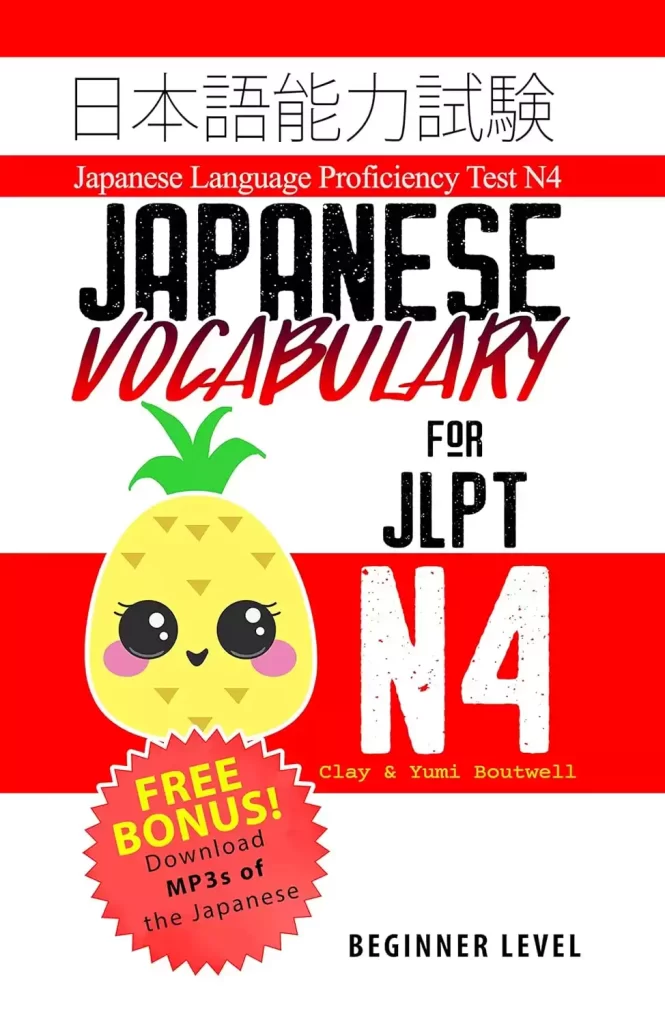
Japanese Vocabulary for JLPT N4 offers digital convenience as an ebook format, suited for busy students who need flexible, on-the-go study access across multiple devices.
For complete JLPT N4 preparation beyond just adjectives, see our comprehensive guide to the best JLPT N4 textbooks covering grammar, reading, and listening skills too.
Others tips to improve your JLPT N4 adjective practice
A few smart additions to your study routine can significantly boost your JLPT N4 adjective learning.
For example, actively using Anki decks can help you. The JLPT N4 Vocabulary Deck with Audio delivers solid spaced repetition practice with native speaker recordings, while the Ultimate JLPT N4 Vocabulary Deck stays current with recent test patterns.
For people who need guidance and find limits in self-study, following Nihongo Online School’s JLPT preparation course can help you with JLPT N4 adjective practice and prepare you for the exam faster. Software engineer Bon-san’s journey illustrates this well: starting from basic greetings, he reached N4 proficiency in six months through our structured approach. The complete case study reveals how our instruction accelerates progress beyond self-study alone.