
 English
  Español

Tips for More Effective Studying
Nihongo Online School > Tips for More Effective Studying > Why I Want to Study in Japan Essay: Complete Writing Guide with Examples
Why I Want to Study in Japan Essay: Complete Writing Guide with Examples

2026/03/28
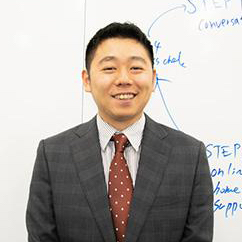
Director: Kotaro Muramoto
Principal of Nihongo Online School
In September 2019, he founded "Nihongo Online School". Since then, has been teaching Japanese online lessons, with a total of over 1,000 students.
He has designed an individualized curriculum based on student’s needs and study goal. And is conscious of making the classes speech-centered in order to improve students’ speaking skills.
The school asks students to submit homework assignments worth 2 hours per lesson to improve faster. By supporting students with these features, students are able to efficiently improve Japanese language skills.
Over 336,000 international students submit “Why I Want to Study in Japan” essays annually for university applications, scholarship programs, and visa documentation. Unlike brief interview responses, these formal essays require 500-1000 words of structured argumentation demonstrating genuine motivation, clear academic goals, and thoughtful planning. This comprehensive guide provides frameworks, strategies, and complete sample essays to help you craft compelling written statements that distinguish your application from hundreds of competitors.
Contents

How to Determine What to Include in Your Essay
Effective essays require honest self-reflection combined with strategic presentation of information admissions committees value most.
Assess Your Core Motivations
Academic and Research Goals – If pursuing graduate degrees or research-focused programs, your essay should emphasize specific academic objectives. Rather than stating “I want to study engineering,” specify: “I aim to develop perovskite-silicon hybrid solar cells under Professor Nakamura’s supervision at Tokyo Institute of Technology, building upon his laboratory’s pioneering work achieving record 29.8% conversion efficiency.”
This specificity demonstrates: (1) knowledge of cutting-edge research, (2) familiarity with specific faculty, (3) clear research direction, and (4) logical connection between your goals and this particular Japanese institution.
Career and Professional Objectives – Career-oriented students should articulate how Japanese degrees enable specific professional pathways. Effective essays connect program features to career requirements: “Waseda’s School of International Liberal Studies provides the bilingual business curriculum and Tokyo internship opportunities essential for my goal of managing U.S.-Japan technology partnerships at multinational corporations.”
Cultural and Language Learning – If cultural immersion motivates you, demonstrate depth through specific interests: traditional arts (茶道 sadō, 書道 shodō), business culture, educational philosophy, or contemporary social systems. Avoid generic “I’m interested in Japanese culture”—instead, explain which cultural aspects intrigue you and how they connect to academic or career goals.
Personal Experiences and Connections – Authentic personal stories—transformative visits, mentor relationships, family background, or significant cultural encounters—create memorable essays. For example: “During my undergraduate exchange semester at Osaka University, participating in a disaster preparedness workshop revealed how effectively Japan integrates traditional knowledge with modern technology, inspiring my graduate research focus on community-based climate adaptation.”
Understand Your Target Audience
Different essay contexts require adjusted emphasis:
| Essay Type | Primary Audience | Key Emphasis | Typical Length |
|---|---|---|---|
| University Application | Admissions committee | Academic fit, program specifics, research interests | 500-800 words |
| Scholarship Essay (MEXT) | Government reviewers | Mutual benefit, cultural bridge role, contribution plans | 800-1000 words |
| Visa Statement of Purpose | Immigration officers | Clear study plan, financial preparation, return intention | 600-800 words |
| Language School | School administration | Language learning goals, career connection, commitment | 400-600 words |
Understanding your audience helps you emphasize information they value most while maintaining essay authenticity.
Identify Japan’s Unique Advantages for Your Goals
Your essay must explain what Japan specifically offers that alternatives cannot replicate. Strong essays reference:
Research Excellence – Name specific laboratories, professors, or research projects. Example: “Kyoto University’s Graduate School of Global Environmental Studies, particularly Professor Yamamoto’s integration of traditional and scientific knowledge for climate adaptation, provides research contexts unavailable at universities in my home country.”
Technological Leadership – Reference Japan’s innovations in your field. “Japan’s leadership in humanoid robotics and artificial intelligence, demonstrated through projects like ASIMO and Pepper, creates unparalleled learning opportunities for my robotics engineering studies.”
Cultural Context – Explain how living in Japan enables authentic understanding. “Studying Japanese literature in its original language at Tokyo University allows engagement with classical texts impossible through translation, particularly examining how Heian-period poetry influences contemporary writers.”
Economic and Professional Opportunities – Discuss Japan’s role in Asia-Pacific economics and business. “Tokyo’s position as Asia’s financial center provides internship and networking opportunities essential for my international business career, particularly regarding technology sector partnerships.”
Essential Structure of a “Why Japan” Essay
Successful essays follow clear organizational patterns ensuring comprehensive coverage while maintaining engaging narrative flow.
Standard Five-Paragraph Structure
Paragraph 1: Opening Hook and Thesis (100-150 words) Begin with an engaging opening that captures reader attention, then clearly state your purpose for studying in Japan. Strong openings use personal anecdotes, surprising facts, or compelling questions rather than generic statements.
Weak opening: “I want to study in Japan because it is a great country with good education and interesting culture.”
Strong opening: “When I discovered that Japanese engineers had developed disaster warning systems reducing earthquake casualties by 40% through community engagement, I realized Japan represents the global frontier for my research interest in community-based climate adaptation. This realization, combined with my undergraduate research experience and my home country’s vulnerability to natural disasters, crystallized my determination to pursue graduate study at Kyoto University.”
Paragraph 2: Academic Background and Preparation (150-200 words) Establish your qualifications and preparation demonstrating you’re ready for Japanese study. Include relevant coursework, research experience, skills, and accomplishments connecting to your Japan study goals.
Paragraph 3: Specific Reasons for Choosing Japan (200-250 words) Explain Japan’s unique advantages for your goals. This represents your essay’s core argumentation. Address why Japan specifically—not just any country—serves your objectives. Reference specific institutions, professors, resources, or opportunities.
Paragraph 4: Future Goals and Contribution Plans (150-200 words) Articulate concrete post-graduation plans demonstrating serious long-term vision. Scholarship essays particularly emphasize how you’ll contribute to your home country’s development and serve as a cultural bridge between Japan and your nation.
Paragraph 5: Conclusion (100-150 words) Synthesize key points reinforcing your main thesis. Strong conclusions reconnect to opening themes while projecting forward to your envisioned future, leaving readers with clear understanding of your motivation and commitment.
Alternative Narrative Structure
Some essays favor chronological storytelling:
Part 1: Personal Journey Leading to Decision – Begin with formative experiences or challenges that shaped your interest in Japan and your field of study.
Part 2: Academic and Professional Development – Describe how you developed relevant knowledge and skills preparing you for Japanese study.
Part 3: Why Japan Addresses Your Goals – Explain specific Japanese advantages connecting to your journey.
Part 4: Future Vision – Conclude with long-term goals and how Japanese education enables their achievement.
This narrative approach creates engaging personal stories while covering all essential information.
Sample Essays for Different Academic Levels
Understanding complete essay examples across different scenarios helps you adapt structures to your specific situation.
Sample Essay 1: Undergraduate Program (600 words)
Why I Want to Study International Business at Waseda University
Growing up in a family-run export business in Vietnam, I witnessed how cultural misunderstandings derailed international partnerships. One painful memory involved a potential Japanese distributor walking away after my father unknowingly violated Japanese business etiquette during dinner. This experience, repeated across Asian partnerships, revealed a critical gap: I could master financial analysis and marketing, but without deep cultural understanding, these skills remained insufficient for Asia-Pacific success. This drives my determination to study at Waseda University’s School of International Liberal Studies, where the bilingual curriculum, cultural immersion, and Tokyo location provide exactly the preparation my career requires.
My academic foundation includes strong AP Economics, Statistics, and Japanese Language performance (3.9 GPA). As Model UN president, I represented Asian countries in economic debates, revealing fascinating cultural differences in negotiation and consensus-building. Three years of Japanese study achieved intermediate proficiency, demonstrating commitment to linguistic preparation. Volunteering as conversation partner for Japanese exchange students and hosting a Japanese student provided valuable cultural exposure and practice navigating differences with patience.
Waseda attracts me for several specific reasons. First, SILS’s bilingual curriculum allows Japanese proficiency development while studying in English, providing gradual acquisition without sacrificing academic depth initially. Second, courses like “Business in East Asia,” “Japanese Management Systems,” and “Intercultural Communication” directly address knowledge gaps identified through family business experiences. Third, Waseda’s corporate partnerships with major Japanese companies promise internship opportunities impossible from my home country, allowing classroom learning application in real business contexts while building professional networks.
Beyond Waseda’s features, Japan offers unique advantages. As the world’s third-largest economy with business practices fundamentally different from Western models, Japan provides ideal context for understanding alternative approaches to organization, decision-making, and relationship management. Tokyo’s position as Asia’s business center means studying where business actually happens. Living in Japan will develop cultural competency no textbook can teach—reading social situations, understanding unstated expectations, navigating hierarchies characterizing Japanese business culture.
My career goal involves joining a management consulting firm’s Asia-Pacific practice, advising on market strategies. Within five to seven years, I aim to specialize in U.S.-Japan business relations, facilitating partnerships between American and Japanese technology companies. Long-term, I envision establishing my own consulting firm helping small and medium enterprises navigate Japanese markets—currently, smaller companies lack access to cultural and business expertise larger corporations maintain through dedicated Japan offices.
Waseda’s SILS offers ideal foundation combining academic rigor, cultural immersion, and practical opportunities. I am prepared to contribute to campus diversity, engage with academic challenges, and immerse myself in Japanese culture. This represents essential preparation for a career bridging cultures in our interconnected world economy.
What Makes This Effective
- Personal opening creating connection
- Specific preparation evidence
- Multiple concrete Waseda reasons
- Clear career progression
- Strong conclusion
Sample Essay 2: Graduate Research Program (Brief Format – 450 words)
Why I Want to Pursue Doctoral Research in Environmental Science at Kyoto University
Typhoon Haiyan’s devastating impact on my hometown Tacloban City in 2013 revealed the critical gap between meteorological warnings and community response—thousands died despite forecasts. This experience motivated my environmental management focus and master’s research on disaster preparedness, ultimately leading me to apply for doctoral study at Kyoto University under Professor Tanaka’s supervision, developing community-based early warning systems integrating traditional knowledge with modern forecasting.
My Bachelor of Science in Environmental Management from University of the Philippines (3.8 GPA) focused on climate adaptation. My undergraduate thesis involved six months field research in Tacloban documenting disaster impacts and indigenous weather prediction knowledge. Subsequent PAGASA internship revealed technical communication challenges from the forecasting side. These complementary perspectives prepared me for research requiring both community engagement and scientific expertise.
Japan offers unique advantages irreplaceable elsewhere. Japan’s extensive disaster experience—earthquakes, tsunamis, typhoons—created unparalleled research infrastructure. Following the 2011 earthquake, Japanese researchers invested heavily in community-based disaster management. Kyoto University’s Professor Tanaka pioneered community-based approaches in Asian contexts, balancing technical sophistication with cultural sensitivity—exactly my research approach.
My research pursues three objectives: (1) analyze existing Southeast Asian early warning systems identifying best practices, (2) conduct Philippine field research documenting traditional knowledge and developing integrated warning prototypes, (3) evaluate effectiveness through participatory action research. Professor Tanaka’s laboratory maintains Southeast Asian research partnerships providing established frameworks and community relationships requiring years to develop independently.
Beyond infrastructure, Japanese academic culture emphasizes thorough research over rapid publication, allowing deep community engagement my methodology requires. Japan’s government commitment to international disaster reduction creates pathways translating research into actual implementation programs.
My career goal involves establishing a Philippine research center dedicated to climate adaptation for vulnerable populations, maintaining Japanese institutional collaborations. My research will directly inform government disaster policies and community programs serving coastal populations facing climate threats. Kyoto University doctorate provides both research expertise and international networks essential for this vision.
Japan faces similar climate challenges—typhoons, flooding—making Japanese experience directly relevant to Philippine contexts while offering advantages unavailable in my home country or Western universities. This doctoral program provides the critical foundation for contributing meaningfully to climate adaptation challenges threatening millions across Southeast Asia.
What Makes This Effective:
- Powerful opening experience
- Concise background demonstration
- Clear Japan advantages
- Specific research objectives
- Social impact connection
Sample Essay 3: Language School (500 words)
Why I Want to Study Japanese Language in Tokyo
After accepting a product localization manager position at a Japanese technology company contingent upon achieving JLPT N2 proficiency within 18 months, I realized that my two years of online Japanese study, while providing foundational grammar and vocabulary, had left me functionally unable to conduct business conversations or navigate workplace cultural expectations. This gap between textbook knowledge and practical communication ability drives my application to Tokyo Japanese Language Institute for 12 months of intensive study, providing the immersion environment and native speaker interaction essential for achieving the functional proficiency my career requires.
My current Japanese level approximates JLPT N4 through self-study using textbooks, apps, and online courses. While I can read simple texts and understand basic conversations, I struggle with natural speech patterns, workplace-appropriate expressions (敬語 keigo), and cultural nuances essential for professional contexts. My online study proved effective for controlled environments but inadequate for developing authentic communication skills. Several experiences revealed this limitation: during a video interview with my future Japanese manager, I understood perhaps 60% of his questions but hesitated constantly, uncertain whether my responses sounded natural or bizarrely formal; when attempting to email Japanese colleagues, I agonized over appropriate politeness levels, often spending thirty minutes crafting simple three-sentence messages. These challenges demonstrated that achieving professional competency requires more than vocabulary memorization—it demands cultural understanding and natural language intuition developable only through immersion.
Studying in Japan provides three critical advantages impossible to achieve through continued self-study. First, daily life immersion forces practical language use beyond classroom vocabulary. Navigating grocery shopping, asking directions, handling banking, and managing daily interactions all require real-time Japanese communication, developing fluency through necessity rather than optional practice. Second, interaction with Japanese people—classmates, teachers, host family, part-time work colleagues—develops authentic communication skills and cultural understanding essential for workplace success. These relationships teach not just language but also social expectations, communication patterns, and cultural values underlying professional Japanese interactions. Third, attending language school in Tokyo allows me to network with companies through school job placement support and potentially secure internships demonstrating my capabilities to employers, transforming language study from isolated skill development into career preparation.
My specific plan involves completing 12 months of intensive study at Tokyo Japanese Language Institute, progressing from current N4 level through N2 by program end. The school’s business Japanese course particularly attracts me, addressing exactly the professional communication skills my career requires. Following language school completion, I will begin my position at the Japanese technology company, applying newly developed proficiency to product localization work. My long-term goal involves advancing into management positions requiring sophisticated Japanese communication across cultural and linguistic boundaries.
Language school in Tokyo represents strategic career investment rather than simply language learning. By achieving functional Japanese proficiency through immersion, I will transform from someone who studied Japanese into someone who can actually work effectively in Japanese business environments—exactly the qualification my career ambitions require.
What Makes This Effective:
- Clear practical motivation and career connection
- Honest assessment of current limitations
- Specific advantages of studying in Japan vs. alternatives
- Concrete study plan and timeline
- Professional focus throughout
Writing Tips for Strong Essays
Develop Specific, Detailed Content
Generic Statement: “Japan has excellent universities with advanced research facilities and good professors.”
Specific Statement: “Tokyo Institute of Technology’s Renewable Energy Research Center, particularly its offshore wind technology program directed by Professor Nakamura, provides access to Japan’s cutting-edge research in marine renewable systems unavailable at universities in my home country.”
Specificity demonstrates genuine research, serious interest, and clear understanding of Japanese education rather than generic application to multiple countries.
Show Rather Than Tell
Telling: “I am very interested in Japanese culture and have been studying it for many years.”
Showing: “During three years volunteering at a Japanese cultural center, teaching English to Japanese exchange students, I discovered profound differences in educational philosophy—particularly regarding group-oriented learning versus individual achievement—that motivated my interest in comparative education research.”
Concrete examples and specific experiences prove your claims rather than asking readers to simply accept assertions.
Connect Personal to Academic
Strong essays weave personal experiences with academic or career interests, showing how your unique background informs research questions or professional goals.
Example: “My grandmother’s mobility challenges following a stroke revealed gaps in assistive technology—Japanese robotics innovations in elderly care, particularly soft robotics for physical therapy, address exactly these needs that I witnessed firsthand, motivating my engineering focus on human-assistive systems.”
Maintain Appropriate Tone
Academic essays require formal, professional tone while remaining engaging and personal. Avoid:
- Overly casual language (“I think Japan is really cool and awesome”)
- Excessive formality sounding unnatural (“It is with great humility that I beseech…”)
- Emotional manipulation (“Please give me this opportunity as my last hope”)
- Arrogance (“I am the perfect candidate who will revolutionize…”)
Aim for confident, professional tone demonstrating enthusiasm without extremes.
Common Mistakes to Avoid
Mistake 1: Generic Content Applicable to Any Country Ensure your essay specifically addresses Japan’s unique advantages. If your essay works equally well for America, England, or Australia by changing the country name, you’ve failed to make a Japan-specific case.
Mistake 2: Cultural Stereotypes Avoid reducing Japan to anime, manga, samurai, geisha, or tourist attractions unless these directly and seriously relate to your academic field. Admissions committees distinguish between genuine cultural engagement and superficial stereotyping.
Mistake 3: No Clear Future Plan Vague statements like “After graduating, I will find good opportunities and help my country” demonstrate lack of serious planning. Provide concrete career steps even if plans may evolve.
Mistake 4: Copying Sample Essays While learning from examples helps, copying language creates unauthentic essays that admissions committees recognize immediately. Your essay must reflect your genuine story, voice, and motivations.
Mistake 5: Excessive Length Without Substance Word count targets exist for reasons—admissions committees read hundreds of essays. Concise, substantial content impresses more than verbose, repetitive writing. Every paragraph should advance your argumentation.
Prepare for Success: Strengthen Your Application Through Japanese Language Study
Whether applying to English-taught or Japanese-taught programs, demonstrating Japanese language preparation significantly strengthens your “Why Japan” essay by proving commitment beyond words. Concrete language study shows admissions committees you’re seriously preparing for Japanese life rather than simply submitting generic applications.
Strategic Japanese Language Preparation
Nihongo Online School offers specialized programs designed for students strengthening study abroad applications through Japanese language acquisition, providing certificates and proficiency enabling more compelling essays.
Key features supporting your application:
Concrete Preparation Evidence – Our 150-hour kick start program combines 50 hours of private 1-on-1 online lessons with 100 hours of structured study materials, providing an official completion certificate documenting serious preparation. Include this in your essay: “I have completed 150 hours of Japanese language instruction at Nihongo Online School, achieving conversational proficiency that will ease my cultural transition and demonstrate my commitment to successful integration.”
Essay-Worthy Achievement – Language study creates specific, concrete content strengthening your essay. Rather than claiming “interest in Japanese language,” demonstrate actual achievement: “My Japanese language study enabled me to read Professor Tanaka’s research papers in their original Japanese, deepening my understanding of his community-based disaster management approach and confirming my desire to study under his supervision.”
Flexible Scheduling – All lessons are conducted via Zoom at convenient times, allowing you to build Japanese proficiency while preparing application materials. Many students use language study both as genuine preparation and as essay content demonstrating commitment.
Practical Communication Focus – Our curriculum emphasizes daily-life Japanese and business communication, providing immediately useful skills while demonstrating serious preparation for Japanese study and life.
Our program has helped over 1,000 students from countries worldwide strengthen applications through documented Japanese language preparation while developing actual functional proficiency enabling successful cultural adaptation.
Take the First Step Toward Your Japan Study Journey
Nihongo Online School offers a free trial lesson where you can experience our teaching approach, assess your current Japanese level, discuss your study abroad timeline and goals with a qualified instructor, and receive personalized recommendations for strengthening your application through language preparation.
Visit Nihongo Online School to schedule your free trial lesson and begin building the Japanese language foundation that will strengthen your essay, demonstrate genuine commitment, and transform your future Japanese experience from challenging to successful.