
 English
  Español

Tips for More Effective Studying
Nihongo Online School > Tips for More Effective Studying > Why Do You Want to Study in Japan? Best Answer Guide with Examples
Why Do You Want to Study in Japan? Best Answer Guide with Examples

2026/03/04
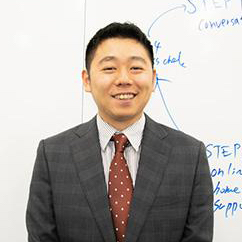
Director: Kotaro Muramoto
Principal of Nihongo Online School
In September 2019, he founded "Nihongo Online School". Since then, has been teaching Japanese online lessons, with a total of over 1,000 students.
He has designed an individualized curriculum based on student’s needs and study goal. And is conscious of making the classes speech-centered in order to improve students’ speaking skills.
The school asks students to submit homework assignments worth 2 hours per lesson to improve faster. By supporting students with these features, students are able to efficiently improve Japanese language skills.
“Why do you want to study in Japan?” remains the most common question in university interviews, scholarship applications, and visa processes for over 336,000 international students annually pursuing Japanese education. Whether facing admissions committees, scholarship panels, or embassy officials, your answer to this fundamental question significantly influences acceptance decisions. This comprehensive guide provides frameworks, strategies, and actual sample answers helping you craft compelling responses demonstrating genuine motivation and thoughtful planning.
Contents
- 1 How to Determine Your Best Answer
- 2 Framework for Structuring Your Answer
- 3 Sample Answers for Different Scenarios
- 4 What Makes Answers Strong vs. Weak
- 5 Common Mistakes to Avoid
- 6 Tips for Interview Delivery
- 7 Prepare for Success: Build Japanese Language Foundation
- 8 Take the First Step Toward Your Japan Study Journey

How to Determine Your Best Answer
Effective answers require honest self-reflection about your motivations, clear understanding of Japan’s unique educational advantages, and ability to articulate connections between Japanese study and your goals.
Assess Your Genuine Motivations
Academic Excellence and Research Opportunities – If advanced research capabilities, specific professors, or cutting-edge facilities attract you to Japan, your answer should emphasize these academic advantages. Japan ranks among the world’s top research nations, particularly in engineering, robotics, materials science, medicine, and environmental studies. Identify which specific Japanese innovations, research groups, or methodologies align with your interests.
For example, robotics students might cite Japan’s leadership in humanoid robots and artificial intelligence, referencing specific laboratories or projects. Environmental science students could highlight Japan’s advanced disaster preparedness research following the 2011 earthquake. Medical students might emphasize Japan’s aging society research providing unique insights into geriatric medicine unavailable elsewhere.
Cultural and Language Immersion – Many students genuinely seek Japanese language mastery and cultural understanding. If cultural motivation drives you, demonstrate depth beyond superficial interests. Rather than citing “interest in Japanese culture” generally, specify which cultural aspects intrigue you: traditional arts (茶道 sadō, 書道 shodō, 華道 kadō), contemporary popular culture, social systems, business practices, or philosophical traditions.
Strong cultural answers connect language/cultural learning to academic or career goals: “Studying Japanese literature in its original language at Kyoto University allows authentic engagement with texts impossible through translation, particularly examining how classical poetry influences contemporary writers.”
Career Opportunities and Global Perspective – Career-oriented students should articulate how Japanese degrees enable specific professional pathways. Japan’s economic significance in Asia-Pacific, its unique business culture, and its global corporations provide compelling career-related study motivations. However, effective answers move beyond “Japan has good job opportunities” to specific career connections.
Personal Connections and Experiences – Authentic personal experiences—family background, transformative visits, mentor relationships, or significant cultural encounters—create memorable, distinctive answers. These stories demonstrate genuine connection rather than opportunistic application.
Understand Japan’s Unique Educational Advantages
Your answer should identify what Japan specifically offers that alternatives cannot replicate.
| Japan’s Unique Advantage | How to Reference in Your Answer |
|---|---|
| World-Class Research Universities | Name specific professors, laboratories, or research projects |
| Advanced Technology and Innovation | Reference specific Japanese technological leadership in your field |
| Cultural and Language Immersion | Explain how living in Japan enables authentic cultural understanding |
| Asia-Pacific Economic Gateway | Discuss Japan’s economic role and business connections |
| Safety and Quality of Life | Mention study environment conducive to academic focus |
| Scholarship and Funding Opportunities | Reference specific programs (MEXT, JASSO) if applicable |
| Unique Cultural Perspectives | Describe specific Japanese approaches to your field of study |
Tailor Your Answer to the Context
Different contexts require adjusted emphasis while maintaining core authenticity:
University Admission Interviews – Emphasize academic fit, specific program features, professors you want to study with, and how this university specifically serves your goals. Demonstrate knowledge of curriculum, research facilities, and unique opportunities this institution provides.
Scholarship Interviews (MEXT, etc.) – Highlight how scholarship enables your goals, your commitment to contributing to your home country’s development, and how you’ll serve as a cultural bridge. Scholarship answers should emphasize mutual benefit—what you’ll gain and what you’ll contribute.
Visa Interviews – Focus on clear study plans, financial preparation, intent to return home (addressing visa officers’ concerns about immigration), and specific program details demonstrating legitimate educational purpose. If your academic timeline has interruptions, be prepared to explain any study gap in your visa and admission documents clearly.
Casual Conversations – Adapt formal interview answers to conversational style while maintaining authenticity. Personal stories and enthusiasm shine more naturally in informal contexts.
Framework for Structuring Your Answer
Effective answers follow clear structures ensuring you address key points while remaining concise and memorable.
The Three-Part Answer Structure
Part 1: Specific Academic/Professional Goals (20-30 seconds) Begin by stating your clear academic or career objective, immediately establishing serious purpose.
Example: “I aim to specialize in renewable energy systems, specifically solar panel efficiency improvement. Japan leads globally in photovoltaic technology research, particularly in perovskite solar cells, which aligns perfectly with my research interests.”
This opening immediately demonstrates: (1) clear focus, (2) knowledge of Japanese leadership, (3) specific technical understanding, and (4) logical connection between goal and Japan.
Part 2: Why Japan Specifically (30-40 seconds) Explain what makes Japan uniquely suited for your goals—what Japan offers that alternatives cannot.
Example: “Professor Tanaka’s laboratory at Tokyo Institute of Technology pioneered work in hybrid perovskite-silicon cells achieving record efficiency levels. Additionally, Japan’s government commitment to renewable energy following Fukushima created extensive research funding and practical implementation opportunities. The combination of cutting-edge research and real-world application possibilities makes Japan the optimal environment for my studies.”
This section demonstrates: (1) specific institutional knowledge, (2) awareness of Japanese context, (3) understanding of broader factors, and (4) logical reasoning for location choice.
Part 3: How This Serves Long-Term Goals (20-30 seconds) Conclude by connecting Japanese study to your future plans, demonstrating serious long-term vision.
Example: “After completing my doctorate, I plan to return to my home country to establish a renewable energy research center, collaborating with Japanese institutions to facilitate technology transfer and capacity building. This will directly serve my country’s renewable energy goals while maintaining strong Japan connections developed during my studies.”
This conclusion shows: (1) concrete career plan, (2) commitment to using education meaningfully, (3) cultural bridge role, and (4) realistic understanding of career pathway.
Alternative Structure: Story-Based Answer
Some contexts favor narrative approaches beginning with personal experiences leading to study decision:
Part 1: Opening Story (15-20 seconds) “During my undergraduate exchange semester at Osaka University, I participated in a disaster preparedness workshop where Japanese professors explained community-based early warning systems. I was struck by how effectively these systems integrate traditional knowledge with modern technology, something my home country desperately needs.”
Part 2: Academic Connection (30-40 seconds) “This experience led me to focus my graduate research on disaster risk reduction. Kyoto University’s Graduate School of Global Environmental Studies, particularly Professor Yamamoto’s laboratory, specializes in exactly this integration of traditional and scientific knowledge for climate adaptation. Japan’s extensive disaster experience—earthquakes, typhoons, tsunamis—provides unparalleled research context for developing effective warning systems.”
Part 3: Future Application (20-30 seconds) “My goal is applying these approaches in Southeast Asian coastal communities facing increasing climate threats. By studying in Japan, I’ll develop both technical expertise and cultural understanding necessary for effective technology transfer, ultimately serving vulnerable populations while strengthening Japan-Southeast Asia collaboration.”
Sample Answers for Different Scenarios
Understanding how effective answers vary by context helps you adapt appropriately while maintaining authenticity.
Sample 1: Undergraduate Admission Interview
Question: “Why do you want to study at Waseda University’s School of International Liberal Studies?”
Answer (approximately 60 seconds):
“I want to study international business focusing on U.S.-Japan technology partnerships, and Waseda’s SILS program provides ideal preparation. Growing up in Silicon Valley, I witnessed how Asia-Pacific markets drive global innovation, with Japan playing a crucial role bridging traditional business culture and cutting-edge technology.
SILS attracts me for three specific reasons. First, the bilingual curriculum allows Japanese proficiency development while studying in English. Second, courses like ‘Business in East Asia’ and ‘Japanese Management Systems’ directly address knowledge gaps I identified through Model UN conferences. Third, Tokyo location provides internship access impossible elsewhere.
My preparation includes three years of Japanese study achieving intermediate proficiency, and volunteering with Japanese exchange students. After graduation, I plan to join a management consulting firm advising on Asia-Pacific strategies, eventually specializing in U.S.-Japan technology partnerships.”
What Makes This Effective?
- Specific program features
- Personal experience connection
- Clear preparation evidence
- Realistic career pathway
Sample 2: MEXT Scholarship Interview
Question: “Why do you want to study in Japan rather than another country?”
Answer (approximately 60 seconds)
“Japan offers unique advantages for my doctoral research in community-based disaster preparedness. I’m developing early warning systems integrating traditional weather knowledge with modern forecasting for Philippine coastal communities facing increased typhoon frequency.
Japan’s extensive disaster experience—particularly the 2011 earthquake—created unparalleled research infrastructure. Kyoto University’s Professor Tanaka pioneered community-based disaster management approaches specifically relevant to vulnerable Asian communities, balancing technical sophistication with cultural sensitivity.
Additionally, Japan’s commitment to international disaster risk reduction through JICA aligns with my goal of serving vulnerable populations. This scholarship enables me to become a bridge facilitating knowledge transfer between Japanese disaster expertise and Philippine community resilience needs.”
What Makes This Effective?
- Clear research focus
- Specific Japanese advantages
- Named professor
- Bridge-building emphasis
Sample 3: Language School Interview
Question: “Why do you want to study Japanese in Japan?”
Answer (approximately 60 seconds):
“I’m applying to language school because I need functional Japanese proficiency for my goal of working at a Japanese technology company in product localization. While I’ve completed online Japanese courses achieving N4 level, I’ve plateaued without immersion environment and native speaker interaction.
Studying in Japan provides three critical advantages I cannot achieve at home. First, daily life immersion forces practical language use beyond classroom vocabulary. Second, interaction with Japanese people develops authentic communication skills and cultural understanding essential for workplace success. Third, attending language school in Tokyo allows me to network with companies and potentially secure internships demonstrating my capabilities.
My plan involves completing 12 months of intensive study reaching N2 proficiency, then applying to Japanese technology companies’ international departments. Language school represents essential preparation I cannot replicate in my home country, making it a strategic career investment rather than simply language learning.”
What Makes This Effective?
- Clear practical goal
- Realistic understanding of language learning requirements
- Specific benefits of studying in Japan vs. home country
- Concrete timeline and career connection
Sample 4: Visa Interview (Statement of Purpose)
Writing your formal purpose of study for a Japan application requires balancing specificity, professionalism, and genuine intent, as the sample below illustrates.
Question: “Why do you want to study in Japan?”
Answer (written format, 100-150 words)
“I am applying for a student visa to complete my Master’s degree in Environmental Engineering at Tokyo Institute of Technology, where I will research solar panel efficiency under Professor Nakamura’s supervision. Japan’s leadership in renewable energy technology, particularly perovskite solar cells, provides unparalleled research opportunities essential for my career goal of establishing a renewable energy research center in my home country.
My undergraduate degree in Electrical Engineering and internship experience with solar installations provide necessary foundations for graduate research. I have secured funding through personal savings and family support, with detailed financial documentation attached. Upon completing my degree, I will return home to apply expertise gained in Japan toward my country’s renewable energy development goals, potentially facilitating future Japan-home country research collaboration.”
What Makes This Effective?
- Clear academic purpose
- Specific program and professor
- Career goal connecting to home country (addresses return intent)
- Financial preparation mentioned
- Appropriate formal tone
What Makes Answers Strong vs. Weak
Understanding distinctions between effective and ineffective responses helps you avoid common pitfalls.
Strong Answer Characteristics
Specificity and Detail – Strong answers name specific professors, research projects, courses, or opportunities rather than generic statements about “good education” or “advanced technology.” Specificity demonstrates genuine research and serious interest.
Example: “Professor Yamamoto’s work on hybrid renewable systems integrating solar and wind generation aligns perfectly with my research interests” versus “The university has good professors and research facilities.”
Personal Connection – Effective answers weave personal experiences, challenges, or insights connecting to study goals. These authentic stories distinguish your answer from hundreds of similar applications.
Logical Flow – Strong answers follow clear progression: goal → why Japan specifically → how this serves long-term objectives. This structure helps interviewers follow your reasoning and remember key points.
Cultural Understanding – Demonstrating respect for and understanding of Japanese culture (without stereotypes) shows preparation and cultural sensitivity essential for successful adaptation.
Appropriate Length – Excellent answers typically run 60-120 seconds for interviews, providing sufficient detail without rambling. Practice timing ensures you don’t rush or drone on excessively.
Weak Answer Characteristics
Generic Statements – “I want to study in Japan because it has good universities and interesting culture” could apply to anyone or anywhere. These generic answers immediately signal lack of genuine interest or preparation.
Cultural Stereotypes – Answers centered on anime, manga, or tourist attractions (unless directly relevant to your field) reduce Japan to stereotypes rather than demonstrating serious academic interest.
Vague Goals – “After graduating, I will get a good job and help my country” provides no specific pathway or concrete plans, making interviewers question your seriousness.
Copying Others – Interviewers recognize rehearsed, unauthentic answers borrowed from online examples. While learning from samples helps, your answer must reflect your genuine story and goals.
No Japan-Specific Reasoning – Answers that work equally well for any country fail to explain why Japan specifically serves your goals. Always address “Why Japan and not alternatives?”
Common Mistakes to Avoid
Mistake 1: Overemphasizing Cost or Scholarships
Weak: “I want to study in Japan because tuition is cheaper than America and I can get scholarships.”
Why It Fails: Makes you appear opportunistic rather than genuinely interested in Japanese education. While cost considerations are legitimate, leading with financial motivations suggests lack of authentic academic interest.
Fix: If cost factors into your decision, mention it after establishing academic motivations: “Japan’s combination of academic excellence and affordability makes it accessible for students like me from developing countries.”
Mistake 2: Insufficient Research About Institution
Weak: “I’m applying to your university because it’s one of the best in Japan.”
Why It Fails: Could apply to any top university. Shows you haven’t actually researched this specific institution.
Fix: Reference specific faculty, courses, research centers, or unique opportunities: “Your university’s Renewable Energy Research Center, particularly its focus on offshore wind technology, directly aligns with my research interests.”
Mistake 3: No Clear Post-Graduation Plan
Weak: “After graduating, I’ll look for good opportunities and see what happens.”
Why It Fails: Suggests lack of direction or serious planning.
Fix: Provide concrete steps even if plans may change: “I plan to join an international development organization working on sustainable energy projects, applying expertise gained during my studies to serve communities lacking electricity access.”
Mistake 4: Comparing Japan Negatively to Other Countries
Weak: “I prefer Japan over America because American education is too expensive and Americans are unfriendly.”
Why It Fails: Criticizing other countries appears negative and disrespectful, creating poor impression.
Fix: Focus on Japan’s positive attributes without denigrating alternatives: “Japan’s unique approach to disaster preparedness, combining community engagement with advanced technology, provides research opportunities unavailable elsewhere.”
Tips for Interview Delivery
Practice and Preparation – Time your response to run 60-120 seconds. Practice aloud multiple times. Prepare 30-second, 60-second, and 90-second versions for different contexts. Anticipate follow-up questions about your research, goals, or preparation.
Body Language and Tone – Maintain eye contact demonstrating confidence and sincerity. Show genuine enthusiasm through voice and expression. Speak clearly and confidently. Practice until delivery feels natural and conversational.
Cultural Considerations for Japanese Contexts – Bow when entering and leaving interview rooms. Use polite Japanese phrases like “よろしくお願いします” (yoroshiku onegai shimasu) appropriately. Be humble while confident—Japanese culture values humility, so present qualifications confidently without excessive self-promotion.
Prepare for Success: Build Japanese Language Foundation
Whether applying to English-taught or Japanese-taught programs, basic Japanese proficiency dramatically enhances your application by demonstrating commitment, facilitating cultural adaptation, and enabling richer experiences in Japan. Many admissions committees view language preparation as evidence of serious intention and cultural respect.
Strategic Japanese Language Preparation
Nihongo Online School offers specialized programs designed for students preparing to study in Japan, providing foundational proficiency demonstrating serious commitment while enabling successful cultural integration.
Key features supporting your study in Japan success
Interview Preparation Support – Our curriculum includes common interview phrases and cultural context for Japanese educational interviews, helping you confidently incorporate appropriate Japanese greetings and expressions demonstrating preparation and respect.
150-Hour Foundation Program – Our kick start program combines 50 hours of private 1-on-1 online lessons with qualified instructors plus 100 hours of structured study materials, providing essential foundation (equivalent to JLPT N5 level) enabling daily life navigation and demonstrating commitment in applications.
Flexible Scheduling – All lessons conduct via Zoom at convenient times, allowing you to build Japanese proficiency while managing current commitments and preparing application materials. Many students complete preparation over 3-6 months before applications or departure.
Certificate of Completion – Upon completing the program, you receive official certification documenting your 150 hours of Japanese study, strengthening applications by demonstrating concrete preparation beyond simply stating “interest in Japanese language.”
Practical Communication Focus – Our curriculum emphasizes practical Japanese essential for interviews, daily life, and cultural integration—giving you actual functional ability rather than just textbook knowledge.
Our program has helped over 1,000 students from countries worldwide build Japanese foundations making their applications stronger and their Japanese experiences more successful and fulfilling.
Take the First Step Toward Your Japan Study Journey
Nihongo Online School offers a free trial lesson where you can experience our teaching approach, assess your current Japanese level, discuss your study plans and application timeline with a qualified instructor, and receive personalized recommendations for strengthening your application through language preparation.
Visit our school to schedule your free Japanese classes online and begin building the Japanese language skills that will strengthen your “Why Japan?” answer, enhance your application competitiveness, and transform your future Japanese experience from challenging to thriving.