
 English
  Español

Tips for More Effective Studying
Nihongo Online School > Tips for More Effective Studying > Can You Really Measure Your Japanese Speaking Ability?
Can You Really Measure Your Japanese Speaking Ability?

2026/01/21

Director: Kotaro Muramoto
Principal of Nihongo Online School
In September 2019, he founded "Nihongo Online School". Since then, has been teaching Japanese online lessons, with a total of over 1,000 students.
He has designed an individualized curriculum based on student’s needs and study goal. And is conscious of making the classes speech-centered in order to improve students’ speaking skills.
The school asks students to submit homework assignments worth 2 hours per lesson to improve faster. By supporting students with these features, students are able to efficiently improve Japanese language skills.
Contents
- 1 Can You Really Measure Your Japanese Speaking Ability?
- 1.1 Intro: Why Japanese Proficiency Tests Don’t Tell the Full Story
- 1.2 What Is a Speaking Level Test?
- 1.3 How the Test Works (audio questions → recorded answers)
- 1.4 What It Measures (vocabulary, grammar, fluency, etc.)
- 1.5 Why It Matters for Learners
- 1.6 What You Can Do With Your Score
- 1.7 Next Steps: Personalized Study Plans
- 2 Real Learner Stories: How Speaking Level Checks Guide Real Progress
Can You Really Measure Your Japanese Speaking Ability?

Intro: Why Japanese Proficiency Tests Don’t Tell the Full Story
Many Japanese learners rely on proficiency tests like the JLPT to measure their progress. While these tests are useful, they mainly focus on reading, listening, and grammar knowledge.
However, real-life Japanese conversation requires more than that.
You may understand grammar but hesitate to speak.
You may know vocabulary but struggle to respond quickly.
You may pass a test — yet still feel uncomfortable in real conversations.
This is why many learners ask:
“How good is my Japanese actually when it comes to speaking?”
What Is a Speaking Level Test?
Our Speaking Level Test is a practical assessment tool developed inside our school to support effective learning.
Important to clarify:
- This is not an official certification
- It is not a replacement for JLPT
- It is a learning-focused speaking assessment
We created this test based on data from 1,000+ real learners, to understand what learners can actually do in Japanese conversation.
Its purpose is simple:
👉 to identify your current speaking ability and guide structured lessons.
How the Test Works (audio questions → recorded answers)
The process is simple and learner-friendly:
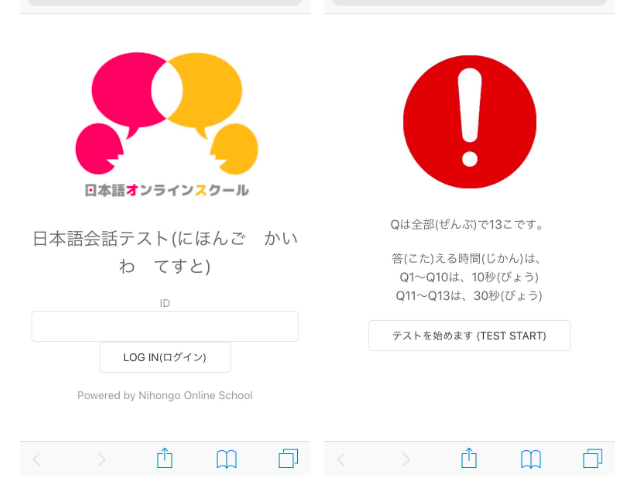
- You listen to short audio questions
- You record your spoken answers
- Our instructors evaluate your responses
- You receive a speaking level result with feedback
There is no memorization, no trick questions, and no written test. We focus on how you respond in real time — just like real conversation.
What It Measures (vocabulary, grammar, fluency, etc.)
The test evaluates multiple aspects of spoken Japanese, including:
- Vocabulary — Can you choose appropriate words?
- Grammar — Are your sentences understandable and accurate?
- Fluency — Can you respond smoothly without long pauses?
- Comprehension — Do you understand the question naturally?
- Pronunciation & clarity — Is your speech easy to follow?
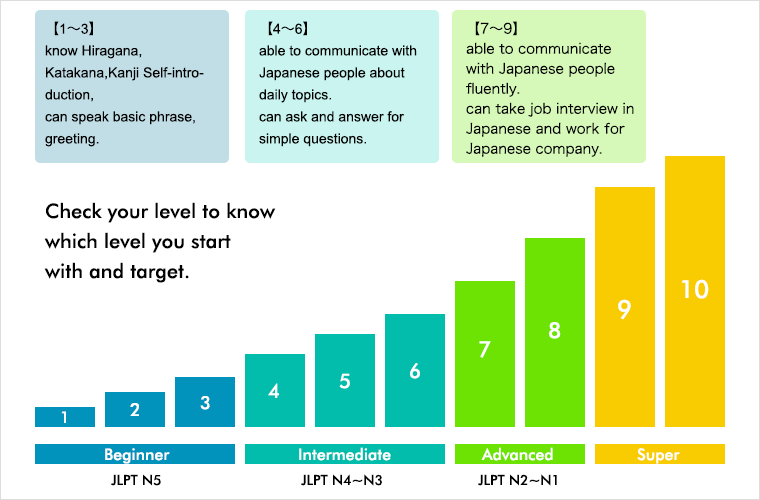
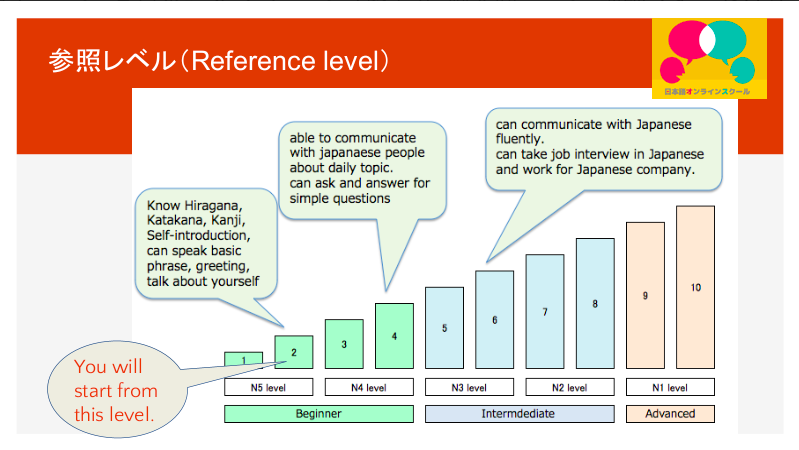
Rather than giving a single “score,” we place you on our Conversation Level scale, which we use consistently across lessons.
Why It Matters for Learners
Many learners feel stuck because they don’t know what they should focus on next, why progress feels slow, or whether they are improving at all.
A speaking level check helps you:
- See your strengths and weaknesses clearly
- Avoid over-studying things you don’t need yet
- Follow a structured learning path, not random practice
- Stay motivated by tracking real progress over time
This is especially helpful for learners who want to speak confidently, not only pass exams.
What You Can Do With Your Score
Your speaking level is not a label. It’s a starting point.
Based on your level, you can:
- Set realistic short-term goals
- Understand how many lessons are typically needed to move up
- Choose lesson content that matches your actual ability
- Track progress as your conversation level increases
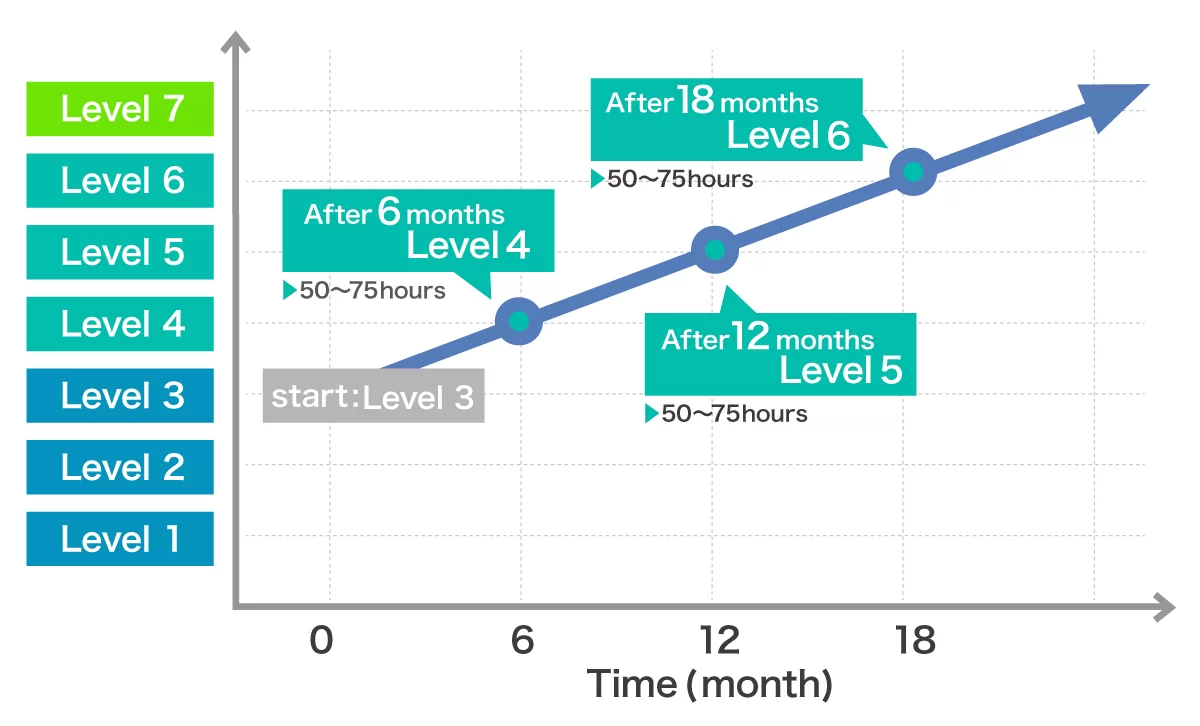
At our school, one conversation level increase typically requires about 50 structured lessons, with consistent practice.
Next Steps: Personalized Study Plans
We use your speaking level to design a personalized study plan, including:
- Lesson frequency recommendations
- Focus areas (fluency, grammar, vocabulary, etc.)
- Homework and self-study guidance
- Clear expectations for 3, 6, and 12 months
Real Learner Stories: How Speaking Level Checks Guide Real Progress
Before starting lessons, many learners ask the same question:
“Does a speaking level test really help?”
Here are two real learner cases that show how a speaking level check is used inside our school to create structured study plans — and how learners actually progress over time.
Case Study 1: Bon — 50 Lessons in 6 Months with a Clear Study Plan

Starting Point: Speaking Level Check
When Bon joined our school, he first took our Speaking Level Test during a trial lesson.
The assessment suggested that he could understand basic questions, but needed time to respond. Sentence structure was inconsistent, and vocabulary was limited to familiar topics.
Based on this, he received a clear and realistic study plan designed to improve speaking step by step.
The Study Plan
- Lesson frequency: 2 lessons per week
- Total lessons: 50 lessons with Homework
- Duration: 6 months
- Homework: 1–2 hours per lesson
Each lesson focused on practical speaking patterns, repeated speaking practice, instructor feedback, and a gradual increase in response speed.
Importantly, the goal was not perfection, but steady progress.
Results After 6 Months
After completing 50 lessons, Bon could respond faster in conversation. Sentence structure became more stable, and he could handle everyday topics with more confidence. He clearly felt the difference between “knowing Japanese” and “speaking Japanese.”
Read the full study plan story (Bon)
Case Study 2: Ben — Understanding Strengths and Weaknesses Early

Starting Point: Trial Lesson & Level Assessment
Ben also started with a trial lesson and a speaking level check.
The assessment suggested that he understood grammar rules, but hesitated when speaking and had difficulty expanding answers beyond short phrases.
Personalized Lesson Direction
Instead of following a generic curriculum, Ben’s lessons focused on expanding short answers into natural sentences, improving fluency (not just adding more grammar), and practicing common conversational patterns repeatedly.
This helped him avoid unnecessary textbook study and focus on speaking practice that matched his real needs.
What Changed Over Time
With consistent lessons, Ben became more comfortable speaking without translating. His answers became longer and more natural, and he gained confidence in everyday conversations.
Read Ben’s full learning summary
What These Cases Show
These stories are not “miracles.” They show how we use speaking level checks to set realistic expectations, design structured lesson plans, focus on what matters most for speaking, and track progress over time.
That’s why our speaking level test is not an official exam — it’s a practical learning tool designed to help learners move forward.
What to do next
If you have finished learning hiragana and katakana and want to move toward real conversation, the most important step is understanding your current speaking level.
A level check can help you see where you are now, what you should focus on next, and how to build a learning plan that fits your goals.
Our free trial lesson includes a conversation level check and personalized guidance for your next step in Japanese learning.