
 English
  Español

Tips for More Effective Studying
Nihongo Online School > Tips for More Effective Studying > How to Say “Should” in Japanese | 〜ほうがいいです (hou ga ii desu) | JLPT N4 Grammar
How to Say “Should” in Japanese | 〜ほうがいいです (hou ga ii desu) | JLPT N4 Grammar
2025/12/06

Director: Kotaro Muramoto
Principal of Nihongo Online School
In September 2019, he founded "Nihongo Online School". Since then, has been teaching Japanese online lessons, with a total of over 1,000 students.
He has designed an individualized curriculum based on student’s needs and study goal. And is conscious of making the classes speech-centered in order to improve students’ speaking skills.
The school asks students to submit homework assignments worth 2 hours per lesson to improve faster. By supporting students with these features, students are able to efficiently improve Japanese language skills.
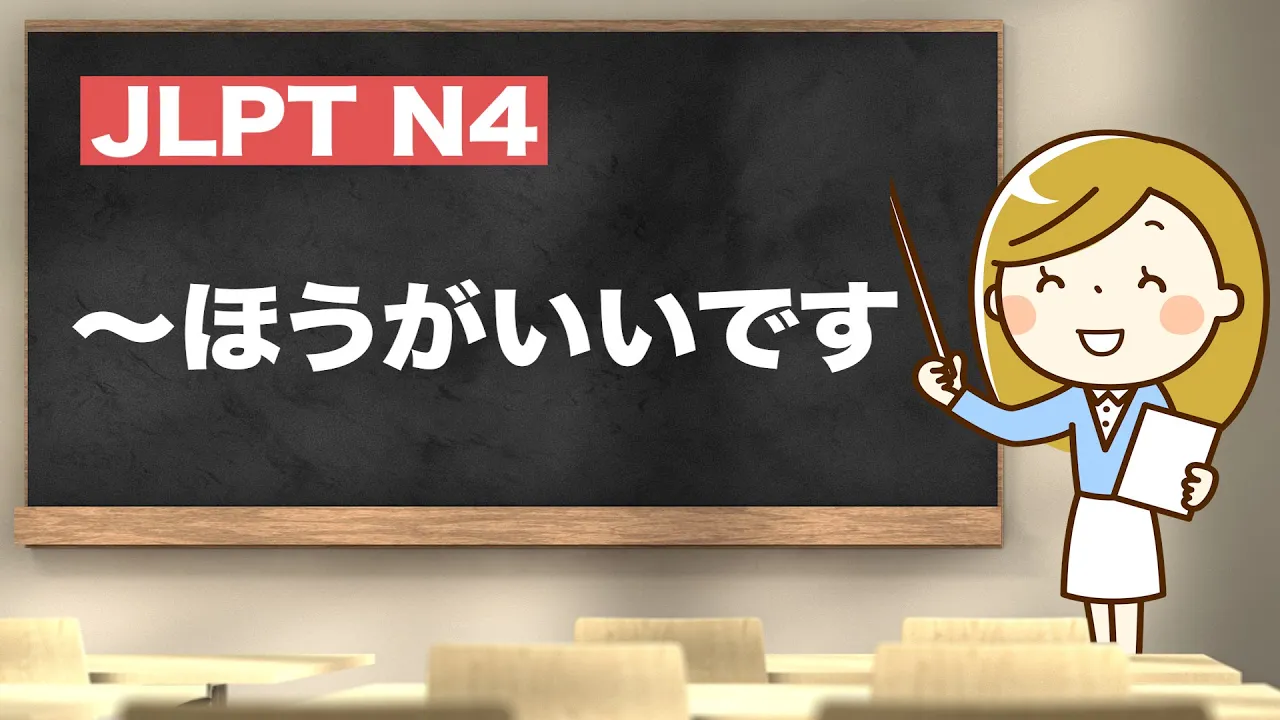
The expression 〜ほうがいい is an essential N4 grammar pattern used when offering advice or making a recommendation.
It allows you to tell someone what would be better for them to do—or not do—in a natural and polite way. Because it sounds considerate rather than commanding, it appears frequently in everyday conversation.
Contents

When and How It’s Used
Learners use 〜ほうがいい when they want to suggest a better choice or action based on the situation. It is commonly translated as “you should …” or “you shouldn’t ….”
There are two important forms:
- 〜たほうがいい: recommends doing something
(“It’s better if you do … / You should …”) - 〜ないほうがいい: recommends not doing something
(“You shouldn’t … / It’s better not to …”)
This pattern is softer than directly giving orders. It signals concern for the listener’s well-being, which is important in Japanese communication. It is used in polite or casual speech and often appears when talking about health, study habits, life decisions, or daily routines.
When giving advice, the speaker usually bases it on what they believe is good for the listener. Therefore, 〜ほうがいい fits situations where you want to sound supportive, helpful, and respectful.
You shouldn’t use “〜ほうがいいです” when speaking to someone of higher status, because it can sound rude.
See How it’s used in conversation
This video will help you understand how is used ~ほうがいい in everyday Japanese conversations. Watch and repeat to improve your listening and speaking skills!
Sentence Pattern
Verb (plain past) + ほうがいい
→ You should …
Verb (plain negative) + ほうがいい
→ You shouldn’t …
The use of the plain past form for the positive recommendation may seem unusual, but it is a fixed grammar pattern in Japanese. The negative form uses 〜ない without changing tense.
Examples
1.もっと水を飲んだほうがいいですよ。 Motto mizu o nonda hō ga ii desu yo.
You should drink more water.
→ Advice for health or well-being.
2.うちで休んだほうがいいです。 Uchi de yasunda hō ga ii desu.
You should rest at home.
→Advice to help recover from fatigue or illness.
3.ずっとゲームをしないほうがいいですよ。Zutto gēmu o shinai hō ga ii desu yo.
You shouldn’t play game for a long time.
→Advise against playing games for long periods.
4.夜遅くまで起きていないほうがいいですよ。
Yoru osoku made okite inai hō ga ii desu yo.
You shouldn’t stay up too late.
→ Advice concerning lifestyle or habits.
In Summary
The pattern 〜ほうがいい is a polite and effective tool for giving advice in Japanese. It expresses what is better for someone to do while maintaining softness and respect—qualities that are central to natural Japanese communication. Using this form helps you participate in supportive conversations, show care for others, and sound more like a native speaker.
Enhance your JLPT N4 with Nihongo Online School
Mastering the core grammar of JLPT N4 is just one step toward passing the exam. To build a solid foundation, you’ll also need to learn JLPT N4 Grammar List , and also Play List on Youtube for JLPT N4 helps you understand important grammar easily.
At Nihongo Online School, our programs combine vocabulary, grammar, and practical usage in a clear, structured way, designed to help you succeed on the JLPT N4. With our learning system giving you the confidence and preparation you need for the exam.Discover your favorite courses at Nihongo Online School.