
 English
  Español

Tips for More Effective Studying
Nihongo Online School > Tips for More Effective Studying > How to Say “Not yet …” in Japanese | まだ、〜ていません (mada …te imasen) | JLPT N4 Grammar
How to Say “Not yet …” in Japanese | まだ、〜ていません (mada …te imasen) | JLPT N4 Grammar
2025/12/06

Director: Kotaro Muramoto
Principal of Nihongo Online School
In September 2019, he founded "Nihongo Online School". Since then, has been teaching Japanese online lessons, with a total of over 1,000 students.
He has designed an individualized curriculum based on student’s needs and study goal. And is conscious of making the classes speech-centered in order to improve students’ speaking skills.
The school asks students to submit homework assignments worth 2 hours per lesson to improve faster. By supporting students with these features, students are able to efficiently improve Japanese language skills.
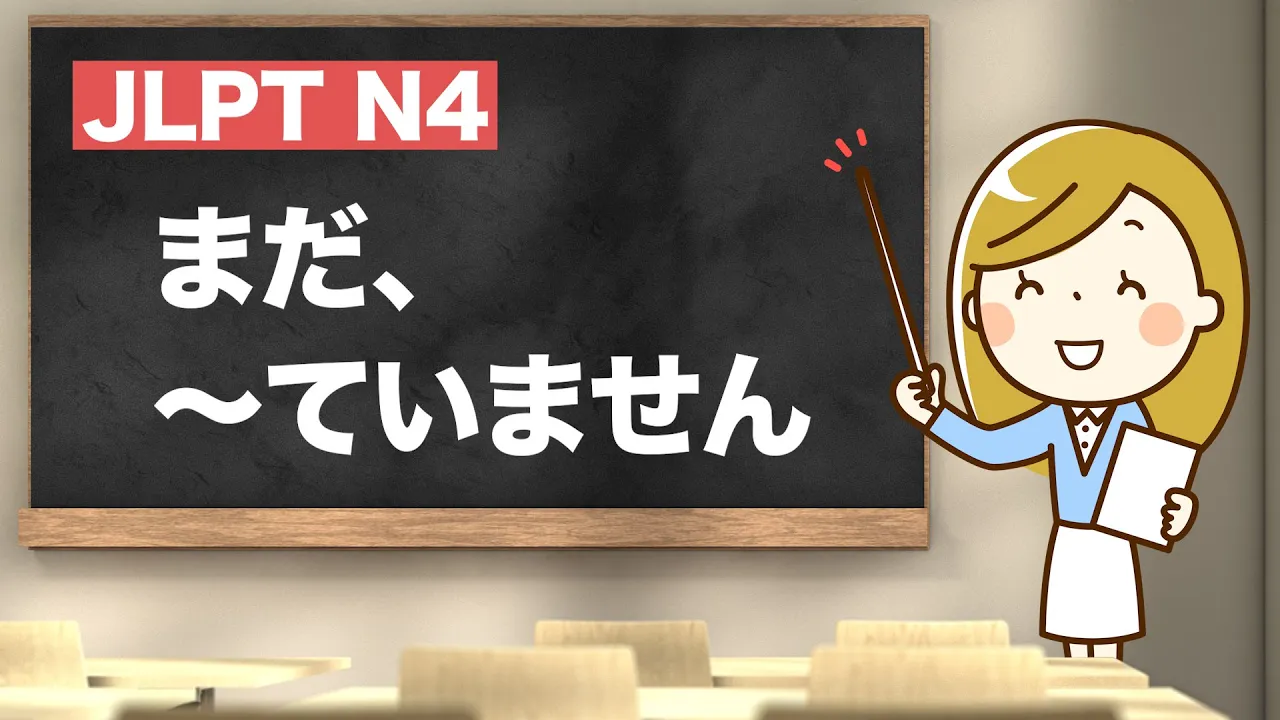
The expression まだ〜ていません is an important N4 grammar pattern used to say that an action has not been completed yet.
It is frequently used in daily conversation to talk about tasks, events, or changes that are expected to happen but have not occurred at the time of speaking. Because it clearly marks an unfinished state, it is especially useful when reporting progress or explaining the current situation.
Contents

When and How It’s Used
Japanese learners use まだ〜ていません when they want to say “not yet” in a polite and natural way. The adverb まだ means “still / yet,” and 〜ていません is the negative form of the continuous or resultative state expressed by 〜ている.
Together, まだ〜ていません means:
- The action has not happened yet,
- but the speaker expects it will happen later or it is supposed to happen.
This form is commonly used to talk about:
- Work or study tasks that are still in progress
- Plans that have not been completed
- Things you have not experienced or tried
- Situations where the expected change has not occurred
Because the nuance includes “but I will eventually,” it sounds softer than simply saying “していません,” which can sound like you do not intend to do it.
See How it’s used in conversation
This video will help you understand how is used まだ~ていません in everyday Japanese conversations. Watch and repeat to improve your listening and speaking skills!
Sentence Pattern
まだ + Verb(〜ている)negative form → 〜ていません
Examples of the verb transformation:
- たべる → たべています → たべていません
- おわる → おわっています → おわっていません
Simply add まだ at the beginning to express “have not yet.”
Examples
- まだ宿題をしていません。 Mada shukudai o shite imasen.
I haven’t done my homework yet. - その映画はまだ見ていません。 Sono eiga wa mada mite imasen.
I haven’t watched that movie yet. - レポートはまだ書いていません。 Repōto wa mada kaite imasen.
I haven’t written the report yet. - 新しい上司にまだ会っていません。 Atarashii jōshi ni mada atte imasen.
I haven’t met my new boss yet.
In Summary
The pattern まだ〜ていません allows you to express that an action remains unfinished, while also implying that it is expected to be completed in the future.
This soft nuance makes your Japanese sound more natural and considerate. Using this pattern helps you talk clearly about progress, plans, and current situations—skills that are essential for effective communication at the N4 level.
Enhance your JLPT N4 with Nihongo Online School
Mastering the core grammar of JLPT N4 is just one step toward passing the exam. To build a solid foundation, you’ll also need to learn JLPT N4 Grammar List , and also Play List on Youtube for JLPT N4 helps you understand important grammar easily.
At Nihongo Online School, our programs combine vocabulary, grammar, and practical usage in a clear, structured way, designed to help you succeed on the JLPT N4. With our learning system giving you the confidence and preparation you need for the exam.Discover your favorite courses at Nihongo Online School.