
 English
  Español

Tips for More Effective Studying
Nihongo Online School > Tips for More Effective Studying > Feel Like a Local: How Following Content Creators Boosted My Language Skills
Feel Like a Local: How Following Content Creators Boosted My Language Skills

2025/09/29
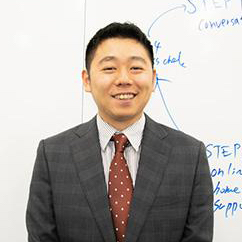
Director: Kotaro Muramoto
Principal of Nihongo Online School
In September 2019, he founded "Nihongo Online School". Since then, has been teaching Japanese online lessons, with a total of over 1,000 students.
He has designed an individualized curriculum based on student’s needs and study goal. And is conscious of making the classes speech-centered in order to improve students’ speaking skills.
The school asks students to submit homework assignments worth 2 hours per lesson to improve faster. By supporting students with these features, students are able to efficiently improve Japanese language skills.
Contents

Finding My Connection Through Content
When I first began studying Japanese, I remember feeling like there was an invisible wall between me and the language. I could memorize grammar rules, pass vocabulary quizzes, and even recognize kanji, but something always felt missing. It was as if I had learned the skeleton of the language, but not the heartbeat. That changed the day I stumbled across Japanese content creators who shared their everyday thoughts, stories, and passions.
At first, I was only a quiet observer. I would sit for hours just listening, trying to catch familiar words and making mental notes when something sounded new. Slowly, that invisible wall started to fade. For the first time, I wasn’t just studying Japanese — I was experiencing it, as if I had been invited into someone’s living room to hear their genuine, unscripted voice.
Why Content Matters More Than Textbooks
Textbooks gave me structure, but they never gave me soul. I could read sample dialogues about asking for directions or ordering food, but they always felt staged. When I listened to content creators, I heard how people actually played with words, joked around, and expressed emotions in ways that no textbook could capture.
I began noticing that these natural conversations carried small treasures: tiny particles that shifted meaning, expressions of hesitation, or even cultural nuances hidden in word choice. Those details weren’t “mistakes” or “informalities”—they were the living proof of how Japanese really works in everyday life. It was through these moments that I finally began to bridge the gap between “textbook Japanese” and the Japanese that beats in the streets of Tokyo or Osaka.
Listening Becomes Natural
In the beginning, listening felt overwhelming. The sentences were too fast, the words blurred together, and I often found myself replaying the same five seconds again and again. But something remarkable happened the more I exposed myself: my ears started to tune in.
At first, it was just catching one familiar word. Then, entire phrases began to stand out. Eventually, I could understand the overall flow of what was being said, even when I didn’t know every single word. The rhythm of Japanese stopped feeling foreign—it became music I could hum along to.
Reading in Context
Reading also took on a new life when I followed these creators. Captions, comments, or small snippets of text gave me a steady diet of short, digestible Japanese. Unlike the long, stiff passages in textbooks, these were alive with emotion, humor, and slang.
Sometimes I’d struggle to decipher a casual phrase or a playful pun, but that struggle always came with reward. I’d remember it the next time I saw it, and little by little, my vocabulary grew in ways I never expected. Reading no longer felt like homework; it felt like being let in on a secret between friends.
Engaging, Not Just Consuming
One of the turning points in my learning journey came when I stopped being a silent observer. For weeks, I had been passively listening and reading, but the day I decided to leave my first comment in Japanese, everything changed. My hands shook, my mind replayed every grammar rule, and I must have re-read my sentence twenty times before hitting send.
But then it happened: someone replied. That tiny moment of interaction was like a spark of electricity—I wasn’t just studying anymore, I was communicating. And the more I engaged, the more natural it felt. Even making mistakes turned into valuable lessons, because I learned how real people would phrase things instead.
Choosing the Right Creators for You
What made the experience even more meaningful was that I chose creators who talked about things I genuinely loved. For some, it might be travel or cooking, for others gaming or fashion. For me, it was a mix of everyday life and hobbies I was already passionate about.
This made all the difference. Because I cared about the topics, I wanted to understand every single word. I’d pause, rewind, look things up, and even mimic their phrasing out loud. My motivation wasn’t driven by study goals or exam scores—it was driven by curiosity and joy. That joy kept me coming back, day after day.
Building Confidence and Feeling Like a Local
With each passing week, I noticed a shift in myself. I was no longer the hesitant learner who feared making mistakes. Instead, I became someone who could laugh along with jokes, contribute my own small comments, and feel included in conversations that once felt out of reach.
These interactions gave me more than just vocabulary—they gave me confidence. I started carrying that confidence into my daily life in Japan, whether it was chatting with classmates, ordering at a restaurant, or striking up a conversation with a stranger. Each time I succeeded, no matter how small, I felt like I was shedding the label of “foreigner” and stepping closer to feeling like a local.
And perhaps the most beautiful part is this: I realized that language learning isn’t only about mastery. It’s about connection. The voices I listened to, the words I read, and the conversations I joined made me part of something larger than myself. That feeling of belonging—the sense that I wasn’t just learning Japanese, but living it—is something no textbook could ever teach me.