
 English
  Español

Tips for More Effective Studying
Nihongo Online School > Tips for More Effective Studying > Best Japanese & JLPT N5 Podcasts for Beginners (2025)
Best Japanese & JLPT N5 Podcasts for Beginners (2025)

2025/08/14

Director: Kotaro Muramoto
Principal of Nihongo Online School
In September 2019, he founded "Nihongo Online School". Since then, has been teaching Japanese online lessons, with a total of over 1,000 students.
He has designed an individualized curriculum based on student’s needs and study goal. And is conscious of making the classes speech-centered in order to improve students’ speaking skills.
The school asks students to submit homework assignments worth 2 hours per lesson to improve faster. By supporting students with these features, students are able to efficiently improve Japanese language skills.
Most people studying for the JLPT N5 struggle with the listening section, even after completing textbook exercises. The problem is that Genki dialogues don’t sound like real Japanese conversations, they’re too slow and predictable compared to what you’ll hear on the actual exam.
This guide covers the best Japanese podcasts for beginners that work well for exam preparation. We’ll also explain why JLPT N5 podcast practice is essential for developing listening skills and share tips to maximize your study time with audio content.
Contents

JLPT N5 Listening Section: Key Points to Remember
The JLPT N5 listening section is a 30-minute examination component that evaluates basic Japanese comprehension skills. The section comprises approximately 20 questions worth 60 points total, representing one-third of the overall JLPT N5 score. Candidates must achieve a minimum of 19 points in this section to meet passing requirements.
The examination tests four primary listening abilities:
- Finding specific details in conversations,
- Grasping the main idea of dialogues
- Understanding conversations in context
- Choosing appropriate responses to questions.
Questions involve everyday scenarios using fundamental vocabulary and grammar structures appropriate for beginners.
Why Podcasts Are a Good Idea for Japanese Listening Practice
Many students complete textbook listening exercises like Genki but find themselves struggling with the JLPT N5 listening section. Standard study materials offer controlled dialogues that work well for learning grammar, but they don’t match the natural speech patterns you’ll encounter on the actual exam.
Japanese is among the fastest-spoken languages in the world, which makes this transition particularly challenging. JLPT N5 podcasts help close this gap through thoughtful design choices: slower pacing, strategic pauses between words or particles, and staying in Japanese while using vocabulary you can actually understand.
Many also include transcripts and vocabulary lists to support your Japanese listening practice. This approach gives you authentic speech that’s still manageable, preparing you for the different voices and conversation styles that appear on test day.
Top Japanese Podcasts for Beginners Preparing for JLPT N5
Podcast Nihongo con Teppei
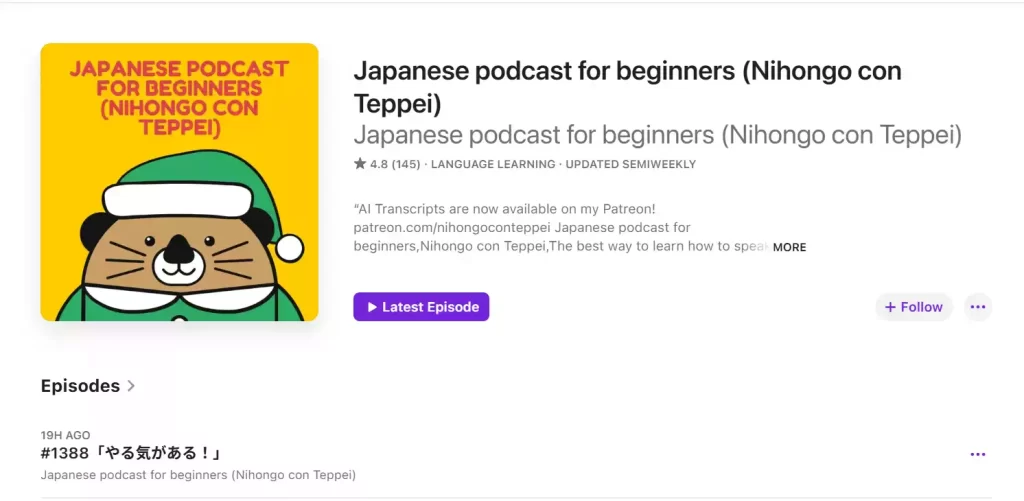
Hosted by Teppei, a Japanese language instructor, this Japanese podcast delivers short monologue-style episodes lasting approximately 4 minutes each. Teppei brings a cross-cultural perspective to his teaching, drawing from his experience as a Japanese native married to a Spanish speaker.
The show features unscripted conversations covering diverse everyday topics, from technology and travel to cultural observations. With over 1,300 episodes in the catalog, listeners have an extensive content variety. Episodes maintain full Japanese immersion while incorporating vocabulary repetition and clear articulation. The short episode format supports regular practice habits essential for developing the listening stamina needed during the JLPT N5 listening section.
Nihongo Con Teppei on Apple Podcasts
Japanese with Shun
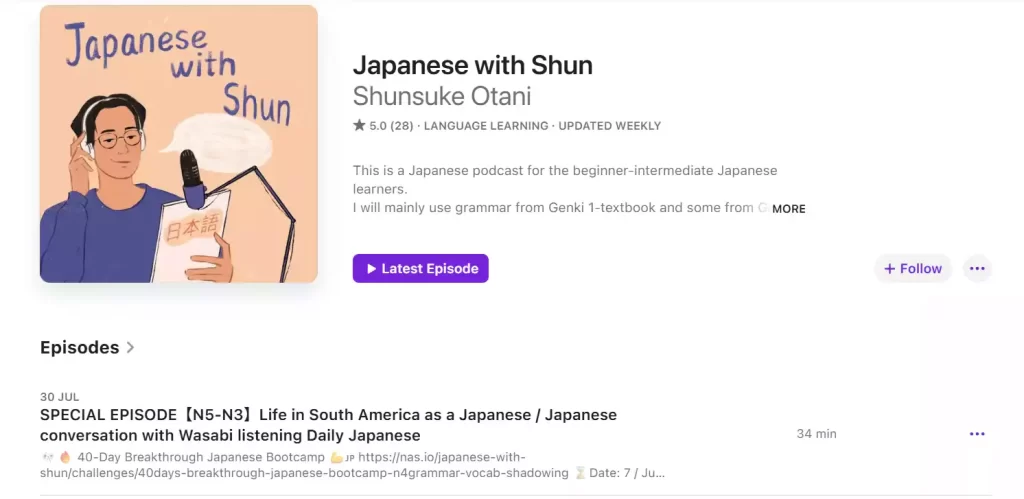
Created by Shunsuke Otani, a Japanese instructor, this Japanese podcast for beginners proposes a methodical approach to vocabulary and grammar selection. Episodes run 5-10 minutes and feature monologue-style content covering topics ranging from everyday experiences like secondhand shopping to deeper subjects such as life philosophy.
What distinguishes this podcast is Shun’s deliberate constraint to Genki 1 and 2 textbook grammar structures, making it particularly accessible for students following these popular beginner curricula. Shun employs a notably slow and clear speaking style, incorporating pauses after particles to give listeners processing time. Each episode concludes with vocabulary summaries that reinforce key terms, and his calm delivery style creates a comfortable learning environment.
Japanese with Shun on Apple Podcasts
Japanese with Noriko
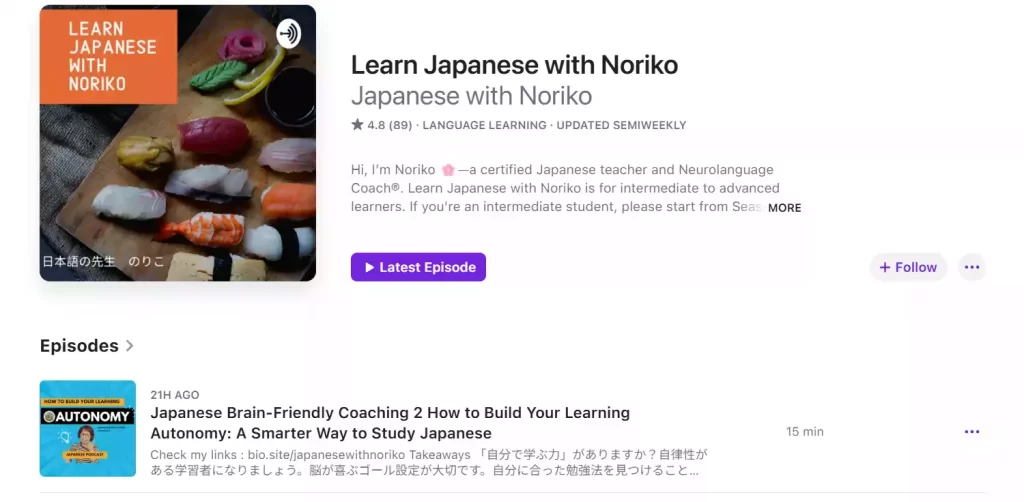
Hosted by Noriko, a certified Neurolanguage Coach who lives in Belfast, this Japanese podcast for beginners offers a bridge between beginner and intermediate content. Episodes typically last 5-10 minutes and cover diverse topics including travel experiences, food culture, language learning insights, and personal reflections. Noriko brings an international perspective to her content, drawing from her multicultural background and language teaching expertise.
Noriko maintains clear articulation and structured presentation while using more sophisticated vocabulary and grammar than typical JLPT podcasts. Free transcripts are available, allowing learners to follow along with written support. Her engaging delivery style has built a dedicated learning community, making this an effective resource for students preparing to handle more natural Japanese listening situations as required in JLPT N5 examination conditions.
Japanese with Noriko on Apple Podcasts
Nihongo Picnic Podcast
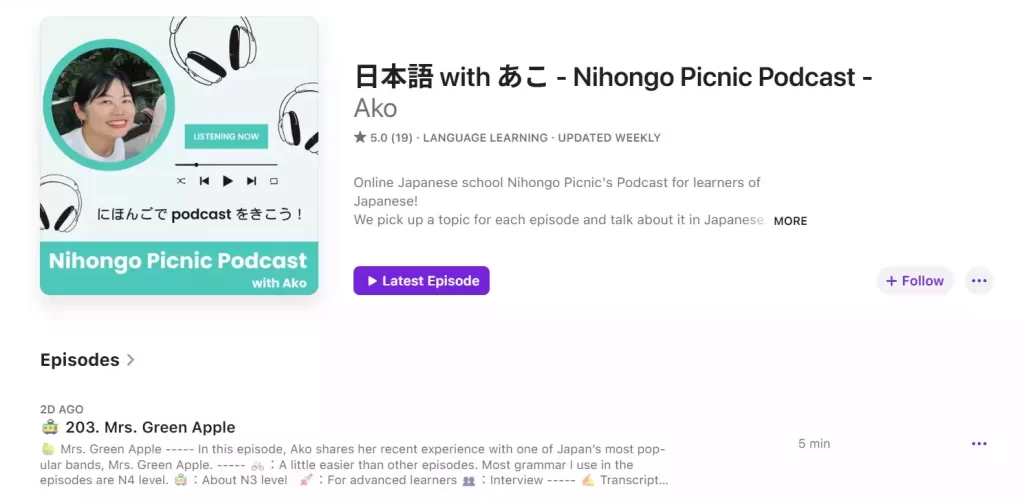
Created by Ako (Akiko Suzuki), a freelance Japanese teacher, this podcast features monologue-style discussions on varied topics from regional culture to language learning experiences. Episodes run approximately 5-10 minutes with weekly releases, building a catalog of over 100 episodes.
Ako maintains clear, measured speech patterns that prioritize comprehensibility without excessive simplification. The podcast includes difficulty indicators to help learners select appropriate content for their level. Transcripts are accessible via the dedicated Notion page, providing written support for learners who benefit from combined audio-visual practice. This approach to content organization makes it effective for JLPT N5 students who can easily identify suitable episodes and track their progression.
Nihongo Picnic Podcast on Apple Podcasts
Learn Japanese Pod
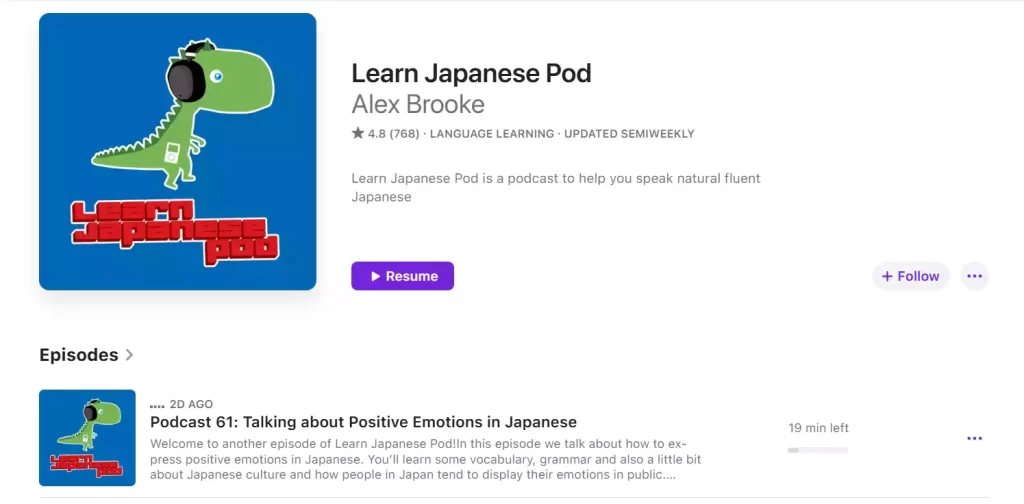
Hosted by Alex and Ami, this podcast combines Japanese dialogues with English explanations in 30-minute episodes. Each episode follows a structured format: Japanese conversation, vocabulary breakdown, grammar explanations, and cultural insights. With over 170 episodes covering topics from restaurant bookings to regional dialects, listeners have extensive material to work with.
The Nihongo podcast stands out through its conversational teaching style that reviewers describe as friendly banter rather than formal instruction. Users consistently report sounding more natural and less robotic after regular listening. The hosts’ chemistry creates engaging dialogue flow, while separate dialogue-only episodes enable focused listening practice and shadowing exercises. This approach effectively supports JLPT N5 preparation by exposing learners to authentic conversational patterns while providing clear grammatical explanations that reinforce textbook knowledge.
Learn Japanese Pod on Apple Podcasts
Getting the Most from Podcast-Based Japanese Listening Practice

Just pressing play on a JLPT podcast won’t magically improve your listening skills. Many learners treat podcasts like background noise, hoping progress will come simply through exposure but it rarely works that way.
To truly benefit from JLPT N5 podcasts, try these strategies:
- Pick the right difficulty: Choose episodes where you understand about 60–70% on the first listen.
- Listen actively: Treat it as study time, not background entertainment. Give the Nihongo podcast your full attention.
- Get context first: Read the title and description beforehand so you’re familiar with the topic.
- Listen in layers: Do a first pass for general meaning, then re-listen for details.
Take focused notes: Write down 5–10 new words per episode instead of trying to capture everything. - Space your practice: Wait 1–2 days before reviewing to improve retention.
- Adjust difficulty as needed: If you’re understanding less than 50%, switch to easier content.
- Revisit past episodes: Return to them after a few weeks to reinforce what you’ve learned.
By consistently applying these strategies, you’ll gradually strengthen both your comprehension and concentration, developing the kind of listening stamina needed for the JLPT N5.
Getting Ready for the JLPT N5 Beyond Podcasts
Japanese podcasts are great for listening practice, but you’ll need more than audio alone to pass the JLPT N5. Practice tests and mock exams help you get familiar with the actual test format and timing. Regular mock listening sessions prepare you for the real 30-minute audio section without the option to pause or replay.
Mix in some visual learning with beginner-friendly manga designed for JLPT N5 learners and simple anime. These reinforce your vocabulary and grammar while keeping study sessions interesting.
For more structured preparation, consider a Japanese language school online such as Nihongo Online Course that offers personalized JLPT N5 courses. Professional guidance helps identify weak spots from your JLPT N5 podcast practice and provides targeted exercises to fill those gaps.