
 English
  Español

Tips for More Effective Studying
Nihongo Online School > Tips for More Effective Studying > Is Kanji Hard to Learn? A Complete Guide for Beginners
Is Kanji Hard to Learn? A Complete Guide for Beginners
2025/07/30

Director: Kotaro Muramoto
Principal of Nihongo Online School
In September 2019, he founded "Nihongo Online School". Since then, has been teaching Japanese online lessons, with a total of over 1,000 students.
He has designed an individualized curriculum based on student’s needs and study goal. And is conscious of making the classes speech-centered in order to improve students’ speaking skills.
The school asks students to submit homework assignments worth 2 hours per lesson to improve faster. By supporting students with these features, students are able to efficiently improve Japanese language skills.
While kanji seems hard to learn with 2,136 commonly-used characters to master, it’s not as intimidating as it seems. With the right approach and consistent daily practice, beginners can learn basic Japanese kanji in 10-20 minutes per character and achieve solid literacy in 1-3 years.
Learning kanji often feels like staring up at Mount Fuji when you’re dressed for the beach. The sheer number of characters, multiple readings, and complex stroke patterns can overwhelm even the most motivated language learners. However, thousands of non-native speakers successfully master kanji every year, and with the right understanding and approach, you can too.
Contents
- 1 Is Kanji Easy to Learn?
- 2 Is Kanji More Difficult to Learn Than Hiragana?
- 3 Why Does Kanji Seem Harder Than It Is to Learn?
- 4 Reasons Why Kanji Feels Difficult and Countermeasures
- 5 Is Kanji Necessary to Learn Japanese?
- 6 Can I Pass N5 Without Knowing Kanji?
- 7 How to Learn Japanese Kanji for Complete Beginners
- 8 Do You Just Memorize Kanji?
- 9 Can You Learn 10 Kanji a Day?
- 10 Fastest Way to Learn Kanji for Beginners
- 11 Recommended Japanese Kanji Textbooks for Beginners
- 12 Making Your Kanji Learning Journey Successful
- 13 Conclusion
- 14 Accelerate Your Kanji Learning with Structured Support

Is Kanji Easy to Learn?
Kanji is not exactly easy to learn, but it’s far more approachable than most beginners expect. Japanese is ranked among the most difficult languages in the world, with the U.S. Foreign Service Institute classifying it as Category 4 (“Super-hard languages”) alongside Arabic and Chinese. The Japanese writing system requires learning 2,136 jōyō kanji (commonly-used characters) for basic literacy, compared to just 26 letters in the English alphabet.
However, you don’t need to know all kanji to achieve functional literacy. Learning approximately 1,000-2,000 characters enables you to read around 98% of modern Japanese texts. This means that with focused study, you can achieve practical reading ability without mastering every single character.
Is Kanji More Difficult to Learn Than Hiragana?
Kanji is more difficult to learn than hiragana, but the gap shifts as you progress.
Hiragana is a phonetic system of just 46 characters, each with a single consistent sound. Most beginners can read it confidently within a few weeks. Kanji, by contrast, carries multiple readings, multiple meanings, and complex stroke structures.
At intermediate level, kanji actually makes Japanese easier to read. A text written entirely in hiragana has no word boundaries and makes homophones impossible to distinguish. Kanji act as visual anchors that chunk sentences into readable units. Many learners report finding all-kana text slower and more frustrating than kanji-rich text.
To understand how the three Japanese writing systems fit together, it helps to get a clear picture of how hiragana, katakana and kanji work as a complete system.
Why Does Kanji Seem Harder Than It Is to Learn?
The perception of kanji difficulty often stems from several misconceptions. Japanese children learn kanji over 12 years of schooling, but adult learners can achieve similar results much faster through systematic study methods. Additionally, many learners focus too heavily on memorizing isolated characters rather than learning them in context through vocabulary and compound words.
Why kanji is hard for most beginners comes down to approach, not ability. The reality is that kanji are building blocks (radicals) that combine to form more complex characters. Once you understand common radicals, learning new kanji becomes significantly easier.
Reasons Why Kanji Feels Difficult and Countermeasures
Challenge 1: Overwhelming Number of Characters
There are over 100,000 kanji characters in existence, with over 2,000 needed for daily use. This sheer volume can paralyze beginners before they even start.
The Solution
Focus on frequency and practical application. Learning just 112 kanji characters at the JLPT N5 level allows you to read approximately 30% of all Japanese texts. Start with the most common characters and build gradually.
Challenge 2: Multiple Readings per Character
Each kanji has both onyomi (Chinese-origin readings) and kunyomi (Japanese-origin readings), with some characters having multiple readings of each type.
The Solution
Learn kanji through vocabulary rather than isolated readings. When you learn the character 生 through words like 先生 (sensei, teacher) and 生きる (ikiru, to live), the different readings become natural and contextual rather than abstract memorization tasks.
Challenge 3: Complex Stroke Order and Writing
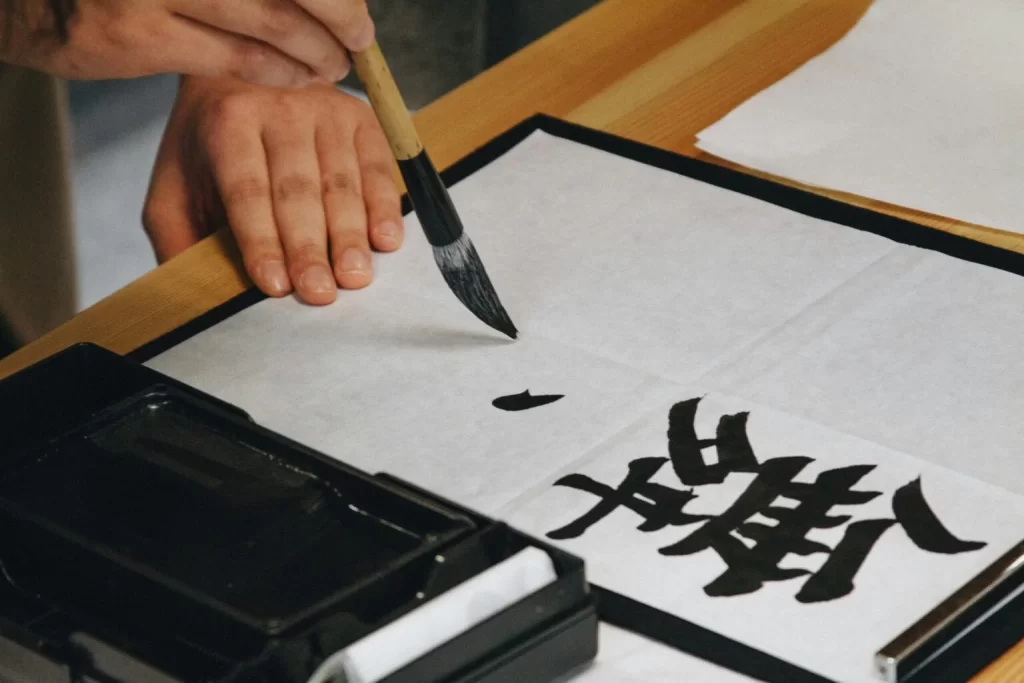
Some kanji have numerous strokes, like 龍 (ryū, dragon) with 16 strokes, making them challenging to write accurately.
The Solution
Learning proper stroke order is crucial because it allows you to decipher illegible handwriting and type characters more efficiently on digital keyboards. Use apps with stroke order practice and focus on muscle memory development.
Challenge 4: Lack of Structured Learning Approach
Many learners try to memorize kanji through repetitive writing without understanding the underlying structure or logic.
The Solution
Learn the approximately 200 radicals in Japanese first. Radicals provide clues to meaning and pronunciation, making kanji much more logical to remember. For example, characters with the water radical (氵) like 海 (sea) and 洗 (wash) are often water-related.
Is Kanji Necessary to Learn Japanese?
Whether kanji is necessary to learn Japanese depends on your goals.
For spoken conversation only, you can technically function without it. But for anything written kanji is non-negotiable. Long-term residents are clear on this: not knowing kanji in Japan means being functionally illiterate in daily life.
A simple breakdown by goal:
- Reading is your priority → Start kanji as soon as possible
- Conversation and reading equally → Introduce kanji early
- Conversation first → Build speaking skills first, add kanji later
- Speaking only → Kanji is optional, but expect real limitations
Kanji also accelerates vocabulary acquisition. Recognizing common characters unlocks patterns across thousands of words.
Can I Pass N5 Without Knowing Kanji?
Technically, you can pass JLPT N5 without knowing kanji, but it’s harder than it sounds.
The JLPT N5 requires 80-100 kanji. The reading section includes furigana on harder kanji, but the vocabulary section does not. More importantly, many N5 practice tests are written entirely in kana.
Knowing your N5 kanji doesn’t just help you pass; it makes reading faster and clearer. At 4-5 kanji per day, you can cover the full N5 list in under a month. The effort pays off immediately, and it lays the foundation for N4 and beyond.
How to Learn Japanese Kanji for Complete Beginners
Essential First 100 Characters (JLPT N5 Level)
The JLPT N5 level requires knowledge of approximately 80-112 kanji characters. These represent the most fundamental characters for basic communication and understanding. Here are the most crucial categories.
Numbers and Basic Counting
| Kanji | Reading | Meaning |
|---|---|---|
| 一 | ichi | one |
| 二 | ni | two |
| 三 | san | three |
| 四 | shi/yon | four |
| 五 | go | five |
| 六 | roku | six |
| 七 | shichi/nana | seven |
| 八 | hachi | eight |
| 九 | kyū/ku | nine |
| 十 | jū | ten |
Time and Calendar
| Kanji | Reading | Meaning |
|---|---|---|
| 日 | hi/nichi | day/sun |
| 月 | tsuki/getsu | month/moon |
| 年 | toshi/nen | year |
| 時 | toki/ji | time |
| 今 | ima/kon | now |
| 週 | shū | week |
People and Relationships
| Kanji | Reading | Meaning |
|---|---|---|
| 人 | hito/jin | person |
| 私 | watashi/shi | I/me |
| 先生 | sensei | teacher |
| 学生 | gakusei | student |
| 友 | tomo/yū | friend |
Grade 1-2 Elementary Kanji Foundation
Japanese children learn kanji systematically through elementary school, starting with 80 characters in first grade and building to 1,026 by sixth grade. Following this progression provides a logical learning path.
Grade 1 (Ages 6-7): 80 Basic Characters These represent simple, tangible objects and daily activities like 山 (yama, mountain) and 川 (kawa, river).
Grade 2 (Ages 7-8): Additional 160 Characters More abstract concepts are introduced, such as 時 (toki, time) and 空 (sora, sky).
JLPT N4 Progression (Additional 300+ Characters)
After mastering N5 kanji, learners should progress to JLPT N4 level, which requires knowledge of approximately 300 additional characters. This level introduces more complex concepts and compound words essential for intermediate communication.
Do You Just Memorize Kanji?
To learn kanji, just memorizing them is the least effective approach.
What actually works is a combination of three things:
- Decomposing kanji into radicals so you recognize patterns
- Using mnemonics and visual stories to anchor meaning,
- Learning kanji through vocabulary in context
When you encounter 手 (hand) in 手紙 (letter) and 手伝う (to help), the character sticks to real meaning and sound at the same time.
Reading consistently is what solidifies Japanese kanji retention long-term. Simple manga aimed at JLPT N5 learners is one of the most natural ways to build recognition without it feeling like study.
Can You Learn 10 Kanji a Day?
Yes, learning 10 kanji a day is possible, and it’s also a solid target.
At 10 per day, you’d cover all 2,136 jōyō kanji in about 7 months.
At 3 per day, you reach N1-level kanji in under two years.
The real difficulty of learning kanji is retention and this is where most learners go wrong.
Fastest Way to Learn Kanji for Beginners
The fastest way to learn kanji for beginners consists of using the right system from the start. Most learners find kanji hard because they don’t have the right system.
Method 1: Spaced Repetition System (SRS)
Spaced Repetition System (SRS) is a study method where newly learned items and difficult-to-remember items are shown more frequently, while correctly answered items appear at increasing intervals.
Why It Works: SRS helps transfer knowledge from short-term to long-term memory by reviewing items at optimal intervals, preventing forgetting while maximizing study efficiency.
Implementation: Popular apps like WaniKani use SRS to help learners master 2,000+ kanji and 6,000 vocabulary words in 1.5-3 years with daily practice.
Method 2: Radical + Mnemonic Approach
The Radical + Mnemonic method breaks down kanji into component parts, teaches the meaning of each radical, then explains how they combine to create the kanji’s meaning.
Example Application
- Learn that 禾 means “grain” and 火 means “fire”
- Combine them to understand 秋 (autumn) as the time when grain is harvested before winter
Mnemonics, stories, and visual associations provide creative strategies for memorizing kanji characters and distinguishing similar-looking characters.
Method 3: Contextual Learning Through Vocabulary
Rather than learning isolated kanji characters, focus on learning them through vocabulary words and compound expressions where they naturally appear.
- Learn 手 (te, hand) through words like 手紙 (tegami, letter) and 手伝う (tetsudau, to help)
- This approach makes readings and meanings more natural and memorable
Method 4: Writing Practice with Stroke Order
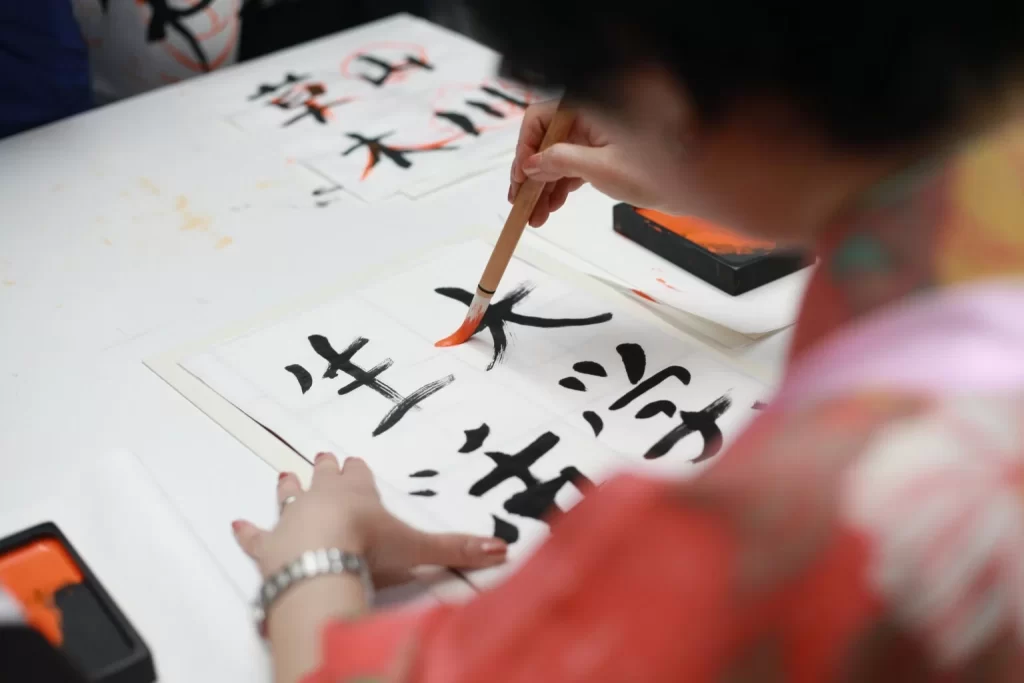
Writing kanji by hand strengthens muscle memory and helps with character recognition, even in our digital age. Proper stroke order allows you to decipher illegible handwriting and type characters more efficiently on digital keyboards.
Daily Practice Recommendations
- Learn 5-10 kanji characters per day for sustainable progress without burnout
- Practice stroke order using apps with guided writing features
- Review previously learned characters regularly to maintain retention
Method 5: Immersion Through Authentic Materials
Combine kanji study with authentic Japanese materials like manga, news articles, and social media to see characters in real-world contexts.
Progressive Approach
- Start with children’s books and manga with furigana (pronunciation guides)
- Gradually transition to materials without reading aids
- Use graded readers designed for language learners
Recommended Japanese Kanji Textbooks for Beginners
1. Remembering the Kanji (RTK) by James Heisig
RTK uses a mnemonic-driven approach, teaching kanji components (primitives) first, then building characters through storytelling and visual associations.
- Quick recognition of kanji meanings through systematic mnemonic stories
- Focuses on character recognition and meaning retention
- Can help learn 2,200+ kanji meanings relatively quickly
Limitations
- Does not teach kanji readings or vocabulary, requiring supplementary study for practical literacy
2. Kanji Look and Learn
This visual resource presents kanji with illustrations depicting meanings and origins, making learning engaging and accessible.
- Covers first 512 kanji with accompanying workbook for writing practice
- Created by the same team behind Genki textbooks, ensuring compatibility
- Visual mnemonics and systematic organization by frequency and theme
Best for visual learners and those using Genki textbooks for overall Japanese study.
3. The First 100 Japanese Kanji
Specifically designed for beginning students, this book presents the most commonly used Japanese kanji for beginners with careful selection for rapid and effective learning.
- Readings, meanings, and common compounds for each character
- Stroke order guides designed for tracing practice
- Three indexes for dictionary-style character lookup
Best for complete beginners seeking a gentle introduction to kanji writing and recognition.
4. Integrated Textbook Options
Genki Series
While Genki is primarily a comprehensive Japanese textbook, it introduces kanji gradually throughout lessons, though it lacks structured kanji instruction. The series includes apps and online resources for practicing 317 basic kanji with mnemonic hints and stroke order videos.
Minna no Nihongo
Popular in Japan and Asia, this series includes dedicated kanji practice books alongside main textbooks, providing structured kanji learning within a complete Japanese curriculum.
Making Your Kanji Learning Journey Successful
Setting Realistic Expectations
Learning kanji is a marathon, not a sprint. Japanese children take 9 years to learn basic kanji, but with focused adult learning methods, you can achieve similar results in 1-3 years.
Daily Practice Commitment
Consistency is key – even 15-30 minutes daily is more effective than sporadic intensive study sessions. Most language classes introduce 5-10 kanji per day, which provides a sustainable learning pace for most students.
Integration with Overall Japanese Study
Kanji learning becomes more meaningful when integrated with grammar, vocabulary, and conversation practice. This contextual approach reinforces learning and demonstrates practical application.
Conclusion
Is kanji hard to learn? Yes, it presents unique challenges that require dedication and the right approach. However, with proper methods, consistent practice, and realistic expectations, kanji learning is absolutely achievable for motivated learners.
The key is starting with fundamentals : learn hiragana and katakana first, master basic radicals, begin with the most common 100-200 characters, and use systematic methods like spaced repetition. Choose learning materials that match your study style and goals, whether that’s comprehensive textbooks like the Kodansha Kanji Learner’s Course or app-based systems like WaniKani.
Remember that learning just 112 basic kanji gives you access to 30% of Japanese texts, and with 1,000-2,000 characters, you can read virtually any modern Japanese material. How to learn Japanese kanji fast comes down to one principle: consistency over intensity. The journey requires patience and persistence, but the reward, unlocking authentic Japanese culture and communication, makes every stroke worthwhile.
Start with small, consistent steps, celebrate incremental progress, and trust in the process. Thousands of learners have successfully mastered kanji before you, and with the right approach, you can join their ranks.
Accelerate Your Kanji Learning with Structured Support
While self-study with textbooks and apps forms the foundation of kanji learning, many students find that combining independent study with guided instruction accelerates their progress significantly. Learning kanji in isolation can lead to gaps in practical application – you might recognize characters but struggle to use them naturally in conversation or writing.
At Nihongo Online School, our online Japanese courses are built around exactly this challenge and to help students who find kanji hard. Each lesson integrates kanji with grammar, vocabulary, and real conversation practice so nothing is learned in isolation. Every session comes with homework assignments designed to consolidate what you’ve covered, because consistent practice between lessons is what drives real progress.
Whether you’re just starting with your first N5 kanji or working toward N4 and beyond, personalized 1-on-1 lessons with qualified instructors mean direct feedback, a curriculum adapted to your pace, and no bad habits left to fix later.