
 English
  Español

Tips for More Effective Studying
Nihongo Online School > Tips for More Effective Studying > 12 Culture Shocks I Experienced in My First Month Living in Japan as a Student
12 Culture Shocks I Experienced in My First Month Living in Japan as a Student

2025/07/08
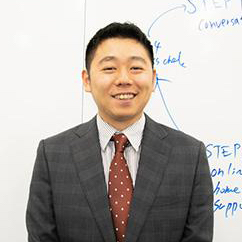
Director: Kotaro Muramoto
Principal of Nihongo Online School
In September 2019, he founded "Nihongo Online School". Since then, has been teaching Japanese online lessons, with a total of over 1,000 students.
He has designed an individualized curriculum based on student’s needs and study goal. And is conscious of making the classes speech-centered in order to improve students’ speaking skills.
The school asks students to submit homework assignments worth 2 hours per lesson to improve faster. By supporting students with these features, students are able to efficiently improve Japanese language skills.
There’s a moment — after the adrenaline of arriving fades — when reality hits. You’re standing in the middle of Tokyo, or Osaka, or some quiet neighborhood you can’t even pronounce, and you realize: “I live here now.”
That’s exactly what happened to me. I came to Japan to study Japanese, but nothing could’ve prepared me for how deeply the country would move, challenge, and even humble me in that very first month.
If you’ve ever dreamed of coming to Japan — whether to study, work, or start a new life — you’ve probably imagined the sushi, the temples, the neon lights. I did too. But what I didn’t expect was how much the small things would hit me the hardest. My first month in Japan was a whirlwind of discovery, awe, confusion, and quiet personal growth.
This isn’t a travel guide. This is my honest, raw reflection as someone who packed up their life, moved to the other side of the world, and started again. I hope it helps you prepare — not just for the culture, but for yourself.
Contents
- 1 1. The Silence in Public Spaces
- 2 2. Kindness with Boundaries
- 3 3. Everything is Clean — But You Can’t Find a Trash Can
- 4 4. The Toilet Changed My Life
- 5 5. Food, Humility, and Learning to Slow Down
- 6 6. Convenience Stores Are Actual Lifesavers
- 7 7. Kindness Without Words
- 8 8. The Loneliness Hits Different
- 9 9. The Beauty in Routine
- 10 10. The Language Barrier Is Real — and Humbling
- 11 11. Realizing That “Normal” Is Relative
- 12 12. The Climate Shock: From Dry Chile to Japan’s Humid Rollercoaster
- 13 Final Thoughts
- 14 💬 Want to Know More About Living in Japan?

1. The Silence in Public Spaces
One of the first things that hit me — and I mean hit me — was the silence. Trains, buses, even busy streets… they were so quiet it almost felt surreal. Back home, people talk on their phones, laugh, play music out loud. Here? People whisper or stay silent. No phone calls. No loud music. Just… calm.
At first, I felt awkward — like I was too loud just by existing. But over time, I started to appreciate the quiet. It gave space for thought, for presence. And oddly enough, it made me feel safe.
2. Kindness with Boundaries
Japanese people are often described as polite — and it’s true. From the first konbini clerk who bowed as I walked in, to the stranger who helped me find the right train, I encountered kindness every day. But there’s a certain distance, too.
It’s not coldness — it’s respect. People give you space. They’re kind without being intrusive. As someone used to casual chats with cashiers or making small talk at bus stops, this felt strange at first.
But I began to understand that in Japan, silence can be compassion. Giving someone their space is a form of care. That realization changed me.
3. Everything is Clean — But You Can’t Find a Trash Can
I was blown away by how spotless everything is. Train stations, streets, parks — all incredibly clean. But then came the confusion: where are the trash bins?
Turns out, public trash cans are rare. People take their garbage home. You’re expected to separate burnable, non-burnable, plastics, PET bottles… it’s an entire system. I kept carrying an empty bottle in my backpack for days before I figured it out.
It may seem annoying at first, but there’s pride in keeping things clean. Once I got the hang of it, I found myself more mindful — and respectful — of my surroundings.
4. The Toilet Changed My Life
Let’s talk about the bathroom — because honestly, I didn’t expect this to be one of the most emotionally moving experiences of my first month.
Warm seats. Bidet options. Buttons I didn’t dare press at first. I literally had to Google how to flush. But more than the tech, there was something deeply thoughtful in how even restrooms were designed for comfort and dignity.
In a foreign land, when you feel lost in the streets, not understanding the signs, it’s oddly comforting to enter a bathroom that feels like a tiny sanctuary.
5. Food, Humility, and Learning to Slow Down
I thought I knew Japanese food. Sushi, ramen, okonomiyaki. But what I didn’t expect was how connected to season, place, and simplicity Japanese meals are.
Even a konbini meal — a humble onigiri with miso soup — can feel nourishing. Every meal seemed like a quiet moment to pause and appreciate. And more than once, I caught myself eating in silence, eyes closed, letting the flavor settle in.
Food became a kind of meditation. And slowly, I realized: I was changing.
6. Convenience Stores Are Actual Lifesavers
I used to think of convenience stores as overpriced gas station stops. Japan changed that forever.
Lawson, FamilyMart, and 7-Eleven became my sanctuaries. Fresh meals. Cheap coffee. Clean bathrooms. Bill payment. Wi-Fi. ATMs. Even printing documents.
In my first lonely weeks, when I didn’t have a fridge or pots, I lived off コンビニ meals. I’d grab an onigiri and sit in a park, wondering what the hell I was doing here. But somehow, those little triangle rice balls became my comfort food. They tasted like survival — and hope.
7. Kindness Without Words
In Japan, kindness often doesn’t look like big gestures. It’s subtle, quiet, even anonymous.
Like the station worker who walked me halfway across the station when I was lost — without saying a word. Or the old lady who smiled and handed me back my glove on a freezing day. Or the cashier who wrapped my hot bento in a separate bag to keep it warm.
No one asked where I was from. No one tried to start a conversation. But in those moments, I felt seen.
8. The Loneliness Hits Different
No one tells you how hard the evenings can be when you first move to Japan.
You’ve spent the day trying to read signs, understand train announcements, not break social rules. You’re surrounded by people — but no one talks to you. You eat alone. You walk home alone. And the silence that once felt respectful suddenly feels… heavy.
Culture shock isn’t just about customs. It’s about identity. And some nights, I questioned mine. Who am I here? Am I too loud, too foreign, too slow?
But over time, the silence became space. The loneliness became reflection. I learned to sit with myself — to be okay in the quiet. Japan teaches you that, whether you want it or not.
I won’t lie — my first month wasn’t all wonder and joy. There were evenings I came home and cried. Not because anything bad happened, but because I felt small. Distant. Disconnected.
Culture shock isn’t just confusion — it’s grief. You grieve what you used to understand. You grieve your language, your rhythm, your jokes, your routines. But in that emptiness, something new grows. Something resilient.
Japan didn’t just surprise me — it stretched me. And that first month laid the foundation for the person I was becoming.
9. The Beauty in Routine
Everything in Japan runs on a kind of quiet rhythm.
People queue without complaint. Trains are on time. Lunch breaks are short but meaningful. Even putting out the trash has a ritual. At first, I missed the spontaneity I was used to. But then I began to breathe with the rhythm.
There’s a kind of peace in knowing your day has a shape. A train to catch. A bentō to buy. A cherry tree that blooms on schedule.
10. The Language Barrier Is Real — and Humbling
I came to Japan expecting to struggle with the language, but I didn’t realize how deeply it would affect my identity.
Ordering food, going to the bank, asking for directions — things I took for granted suddenly became nerve-wracking tasks. I’d rehearse entire sentences in my head just to freeze the moment someone spoke back too fast. I’d nod, smile, and walk away not having understood anything.
And even when I started to study seriously, I realized that knowing words isn’t the same as being understood. My accent gave me away. My grammar was off. My confidence took a hit.
But in that struggle, I found something important: humility. It reminded me what it feels like to be vulnerable. And every time I managed to get through a conversation, even if it was messy, I felt proud — not just for speaking Japanese, but for not giving up.
11. Realizing That “Normal” Is Relative
Back home, I had a sense of what was “normal.” How people act on the street, how you greet someone, what’s considered polite or rude. In Japan, almost none of that applied.
- People avoid eye contact on purpose.
- You bow instead of waving.
- No tipping. No eating while walking.
- People sleep on strangers’ shoulders on the train like it’s nothing.
At first, I wanted to label things: “This is weird.” “This is better.” “This doesn’t make sense.” But over time, I realized something: it’s not weird — it’s just not mine.
Living in Japan isn’t just about adapting to a new culture. It’s about letting go of your own expectations and accepting that “normal” isn’t universal. It’s personal. And the more I let Japan be Japan, the more I began to feel at home.
12. The Climate Shock: From Dry Chile to Japan’s Humid Rollercoaster
I grew up in a place with dry summers, mild winters, and four seasons that felt… balanced. In Japan? That balance vanished.
The summer humidity hit me like a wall. I remember walking out of Narita Airport and instantly sweating through my shirt. The air felt thick, like I was swimming through it. No breeze. No escape. I thought I could handle heat — I’m from Chile, after all — but this was different. I wasn’t ready for the relentless humidity, the cicadas screaming from every tree, or the wet clothes that never quite dried.
Then came winter. And for the first time in my life, I saw snow fall outside my apartment window. It was magical… until I had to bike to school through it. The cold wasn’t just cold — it was a kind of quiet that got into your bones. Trains delayed. Icy sidewalks. My hands cracked from the dry air inside heated rooms.
Japan’s climate taught me something I didn’t expect: how deeply weather affects your mood, your rhythm, even your self-image. Some days I felt like I was melting. Others, like I was disappearing into the cold. But in both, I learned to adapt — to carry a towel in summer, layer up in winter, and always check the forecast before leaving home.
Final Thoughts
Japan didn’t welcome me with fireworks or a warm hug. It welcomed me with silence, systems, and soft moments that took time to understand.
But now, a month in, I’m different. A little quieter. A little more patient. A little more grateful. I still get things wrong. I still feel foreign. But I also feel… something else. Like I belong — not completely, but enough.
If you’re planning to move here, know this: Japan won’t change for you. But it will change you.
And maybe, that’s the real surprise.
💬 Want to Know More About Living in Japan?
Drop a comment below or contact us at Nihongo Online School. Whether you’re planning to study or just curious, we’re happy to share what we’ve learned from real experience.