
 English
  Español

Tips for More Effective Studying
Nihongo Online School > Tips for More Effective Studying > 【numbers】- Lesson 5 Counter Suffix
【numbers】- Lesson 5 Counter Suffix
2023/09/19

Director: Kotaro Muramoto
Principal of Nihongo Online School
In September 2019, he founded "Nihongo Online School". Since then, has been teaching Japanese online lessons, with a total of over 1,000 students.
He has designed an individualized curriculum based on student’s needs and study goal. And is conscious of making the classes speech-centered in order to improve students’ speaking skills.
The school asks students to submit homework assignments worth 2 hours per lesson to improve faster. By supporting students with these features, students are able to efficiently improve Japanese language skills.
もののかぞえかた Counter suffix
When counting in Japanese, you will need to put certain counter words after the number. This counter word changes depend on what you count,
When you counting …
・people : にん(人)=nin
・frequency:かい(回)=kai
・animals, fish or insects :ひき(匹)=hiki
・cups/glasses of liquid: はい(杯)=hai
・counting long and thin objects like poles :ほん(本)=hon
・books:さつ(冊)=satsu
・cars and machines :だい(台)=dai
Contents

■People: にん
When counting people, using the counter “にん”. “Number+にん”. But, 1 and 2 are irregular. 3 people onwards, the rule “number + にん(nin)” is applied.

1person=ひとり hitori, 2people=ふたり futari

3 people onwards, the rule “number + にん(nin)” is applied.
| Number + peopleすうじ(数字)+にん(人) | |
| 1 | ひとり hitori |
| 2 | ふたり futari |
| 3 | さんにん san nin |
| 4 | よにん yo nin |
| 5 | ごにん go nin |
| 6 | ろくにん roku nin |
| 7 | ななにん nana nin |
| 8 | はちにん hachi nin |
| 9 | きゅうにん kyuu nin |
| 10 | じゅうにん juu nin |
| なんにん何人 | なんにん nan nin? |
■Frequency: かい
かい” is a counter that express frequency or time order. “Number+回(かい)”.

じっけんを2かいしました。
Jikkenn wo nikai shimashita.
I did experiment for 2 times.

おなじユーチューブのどうがを2かいみました。
Onaji yutube no dougawo nikai mimashita.
I watched same YouTube movie 2times.
| Number + timesすうじ(数字)+かい(回) | |
| 1 | いっかい ikkai |
| 2 | にかい ni kai |
| 3 | さんかい san kai |
| 4 | よんかい yon kai |
| 5 | ごかい go kai |
| 6 | ろっかい rokkai |
| 7 | ななかい nana kai |
| 8 | はっかい hachi kai |
| 9 | きゅうかい kyuu kai |
| 10 | じゅっかい jukkai |
| なんかい何回 | なんかい nan kai? |
■Animals, Fish or Insects :ひき
When counting small animals, fish or insects using the counter “ひき”. “Number+ひき”.

いぬが いっぴき います。
Inuga ippiki imasu.
There is a dog.

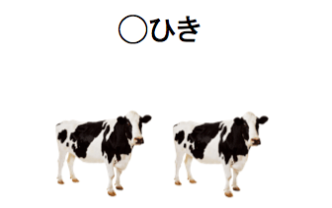
うしが にひき います。
Ushiga nihiki imasu.
There are 2 cows .
| Number+ animals/fish/insectsすうじ(数字)+ひき(匹) | |
| 1 | いっぴき ippiki |
| 2 | にひき ni hiki |
| 3 | さんびき san biki |
| 4 | よんひき yon hiki |
| 5 | ごひき go hiki |
| 6 | ろっぴき roppiki |
| 7 | ななひき nana hiki |
| 8 | はっぴき happiki |
| 9 | きゅうひき kyuu hiki |
| 10 | じゅっぴき juppiki |
| なんびき何匹 | なんびき nan biki? |
■Cups/glasses of Liquid: はい
When counting cups/glasses of liquid, using “Number + はい”.

チャイをいっぱい のみます。
Chai wo ippai nomimasu.
I drink one cup of chai.
| Number+ cups/glassesすうじ(数字)+(はい)杯 | |
| 1 | いっぱい ippai |
| 2 | にはい ni hai |
| 3 | さんばい san bai |
| 4 | よんはい yon hai |
| 5 | ごはい go hai |
| 6 | ろっぱい roppai |
| 7 | ななはい nana hai |
| 8 | はっぱい happai |
| 9 | きゅうはい kyuu hai |
| 10 | じゅっぱい juppai |
| なんはい何杯 | なんはい nan hai? |
■Counting Long and Thin Objects Like Poles :ほん
When counting long and thin objects like poles using “(ほん)”. “Number + (ほん)”.

わたしは、ペンを3ほん(ぼん)もっています。
Watashiwa, pen wo sanbon motteimasu.
I have 3 pens.
| Number+ thin and long thingsすうじ(数字)+ほん | |
| 1 | いっぽん ippon |
| 2 | にほん ni hon |
| 3 | さんぼん san bon |
| 4 | よんほん yon hon |
| 5 | ごほん go hon |
| 6 | ろっぽん roppon |
| 7 | ななほん nana hon |
| 8 | はっぽん happon |
| 9 | きゅうほん kyuu hon |
| 10 | じゅっぽん jupon |
| なんほん何本 | なんほん nan hon? |
■Books:さつ
When counting books, use the counter “さつ”. “Number + さつ”.

ここに、じゅっさつのほんがあります。
Kokoni, jussatsu no honga arimasu.
There are 10 notebooks.
わたしは、ノートを1さつ(冊)もっています。
Watashiwa, note wo issatsu motteimasu.
I have 1 notebook.
| Number+ booksすうじ(数字)+さつ(冊) | |
| 1 | いっさつ issatsu |
| 2 | にさつ ni satsu |
| 3 | さんさつ san satsu |
| 4 | よんさつ yon satsu |
| 5 | ごさつ go satsu |
| 6 | ろくさつ roku satsu |
| 7 | ななさつ nana satsu |
| 8 | はっさつ hassatsu |
| 9 | きゅうさつ kyuu satsu |
| 10 | じゅっさつ jussatsu |
| なんさつ何冊 | なんさつ nan satsu? |
■Cars and Machines :だい
When counting cars and machines, use the counter “だい”. “Number + だい”.

そこには、くるまが 2だい あります。
Sokoniwa, kurumaga nidai arimasu.
There are 2 cars.
わたしは、パソコンを2だいもっています。
Watashiwa, pasokon wo nidai motteimasu.
I have 2 PCs.
| Number+ machines and vehiclesすうじ(数字)+だい(台) | |
| 1 | いちだい ichi dai |
| 2 | にだい ni dai |
| 3 | さんだい san dai |
| 4 | よんだい yon dai |
| 5 | ごだい go dai |
| 6 | ろくだい roku dai |
| 7 | ななだいnana dai |
| 8 | はちだい hachi dai |
| 9 | きゅうだい kyuu dai |
| 10 | じゅうだい juu dai |
| なんだい何台 | なんだい nan dai? |