
 English
  Español

Tips for More Effective Studying
Nihongo Online School > Tips for More Effective Studying
What is “Business Japanese”?
2024/04/30
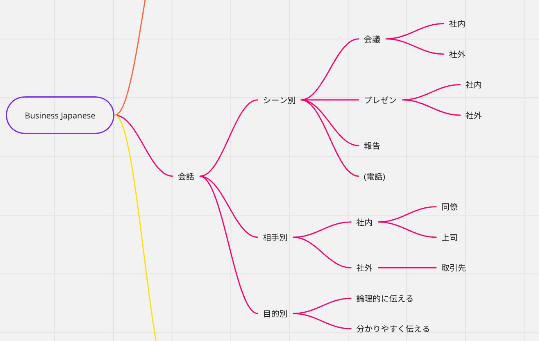
Hello, this is Muramoto, the representative. It’s a bit humiliating, but I don’t have specific answer for what it is. But from my experience worked with member from overseas, smooth communicate make business move forward. When you work at Japanese company, you face at some issues such as couldn’t hear people say in business meeting […] […]

Navigating the Japanese Workplace: Lessons Learned from More than Five Years of Experience
2024/04/22
Working with Japanese colleagues in Japan provides a rich and fulfilling experience, but it also comes with its unique set of challenges. For more than five years, I’ve had the opportunity to immerse myself in the Japanese workplace culture, learning valuable lessons along the way. In this article, I’ll share insights gleaned from my experience, […] […]

Unlocking Japanese: Overcoming Challenges and Enjoying the Journey to Fluency
2024/04/22
Learning Japanese can be daunting at first, but with the right approach, it can be an exciting and enriching journey. As one of the most spoken languages in the world, Japanese opens doors to a rich cultural heritage and diverse opportunities. Whether you’re drawn to the beauty of its traditional customs the innovation of its […] […]

Verb Expressions That Are a Mixture of English and Japanese
2024/02/08
These words give off a frivolous impression, so you can’t use them in serious situations, but if you use them with close colleagues or friends, they may bring you closer together and make communication more enjoyable. Teacher YUKI wrote this article Qualifications:Completed 420-hour Japanese language teacher training courseI started my career at a Japanese language […] […]

Way of Thinking for Improving Your Japanese Study「Active Learner」
2024/01/13
Have you ever felt anxious about studying Japanese because you couldn’t feel the progress or couldn’t see the goal? It often happens to any learners who are learning about anything. However, sometimes things can get better with just a little change in mindset. In this article, I would like to recommend becoming an “active learner” […] […]

5 Phrases & 15 Words to Use at the End of the Year and the New Year
2023/12/29
A year has passed so quickly, and there are only a few days left. Has it been a fruitful year for everyone? If you are learning Japanese, have you made any progress towards your goals? Now, at the end of the year and the New Year, there are many occasions in Japan to gather with […] […]
Japanese English is Words Translated into Japanese Directly From English
2023/12/15
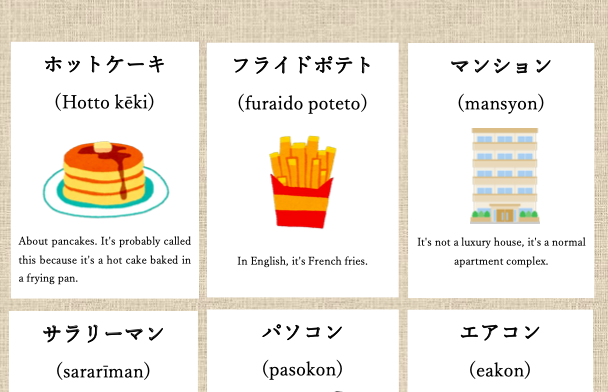
What is Japanese English? In Japanese, words that came from foreign countries or words that have been translated into Japanese directly from English are expressed using katakana. We introduce some Japanese English today. For example, ハンバーガー(hanbāgā), インターネット(intānetto), ボランティア(boranthia),プロジェクト(purojekuto), ドキュメント(dokyumento), グローバル(gurōbaru),etc. Katakana is also used in the names of shops and companies such as マクドナルド(McDonald’s), スターバックス(Starbucks), […] […]

The Language Acquisition Process is Learned in the Order of Listening, Speaking, Reading, and Writing.
2023/12/15
The process of learning a language is no different no matter what language it is. It is the same for a foreigner learning Japanese or a Japanese learning a foreign language. It is also the same as when a baby learns a language. The language acquisition process is learned in the order of listening, speaking, […] […]

Free of Charge! Summary of Japanese Language Materials for Japanese Learner
2023/12/15
There are many types of Japanese-language materials for foreigners, and some students may have a hard time deciding what to choose and how to go about selecting the right one. This article introduces a number of free Japanese language learning materials that are often used in Japanese language schools to help such people choose the […] […]

How many hours to learn and improve Japanese skills? Based on 1,000 students data.
2023/12/11
How long will it take to learn and how much will my Japanese improve? How long it takes for your Japanese to improve depends on the curriculum that matches your level and the amount of time you are able to spend studying. Many of our students who contact us say that their conversational ability does […] […]

Introduces 3 Japanese Language Training Methods to Improve Japanese Conversation Skills!
2023/12/11
One of the most common inquiries we receive at our Japanese language online school is “I have been studying Japanese for a long time, but my Japanese conversation skills are not improving, In this article, we would like to introduce three useful Japanese language training methods for those who have such problems in improving their […] […]

3 Advantages of Taking Online Japanese Lessons Before Coming to Japan
2023/12/03
To get off to a good start in your life as a foreign student in Japan or at your new job, you need to know the most commonly used Japanese conversation phrases, culture, customs, and manners before you come to Japan. It may be difficult to learn these things comprehensively at Japanese language classes or […] […]
