
 English
  Español

Tips for More Effective Studying
Nihongo Online School > Tips for More Effective Studying > Purpose of Study in Japan Essay Sample: Complete Guide with Examples
Purpose of Study in Japan Essay Sample: Complete Guide with Examples

2026/03/04
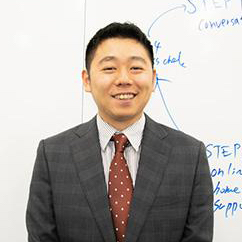
Director: Kotaro Muramoto
Principal of Nihongo Online School
In September 2019, he founded "Nihongo Online School". Since then, has been teaching Japanese online lessons, with a total of over 1,000 students.
He has designed an individualized curriculum based on student’s needs and study goal. And is conscious of making the classes speech-centered in order to improve students’ speaking skills.
The school asks students to submit homework assignments worth 2 hours per lesson to improve faster. By supporting students with these features, students are able to efficiently improve Japanese language skills.
Over 336,000 international students currently study in Japan, each having crafted compelling purpose statements explaining their motivations, academic goals, and career aspirations.
Whether applying for MEXT scholarships, university admission, Japan visa application after a rejection, your study purpose essay represents the critical document distinguishing accepted students from rejected applicants. This comprehensive guide provides actual samples, strategic frameworks, and expert guidance for creating persuasive study purpose essays for Japanese institutions.
Contents

How to Determine Your Study Purpose for Japan
Effective study purpose essays begin with genuine self-reflection about your motivations, goals, and fit for Japanese education and explaining why you want to study in Japan is the foundation of this process. Admissions committees detect insincere or generic statements immediately, so authentic clarity proves essential.
Assess Your Academic and Career Goals
Research-Focused Goals – Graduate students pursuing master’s or doctoral degrees should identify specific research questions, methodologies, or academic contributions they aim to achieve in Japan. For example, rather than stating “I want to study robotics,” specify: “I aim to advance human-robot interaction through natural language processing, building upon Professor Tanaka’s pioneering work in adaptive dialogue systems at Tokyo Institute of Technology.”
This specificity demonstrates genuine research understanding, familiarity with relevant faculty, and clear academic direction. Admissions committees for research programs prioritize applicants with defined research objectives aligned with institutional strengths.
Career-Oriented Goals – Undergraduate and professional program applicants should articulate career pathways their Japanese degree enables. Effective statements connect specific program features to career requirements. For instance: “The bilingual business curriculum at Waseda’s School of International Liberal Studies provides the intercultural communication skills and Asia-Pacific market expertise essential for my goal of managing international partnerships at multinational technology firms.”
This connects program specifics with career requirements, demonstrating informed program selection rather than random application.
Skill Development Goals – Some students prioritize specific skill acquisition, Japanese language mastery, technical expertise, or professional certifications. Knowing how to build a credible Japanese language study plan for your application is key here: clarify which skills you are developing, set realistic milestones, and explain why Japan provides the optimal learning environment for these capabilities.
Evaluate Your Cultural Motivation and Japanese Connection
Genuine Cultural Interest vs. Superficial References – Admissions committees distinguish between authentic cultural engagement and superficial “anime and sushi” references. Effective essays demonstrate deep, sustained interest through: previous Japanese language study, participation in cultural activities, travel experiences providing genuine insights, or meaningful relationships with Japanese people or culture.
For example: “During my three-year volunteer work teaching English at a Japanese cultural center, conversations with Japanese exchange students revealed profound differences in educational philosophy, particularly regarding group-oriented learning. This experience motivated my interest in comparative education systems, leading me to apply for graduate study in education at Kyoto University.”
This demonstrates genuine cultural engagement informing academic interests rather than tourist-level fascination.
Personal Connections and Experiences – Family background, personal experiences, or significant life events connecting you to Japan strengthen applications. Whether Japanese heritage, formative childhood experiences, mentor relationships, or transformative study abroad, authentic personal connections resonate with admissions committees.
Consider Program-Specific Alignment
Different program types require distinct purpose essay approaches:
| Program Type | Essay Focus | Word Count | Key Elements |
|---|---|---|---|
| MEXT Research Scholarship | Research plan, academic contribution | 500-1000 words | Specific research questions, methodology, Japan relevance |
| Undergraduate Admission | Academic interests, career goals | 500-800 words | Academic preparation, program fit, personal growth |
| Graduate School | Research proposal, academic background | 1000-1500 words | Literature review, methodology, expected outcomes |
| Language School | Language learning goals, career plans | 300-500 words | Current proficiency, learning objectives, future applications |
| Visa Application (SOP) | Study purpose, financial preparation | 800-1000 words | Study plan, career goals, return intentions |
Understanding your target program’s expectations ensures appropriate essay focus and structure.
Essential Components of a Strong Study Purpose Essay
Regardless of program type, successful essays incorporate specific elements demonstrating serious preparation and genuine commitment.
Opening: Capture Attention with Specific Motivation
Effective Opening Example: “When I discovered that Japanese engineers had developed robotics capable of assisting elderly patients with 95% accuracy in daily living activities, I realized Japan represented the global frontier for assistive technology research. This revelation, combined with my undergraduate research in biomedical engineering and my grandmother’s struggle with mobility limitations, crystallized my determination to pursue graduate study at Osaka University’s Robotics Laboratory.”
This opening accomplishes multiple objectives: demonstrates specific knowledge of Japanese innovations, connects personal experience to academic interest, names target institution, and establishes clear research direction—all within three sentences.
Ineffective Opening Example: “Japan is a fascinating country with rich culture and advanced technology. I have always been interested in Japanese culture and would like to study there. I believe studying in Japan will provide me with good opportunities.”
This generic opening lacks specificity, demonstrates no genuine understanding, and could apply to any applicant or any country.
Academic Background: Establish Qualifications
Demonstrate Relevant Preparation: “My bachelor’s degree in Environmental Science from Delhi University provided foundational knowledge in ecosystem analysis and climate modeling. My senior thesis, ‘Impact of Urban Development on River Ecosystem Health in North India,’ employed statistical analysis techniques similar to those utilized by Professor Yamamoto’s laboratory at Kyoto University. Additionally, my internship at the National Environmental Research Institute exposed me to field research methodologies essential for successful doctoral research.”
This paragraph establishes academic credentials, connects previous work to target professor’s research, and demonstrates research experience—all critical for graduate admission.
Specific Reasons for Choosing Japan
Strong Japan-Specific Reasoning: “Japan offers unparalleled opportunities for earthquake engineering research due to its rigorous seismic building codes, extensive post-disaster reconstruction experience, and world-leading research institutions. Specifically, Tohoku University’s International Research Institute of Disaster Science provides access to the March 2011 earthquake data, advanced simulation facilities, and interdisciplinary collaboration opportunities unavailable elsewhere. Furthermore, Japan’s commitment to disaster preparedness aligns with my goal of developing resilient infrastructure for earthquake-prone regions worldwide.”
This demonstrates understanding of Japan’s unique advantages, identifies specific institutional resources, and connects these to personal research goals.
Weak Reasoning: “Japan has good universities and interesting culture. The quality of education is high and I think I can learn many things there.”
This provides no specific institutional knowledge, unique Japan advantages, or genuine understanding of Japanese education.
Future Goals: Connect Studies to Career Plans
Concrete Career Pathway: “Upon completing my master’s degree in International Business at Waseda University, I plan to join the Asia-Pacific division of a multinational corporation, leveraging my bilingual capabilities and cultural understanding to facilitate business partnerships between Japanese and Southeast Asian companies. Within five years, I aim to assume regional management responsibilities, ultimately contributing to stronger economic ties between Japan and my home country of Thailand through sustainable business practices.”
This provides specific career steps, demonstrates realistic planning, and articulates how the Japanese degree enables these goals.
Personal Qualities: Demonstrate Cultural Fit
Adaptability and Preparation: “To prepare for study in Japan, I have completed 150 hours of Japanese language instruction, achieving conversational proficiency. I have actively engaged with Japanese culture through participation in tea ceremony (茶道 sadō) workshops and Japanese film clubs at my university. My experience adapting to new environments during study abroad in Singapore demonstrated my capability to thrive in culturally distinct settings. I am committed to integrating fully into Japanese academic and social environments, contributing positively to campus diversity while learning from Japanese peers and professors.”
This demonstrates concrete preparation, cultural respect, and realistic understanding of adjustment challenges.
Sample Study Purpose Essays for Different Scenarios
Understanding successful essay structures through actual examples provides invaluable guidance for crafting your own statement.
Sample 1: MEXT Research Scholarship (Graduate Student)
Research Proposal for Master’s Program in Environmental Science Maria Santos, Philippines | Kyoto University | 650 words
The increasing frequency of typhoons affecting Southeast Asian coastal communities demands innovative climate adaptation approaches. My proposed research at Kyoto University’s Graduate School of Global Environmental Studies focuses on developing community-based early warning systems integrating traditional knowledge with modern meteorological forecasting, aiming to reduce typhoon-related casualties in vulnerable coastal populations.
Academic Background
I completed my Bachelor of Science in Environmental Management at the University of the Philippines, focusing on climate change adaptation. My undergraduate thesis, “Community Resilience to Climate-Related Disasters in Philippine Coastal Communities,” involved six months of field research in Tacloban City, devastated by Typhoon Haiyan in 2013. This research revealed critical gaps between meteorological warnings and community response mechanisms.
During my internship at the Philippine Atmospheric, Geophysical and Astronomical Services Administration (PAGASA), I observed challenges of translating technical forecasting into actionable community-level information, preparing me for research requiring both technical expertise and community engagement.
Research Objectives and Methodology
My research aims to: (1) analyze existing early warning systems across Southeast Asian countries, (2) conduct field research in two Philippine coastal communities documenting traditional weather prediction knowledge, and (3) develop an integrated warning system combining scientific forecasting with locally appropriate communication channels.
The methodology employs mixed methods including quantitative analysis of warning effectiveness, qualitative interviews with community leaders and traditional knowledge holders, and participatory action research for community co-design. This ensures systems reflect both scientific accuracy and cultural appropriateness.
Why Japan and Kyoto University
Japan’s extensive disaster preparedness experience, particularly with typhoons and earthquakes, provides optimal learning environments for risk reduction research. Kyoto University’s Graduate School houses leading researchers including Professor Tanaka, whose community-based disaster management work directly aligns with my interests.
Japan’s technological advancement in meteorological forecasting combined with understanding of cultural factors in disaster response offers unique research advantages. Studying under Professor Tanaka’s supervision, accessing Kyoto University’s disaster research archives, and collaborating with Asia-Pacific researchers would significantly enhance my research quality and regional impact.
Expected Outcomes
This research will produce: (1) comprehensive analysis of early warning effectiveness across Southeast Asia for policymakers, (2) documentation of traditional weather knowledge contributing to climate adaptation literature, and (3) prototype integrated warning system offering a replicable model for vulnerable communities.
Beyond immediate outputs, this work contributes to academic discourse on integrating traditional and scientific knowledge systems while addressing Sustainable Development Goal 13 (Climate Action).
Career Objectives
Upon completing my master’s degree, I plan to pursue doctoral research further developing integrated warning systems. My long-term goal involves establishing a Philippine research center focused on community-based disaster preparedness, collaborating with Japanese institutions for knowledge exchange.
This research serves my home country’s urgent disaster risk reduction needs while contributing to international climate adaptation. Skills, knowledge, and networks developed at Kyoto University will enable me to bridge Japanese disaster preparedness expertise with Southeast Asian vulnerable communities.
Preparation and Commitment
I have completed Japanese language courses achieving JLPT N3 certification, with plans to reach N2 before program commencement. I have studied Japanese disaster management policies and engaged with Japanese researchers at international conferences. My research experience, language preparation, and understanding of both Japanese and Philippine contexts position me to contribute meaningfully while maximizing learning opportunities.
What Makes This Sample Effective?
- Specific research question with social relevance
- Detailed academic background
- Concrete methodology showing feasibility
- Clear Japan advantages
- Realistic career pathway
- Evidence of preparation
Sample 2: Undergraduate English-Taught Program
Application Essay for International Liberal Studies James Miller, United States | Waseda University | 450 words
Growing up in Silicon Valley, I witnessed how Asia-Pacific markets drive global technology trends. My goal of becoming an international business consultant specializing in U.S.-Japan technology partnerships motivates my application to Waseda University’s School of International Liberal Studies (SILS), where the interdisciplinary curriculum and Tokyo location provide optimal preparation for cross-cultural business leadership.
Academic Interests and Program Fit
My interests center on international business and how cultural differences shape market strategies. Through AP courses in Economics, Statistics, and Japanese Language, I developed foundational business knowledge. Model United Nations conferences, where I represented Japan in economic debates, sparked deeper interest in Japanese economic policies.
SILS’s interdisciplinary approach perfectly aligns with my objectives. Courses like “Business in East Asia,” “Intercultural Communication,” and “Japanese Management Systems” address knowledge essential for my career. The English-taught format allows immediate commencement while I develop Japanese proficiency through SILS’s language courses.
Why Japan and Waseda
Japan offers unique advantages as the world’s third-largest economy with distinctive business practices. Tokyo’s position as a global financial center provides internship and networking opportunities impossible elsewhere. Living in Japan develops cultural competency essential for cross-cultural business communication.
Waseda’s international reputation, diverse student body, and corporate partnerships attract me specifically. SILS’s emphasis on global citizenship aligns with my values, while Waseda’s extensive business connections promise valuable practical experiences.
Personal Experiences
My Japan interest extends beyond career pragmatism to cultural engagement. Three years studying Japanese achieved intermediate proficiency. Volunteering as an English conversation partner for Japanese exchange students developed friendships revealing social customs and contemporary culture. My family hosting a Japanese exchange student provided daily exposure to Japanese perspectives, teaching patience and respect in navigating cultural differences.
Career Goals
My immediate goal involves joining a management consulting firm’s technology practice, advising on Asia-Pacific market strategies. Within five to seven years, I aim to specialize in U.S.-Japan business relations, facilitating partnerships between American and Japanese technology companies. Long-term, I plan to establish my own consulting firm helping smaller technology companies access Japanese markets.
Conclusion
Waseda’s SILS offers the ideal combination of academic rigor, cultural immersion, and practical opportunities. I am prepared to contribute to campus diversity, engage with academic challenges, and immerse myself in Japanese culture. This represents the foundation for a career bridging cultures in our interconnected world.
What Makes This Effective?
- Clear career goal connecting to program
- Specific program features showing research
- Genuine cultural interest with concrete evidence
- Realistic career pathway
- Appropriate enthusiasm with seriousness
Sample 3: Graduate School Research (Master’s/PhD) – Brief Format
Research Plan for Doctoral Program in Computer Science Priya Sharma, India | Tokyo Institute of Technology
Research Topic: Adaptive Machine Learning Systems for Low-Resource Language Natural Language Processing
Research Motivation: Over 7,000 languages lack effective NLP tools due to insufficient training data. My research develops few-shot learning architectures enabling NLP for low-resource languages, particularly Indian regional and Southeast Asian minority languages.
Academic Background: Completed M.Tech in Computer Science at IIT Delhi, focusing on Hindi NLP and transfer learning. Published two conference papers on morphological processing. Research experience with neural architectures and multilingual systems.
Research Objectives: (1) Develop few-shot learning architectures requiring minimal training data, (2) Create cross-linguistic transfer strategies informed by linguistic typology, (3) Integrate multimodal data to compensate for limited text, (4) Build evaluation frameworks for low-resource NLP.
Methodology: Design novel neural architectures incorporating linguistic priors, implement prototypes for six languages (Hindi, Tamil, Bengali, Marathi, Thai, Vietnamese), conduct comparative experiments, evaluate real-world applications including machine translation and information retrieval.
Why Tokyo Tech: Professor Nakamura’s Computational Linguistics Laboratory pioneered morphologically rich language processing. Tokyo Tech’s collaboration with Southeast Asian institutions provides valuable research networks. Access to advanced computational resources and industry partnerships with NEC and Sony enables practical applications.
Expected Outcomes: Publish findings in top-tier conferences (ACL, EMNLP), release open-source implementations, create benchmark datasets, deploy prototype systems for community use in rural regions.
Career Goals: Pursue academic career focusing on NLP for underserved languages. Establish research group in India collaborating internationally on language technology for social impact.
Timeline: Year 1—coursework, literature review, architecture design, pilot experiments. Year 2—full development, cross-linguistic experiments, conference publications. Year 3—empirical validation, real-world deployment, journal articles.
What Makes This Brief Format Effective?
- Maintains technical specificity despite brevity
- Clear structure following research proposal format
- Specific Japan/institution justification
- Concrete deliverables and timeline
- Direct career pathway connection
Common Mistakes to Avoid
Generic Statements Without Specificity
Mistake: “I want to study in Japan because it has good universities and interesting culture. I believe this experience will help me develop personally and professionally.”
Why It Fails: Could apply to any country or applicant. Demonstrates no research, no genuine interest, no understanding of Japanese education.
Fix: Replace generic statements with specific details. Name specific institutions and explain why their strengths align with your goals. Describe specific cultural aspects connecting to academic or career interests with evidence of engagement.
Cultural Stereotypes and Superficial References
Mistake: “I love anime and manga, and I want to experience Japan’s ancient traditions like samurai culture. Japan is very advanced but respects old customs.”
Why It Fails: Reduces Japan to stereotypes, demonstrates tourist-level understanding rather than serious academic interest.
Fix: If cultural interests motivate you, demonstrate deep engagement through language study, academic analysis, or meaningful experiences. Connect cultural interests to academic goals rather than presenting them as leisure activities.
Weak Connection Between Studies and Career Goals
Mistake: “After graduating, I will find a good job and contribute to my country. Skills learned in Japan will help me succeed.”
Why It Fails: Provides no specific career pathway, no employment research, vague promises without concrete planning.
Fix: Provide concrete steps: “Upon graduation, I will join [specific company type] in [specific role], applying [specific skills] to [specific problems]. Within [timeframe], I aim to [specific advancement], eventually [long-term goal].” Research actual career pathways for your field.
Insufficient Program Research
Mistake: “I am applying because your university is one of the best in Japan with excellent programs and good professors.”
Why It Fails: Could apply to any top university. Demonstrates no actual institution research.
Fix: Name specific professors and their research, reference particular courses, discuss unique university resources, explain why this specific institution serves your goals better than alternatives.
Prepare for Success: Build Japanese Foundation for Your Studies
While English-taught programs eliminate Japanese language requirements for admission, developing basic Japanese proficiency dramatically enhances your study experience, employment prospects, and cultural integration in Japan. Students arriving with Japanese foundations navigate daily life confidently, form deeper relationships, and access broader opportunities than those operating entirely in English.
Strategic Japanese Language Preparation
Nihongo Online School offers specialized programs designed for students preparing to study in Japan, providing the foundational proficiency transforming your Japanese experience from surviving to thriving.
Key features supporting your success:
Practical Daily-Life Focus – Our curriculum emphasizes survival Japanese essential for daily activities: shopping, banking, healthcare, asking directions, making appointments, and understanding announcements. This practical focus ensures you can manage daily life independently from arrival.
150-Hour Foundation Program – Our kick start program combines 50 hours of private 1-on-1 online lessons with qualified instructors plus 100 hours of structured study materials and homework, providing essential foundation (equivalent to JLPT N5 level) enabling daily life navigation and social interaction.
Flexible Scheduling for Pre-Departure Preparation – All lessons conduct via Zoom at times convenient for your schedule, allowing you to build Japanese proficiency while managing current school or work commitments before departing for Japan. Many students complete preparation over 3-6 months before arrival.
Certificate of Completion – Upon completing the program, you receive official certification documenting your 150 hours of Japanese language study, demonstrating serious preparation to universities and potential employers.
Our program has helped over 1,000 students from countries worldwide build the Japanese foundation making their study abroad experiences successful and fulfilling rather than frustrating and isolated.
Take the First Step Toward Your Japan Study Journey
Nihongo Online School offers a free trial lesson where you can experience our teaching approach, assess your current Japanese level, discuss your study plans and timeline with a qualified instructor, and receive personalized recommendations for your language preparation journey.
Visit our school to schedule your online Japanese course with certificate and begin building the Japanese language skills that will transform your Japan experience, enhance your study purpose essay by demonstrating concrete preparation, and open doors to opportunities throughout your Japanese educational journey.