
 English
 Español


Tips for More Effective Studying
Nihongo Online School > Tips for More Effective Studying > How to Prepare for the MEXT Scholarship Interview: Questions & Practice Tips
How to Prepare for the MEXT Scholarship Interview: Questions & Practice Tips

2026/11/12
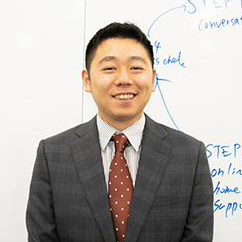
Director: Kotaro Muramoto
Principal of Nihongo Online School
In September 2019, he founded "Nihongo Online School". Since then, has been teaching Japanese online lessons, with a total of over 1,000 students.
He has designed an individualized curriculum based on student’s needs and study goal. And is conscious of making the classes speech-centered in order to improve students’ speaking skills.
The school asks students to submit homework assignments worth 2 hours per lesson to improve faster. By supporting students with these features, students are able to efficiently improve Japanese language skills.
Passing the written exam for the Japanese Government (MEXT) Scholarship is a big achievement, but it is not the finish line. The interview is where the embassy decides whether you are the kind of student it wants to recommend to Japan’s Ministry of Education. Competition is intense: for the 2027 Research Student intake, the Embassy of Japan in India received 7,303 applications and shortlisted only 186 people for the written test and interview (Embassy of Japan in India).
The good news is that the MEXT interview is predictable. The same types of questions come up year after year, and the Japanese you need is far more limited than most applicants fear. This guide walks you through how the interview fits into the selection process, what the panel is looking for, the questions you are most likely to hear, the Japanese phrases worth memorizing, and a practical preparation plan. At the end, you will meet Husain, a Nihongo Online School student who prepared with his teacher and won the MEXT Scholarship.
Contents
- 1 What Is the MEXT Scholarship Interview? (Selection Process and What Interviewers Evaluate)
- 2 Common MEXT Interview Questions and How to Answer Them
- 2.1 Self-Introduction
- 2.2 Motivation: Why Japan, and Why the MEXT Scholarship?
- 2.3 Your Research Plan or Field of Study (Research Students)
- 2.4 Your Intended Major (Undergraduate, Kosen, and Specialized Training Students)
- 2.5 University Choices and Flexibility
- 2.6 Life in Japan and Adaptability
- 2.7 Questions About Your Application Documents
- 2.8 Future Plans After the Scholarship
- 2.9 “Do You Have Any Questions for Us?”
- 3 Japanese in the MEXT Interview and How Your Japanese Is Evaluated
- 4 How to Practice Before the Interview and What to Do on the Day
- 4.1 Know Your Application Better Than the Panel Does
- 4.2 Build Answer Frameworks, Not Scripts
- 4.3 Practice Explaining Your Research to Non-Experts
- 4.4 Do Mock Interviews with a Teacher
- 4.5 Keep Up Your Japanese Speaking Practice
- 4.6 What to Do on the Day of the Interview
- 4.7 After the Interview: What Happens Next
- 5 Success Story: How Husain Won the MEXT Scholarship After Practicing with His Teacher
- 6 Prepare for Your MEXT Scholarship Journey with Nihongo Online School
- 7 Final Thoughts: Turn Preparation into Confidence

What Is the MEXT Scholarship Interview? (Selection Process and What Interviewers Evaluate)
The MEXT interview is the final step of the first screening run by the Japanese embassy or consulate in your country. If you pass it, the embassy recommends you to MEXT in Tokyo, which makes the final decision. In other words, the interview is the last moment where you can personally influence the outcome.
Where the Interview Fits in the Embassy Recommendation Process
Most applicants apply through the Embassy Recommendation route. The exact dates differ by country, but the order of the stages is almost always the same. The table below uses the 2027 intake as an example.
| Stage | Who runs it | Typical timing (2027 intake example) |
|---|---|---|
| 1. Application and document screening | Embassy of Japan in your country | Applications April to June 2026 |
| 2. Written examinations (usually English and Japanese; some categories add math or science) | Embassy | June to July 2026 |
| 3. Interview | Embassy selection committee | Late June to August 2026 |
| 4. Recommendation to MEXT and final screening | MEXT in Tokyo | Results around January to February 2027 |
| 5. University placement and departure | MEXT and host university | Arrival around April or October 2027 |
One detail many applicants overlook is how short the gap between the written exam and the interview can be. In Israel, for example, the 2027 written exams were held on June 19, 2026 and interviews on July 1, 2026 (Embassy of Japan in Israel). In Thailand, Kosen applicants learned their written exam results on July 10 and were interviewed on July 20 (Embassy of Japan in Thailand guidelines). That leaves roughly ten days, so the safest plan is to start interview preparation before you even know your written exam result.
Passing the interview is also not a guarantee. The Embassy of Japan in Cambodia notes that MEXT’s final selection is a competition among all applicants who were recommended by embassies around the world (Embassy of Japan in Cambodia). A strong interview gives the embassy confidence to rank you highly in its recommendation.
Embassy Recommendation vs. University Recommendation Interviews
This guide focuses on the Embassy Recommendation interview, because it is the one most applicants face. If you apply through the University Recommendation route, you deal with a Japanese university directly. The interview there is usually conducted by your prospective supervisor or a university committee, and it leans much more heavily on your research fit with a specific lab. The question types below still apply, but expect deeper technical discussion.
Who Sits on the Panel and How Long the Interview Lasts
Embassy interviews typically last 15 to 30 minutes and involve two to four panelists (GyanMirai). The panel often includes an embassy education officer, a Japanese academic, and sometimes a local professor or a former MEXT scholar. Interviews are generally held in person at the embassy, and some embassies state clearly that remote participation is not allowed (Embassy of Japan in Afghanistan).
One important consequence: the professor on your panel is very often not an expert in your field. A UK research applicant recalled that the interviewers asked her to explain her physics research while admitting they were not physicists (Jojiina blog). You should be ready to explain your plans to an intelligent non-specialist.
What the Interviewers Are Really Evaluating
Embassies rarely publish a scoring sheet, but reports from successful applicants and the structure of the questions point to six recurring evaluation points.
| Evaluation point | What the panel wants to see | How to show it |
|---|---|---|
| Academic purpose | A clear, realistic study or research plan | Explain your goal, method, and expected result in plain language |
| Reason for choosing Japan | Japan is a deliberate choice, not a backup | Link your field to specific strengths of Japanese universities or labs |
| Readiness for life in Japan | You can live independently and adapt | Mention past experiences living away from home or working in diverse teams |
| Communication ability | You can study and interact in English and/or Japanese | Answer concisely, and use the Japanese you claimed in your application |
| Consistency | Your answers match your application documents | Re-read every document you submitted before the interview |
| Future contribution | A plan for after graduation that benefits your home country, Japan, or both | Describe a concrete career goal and how the scholarship moves you toward it |
Common MEXT Interview Questions and How to Answer Them
MEXT interview questions fall into a handful of predictable groups. Prepare a clear answer structure for each group rather than memorizing scripts, because panelists often rephrase questions or follow up based on what you just said. The table below gives a quick overview, and the sections that follow explain how to answer each type.
| Question type | Typical example | What the panel is checking |
|---|---|---|
| Self-introduction | Please introduce yourself. | Communication and first impression |
| Motivation | Why do you want to study in Japan rather than the US or Europe? | Whether Japan is a deliberate choice |
| Study or research plan | Please explain your research so that non-experts can understand it. | Clarity and feasibility of your plan |
| University choice | Why did you choose these universities? What if MEXT places you elsewhere? | Research and flexibility |
| Life in Japan | How will you handle living alone in a different culture? | Adaptability and independence |
| Japanese ability | You wrote that your Japanese is intermediate. Can you introduce yourself in Japanese? | Honesty and real ability |
| Your documents | Why did you change majors? Why is there a gap in your education? | Consistency of your story |
| Future plans | What will you do after you graduate? | Commitment and long-term value |
| Closing | Do you have any questions for us? | Genuine interest and preparation |
Self-Introduction
Almost every MEXT interview opens with a request to introduce yourself. Keep it to about one minute: your name and where you are from, what you studied or are studying, what you want to do in Japan, and one detail that makes you memorable. Many follow-up questions are built on what you say here, so mention topics you are happy to talk about, such as a research project or an experience abroad, and avoid anything you cannot expand on.
Motivation: Why Japan, and Why the MEXT Scholarship?
“Why Japan?” is the question that separates strong candidates from average ones. Answers like “I love anime” or “Japan is safe and clean” are not wrong, but they do not explain why your studies need to happen in Japan. A stronger answer connects your academic goal to something Japan does especially well, such as robotics, disaster prevention, materials science, public health for aging societies, or a particular professor’s research. Personal interest in Japanese culture can be a supporting detail, not the main reason.
Your Research Plan or Field of Study (Research Students)
Research Student applicants should expect several minutes on their research plan. Prepare two versions: a one-minute summary for non-experts and a three-minute explanation with more detail. A simple structure works well: the problem you want to solve, why it matters, how you plan to approach it, and what you hope to produce. Be ready for practical follow-ups such as why you need specific equipment or data available only in Japan, how long each phase will take, and how your plan builds on your previous studies.
Your Intended Major (Undergraduate, Kosen, and Specialized Training Students)
If you are applying as an Undergraduate, College of Technology (Kosen), or Specialized Training College student, the panel will focus on your chosen major and your school record. Explain what first sparked your interest in the field, what you have already done to explore it (club activities, projects, competitions, self-study), and what kind of work you hope to do with the knowledge later. Show that you understand the program involves a year of preparatory education, including Japanese, before you start your specialized studies.
University Choices and Flexibility
Research Student applicants list preferred universities, and the panel may ask why you chose them and in that order. Refer to specific programs, labs, or professors rather than rankings. You may also be asked what you would do if MEXT placed you at a different university. The best answer shows flexibility: your priority is the research itself, and you would adapt your plan to the new environment.
Life in Japan and Adaptability
Panels want to know you will not give up and go home after three months. Expect questions about living independently, handling culture shock, managing on the monthly stipend, or coping in a rural area if your university or research site is outside a big city. Concrete examples help: a semester abroad, living in a dormitory, working part-time, or volunteering with people from different backgrounds. If you have visited Japan or interacted with Japanese people, mention what you learned from the experience.
Questions About Your Application Documents
Interviewers usually have your application form in front of them and may ask about anything unusual: a change of major, a gap year, an early graduation, a lower grade in one subject, or an activity you listed. Re-read every document you submitted and prepare an honest, positive explanation for anything that stands out. Contradicting your own application is one of the quickest ways to lose the panel’s trust.
Future Plans After the Scholarship
MEXT is an investment in people who will strengthen ties between Japan and their home countries. When asked about your future, describe a realistic career path and explain how your studies in Japan prepare you for it. You do not have to promise to stay in Japan or to return home immediately. What matters is that you have a clear direction and can explain how you will use what you learned, whether in academia, industry, government, or education.
“Do You Have Any Questions for Us?”
Always prepare one or two questions. Asking nothing can suggest a lack of genuine interest. Good questions are about the program itself, for example how the transition from research student to a master’s or doctoral program usually works, or how the preparatory Japanese course is organized. Avoid questions that the official application guidelines already answer clearly.
Japanese in the MEXT Interview and How Your Japanese Is Evaluated
For most MEXT categories, you do not need to speak Japanese to pass the interview. However, the Japanese you do use, and how honestly it matches what you wrote in your application, can make a real difference.
Is the MEXT Interview Conducted in Japanese?
In most countries, the interview is mainly in English. The Embassy of Japan in Israel, for instance, describes its 2027 Research Student interview as conducted mainly in English (Embassy of Japan in Israel). In Thailand, the Kosen interview is held in English and/or Japanese, with Japanese used for applicants who already have some knowledge of the language (Embassy of Japan in Thailand guidelines). Applicants for the Japanese Studies category should expect much more Japanese, since the language is the core of that program.
The key rule is that the panel uses your application as a guide. If you rated your Japanese as “good” or attached a JLPT certificate, expect them to test it. The UK applicant mentioned earlier was asked to repeat her self-introduction in Japanese because she had rated her speaking as good, and to read physics material in Japanese because she had rated her reading highly (Jojiina blog). Overstating your level and then freezing is far worse than rating yourself modestly and speaking a little more than expected.
How Your Japanese Ability Is Evaluated
Japanese is usually not a requirement. The University of Malta’s 2027 call for applications notes that Japanese proficiency is not a prerequisite for most categories, but adds that all candidates should be motivated to learn the language (University of Malta). That second point matters. Your written Japanese exam score, your answers to Japanese questions, and how you talk about your study habits all signal whether you will be able to function in daily life and in a Japanese lab.
In practice, panels tend to look at three things. First, whether you can handle basic interview courtesies and a short self-introduction smoothly. Second, whether your actual level matches your self-reported level. Third, whether you have a realistic plan to keep improving, for example structured lessons or a target JLPT level before departure. Even a beginner can score well on the third point.
Essential Japanese Phrases for the MEXT Interview
Even if the whole interview is in English, opening and closing with polite Japanese leaves a strong impression. The phrases below cover the moments where Japanese is most likely to come up.
| Situation | Japanese (romaji) | Meaning |
|---|---|---|
| Knocking and entering the room | 失礼します shitsurei shimasu | Excuse me (said as you enter) |
| Greeting the panel | 本日はよろしくお願いいたします honjitsu wa yoroshiku onegai itashimasu | Thank you for having me today |
| When asked to sit down | 失礼します shitsurei shimasu | Excuse me (said as you take your seat) |
| You did not catch the question | もう一度おっしゃっていただけますか mou ichido osshatte itadakemasu ka | Could you please say that again? |
| You need a moment to think | 少し考えてもよろしいでしょうか sukoshi kangaete mo yoroshii deshou ka | May I take a moment to think? |
| You want to switch to English | 英語でお答えしてもよろしいでしょうか eigo de okotae shite mo yoroshii deshou ka | May I answer in English? |
| Finishing the interview | 本日はありがとうございました honjitsu wa arigatou gozaimashita | Thank you very much for today |
| Leaving the room | 失礼いたします shitsurei itashimasu | Excuse me (said as you leave) |
A casual こんにちは konnichiwa (hello) is not wrong, but in a formal interview the phrases above sound more natural and respectful.
Sample Japanese Self-Introduction for the MEXT Interview
If you are asked to introduce yourself in Japanese, a short and accurate answer is better than a long one full of mistakes. Replace the parts in brackets with your own information.
| Japanese (romaji) | English |
|---|---|
| はじめまして。[国名]から参りました、[名前]と申します。 hajimemashite. [kokumei] kara mairimashita, [namae] to moushimasu. | Nice to meet you. My name is [name], and I am from [country]. |
| [大学名]で[専攻]を勉強しました。 [daigaku-mei] de [senkou] o benkyou shimashita. | I studied [major] at [university]. |
| 日本では[テーマ]について研究したいと考えております。 nihon de wa [teema] ni tsuite kenkyuu shitai to kangaete orimasu. | In Japan, I would like to research [topic]. |
| 日本語は[期間]ほど勉強しています。 nihongo wa [kikan] hodo benkyou shite imasu. | I have been studying Japanese for about [period]. |
| どうぞよろしくお願いいたします。 douzo yoroshiku onegai itashimasu. | Thank you for your consideration. |
Undergraduate applicants can replace the second and third lines with your school and the field you want to major in, for example [分野]を専攻したいと考えております [bun’ya] o senkou shitai to kangaete orimasu (I would like to major in [field]).
Japanese Questions You Might Hear
When Japanese questions come up, they are usually simple and personal. Practice understanding them by ear, not just reading them.
| Japanese question (romaji) | Meaning |
|---|---|
| 自己紹介をしてください jiko shoukai o shite kudasai | Please introduce yourself. |
| どうして日本に留学したいのですか doushite nihon ni ryuugaku shitai no desu ka | Why do you want to study in Japan? |
| 日本でどんなことを勉強したいですか nihon de donna koto o benkyou shitai desu ka | What do you want to study in Japan? |
| 日本語はどのくらい勉強していますか nihongo wa dono kurai benkyou shite imasu ka | How long have you been studying Japanese? |
| どうやって日本語を勉強していますか douyatte nihongo o benkyou shite imasu ka | How do you study Japanese? |
| 趣味は何ですか shumi wa nan desu ka | What are your hobbies? |
| 将来の夢は何ですか shourai no yume wa nan desu ka | What is your dream for the future? |
If you do not understand a question, do not guess. Ask politely for it to be repeated using the phrase from the table above. Interviewers respond far better to a calm request than to an answer to the wrong question.
How to Practice Before the Interview and What to Do on the Day
Because the interview can come only a week or two after the written exam results, the applicants who do best usually start practicing while they are still preparing for the written test. A simple four-week plan looks like this.
| Time before the interview | Main focus |
|---|---|
| 4 weeks | Re-read your application and research plan. List the questions you expect and outline your answers. |
| 3 weeks | Prepare a one-minute and a three-minute explanation of your study plan. Draft your Japanese self-introduction. |
| 2 weeks | Do mock interviews with a teacher or mentor. Record yourself and review your answers. |
| Final week | Polish weak answers, practice Japanese phrases by ear, and confirm the date, venue, and required documents. |
Know Your Application Better Than the Panel Does
Print the exact documents you submitted, including your application form, field of study and research plan, and any certificates. Highlight every claim that could trigger a question: your listed language levels, activities, awards, and the reasons you gave for choosing Japan and your universities. Then make sure you can talk about each one for at least thirty seconds. This single step prevents most of the inconsistencies that hurt applicants.
Build Answer Frameworks, Not Scripts
Memorized scripts break down the moment a panelist asks a question in a slightly different way. Instead, write a few keywords for each likely question and practice speaking from them. For experience-based questions, a simple pattern helps: the situation, what you did, what happened, and what you learned. Aim for answers of about one minute, then stop and let the panel guide the next question.
Practice Explaining Your Research to Non-Experts
Try explaining your plan to a friend or family member outside your field. If they cannot repeat back the main idea in one sentence, simplify. Replace technical terms with everyday comparisons, and lead with why the research matters before describing how you will do it. This is especially important because the panel may not include anyone from your discipline.
Do Mock Interviews with a Teacher
Practicing alone helps, but nothing replaces answering unfamiliar questions out loud in front of another person. A teacher can ask follow-up questions you did not anticipate, point out habits such as speaking too fast or avoiding eye contact, and correct your Japanese in real time. If your interview may include Japanese, a native-speaking teacher can also help you get used to natural speed and polite phrasing.
At Nihongo Online School, lessons are private, one-on-one, and fully tailored, so you can ask your teacher to focus on MEXT preparation, from reviewing past written exams to rehearsing your Japanese self-introduction and interview courtesies. Book a free trial lesson to discuss your goals.
Keep Up Your Japanese Speaking Practice
Short daily practice is more effective than one long session a week. Spend ten to fifteen minutes a day saying your self-introduction aloud, answering the Japanese questions listed above, and listening to the phrases until you can recognize them instantly. Record yourself and listen back, paying attention to particles and polite verb endings, which are the most common weak points under pressure.
What to Do on the Day of the Interview
On the day itself, small details shape the first impression. Wear neat business attire, such as a suit or formal shirt, unless the embassy says otherwise. Arrive early, because embassies have security checks and you may be asked to wait. Bring the documents listed in your invitation, such as your ID and any original certificates the embassy requested, plus a copy of your own application to review while you wait.
When you are called, knock, enter with 失礼します shitsurei shimasu, and wait to be invited before sitting down. Sit upright, look at the person asking the question while also acknowledging the other panelists, and answer at a calm pace. If you make a mistake in Japanese, correct yourself briefly and continue; panelists care more about composure than perfection. At the end, thank the panel, stand up, bow lightly, and leave with 失礼いたします shitsurei itashimasu.
After the Interview: What Happens Next
Embassies usually announce first screening results within a few weeks, often without giving reasons for decisions. If you are recommended, MEXT conducts the final screening, and universities are contacted about placement. Final results for Embassy Recommendation applicants generally arrive in the following January to February. Use the waiting period to continue studying Japanese, because successful scholars will need it from the first day in Japan.
Success Story: How Husain Won the MEXT Scholarship After Practicing with His Teacher
At Nihongo Online School, students can request personalized Japanese lessons that incorporate MEXT scholarship exam preparation. One of our students, Husain, worked with his teacher using past exam papers while continuing his regular Japanese studies, and he was selected for the MEXT Scholarship.
About Husain
Husain lives in Kuwait and has always enjoyed learning languages. Japanese became one of his favorites, and his long-term dream is to split his life between Japan and Kuwait with his family. Like many learners, he found Japanese grammar structures and particles challenging. Even when he understood them, recalling them quickly while speaking was difficult.
Before choosing a school, Husain compared several online programs. He wanted a structured course and relied on candid reviews from other learners about teachers, scheduling, and flexibility. Nihongo Online School’s reputation made the decision easy.
Learning Japanese While Working and Parenting
As a working professional and a new parent, Husain needed lessons that fit around his life. Studying online meant he could take lessons from home before or after work and still be there for his child right after class. He describes his teacher, Yuko-sensei, as understanding and flexible with both the curriculum and the schedule, which made it possible to stay consistent.
How He Prepared for the MEXT Exam with Yuko-sensei
When the MEXT application came up, Yuko-sensei adapted his lessons to include exam preparation. Over about a month, they worked through past papers from the MEXT exams and from the EJU (Examination for Japanese University Admission for International Students), covering exams from 2014 to 2019. Husain says that reviewing those papers was enough to achieve a good result.
He also believes his Japanese gave him an advantage beyond the written test. In his words, for a scholarship that sends you to live and study in Japan, “knowing that you have some Japanese ability really is assuring” to the selection committee. It shows that you are prepared and genuinely interested in the language, which is exactly what the interview panel is looking for.
What Future Applicants Can Learn from Husain
Husain’s experience highlights three lessons. Start early and use past exam papers so that the format holds no surprises. Keep up regular Japanese study alongside exam preparation, because your language skills are part of how the embassy judges your readiness for Japan. And work with a teacher who can adapt lessons to your specific goal and schedule.
Watch Husain and Yuko-sensei’s Interview
In this video, Husain and his teacher Yuko-sensei look back on their online lessons together and Husain’s path to the MEXT Scholarship.
Read Husain’s Full Story
For more on why Husain chose Nihongo Online School, how he studied around work and parenting, and his advice for future applicants, read the full interview.
Prepare for Your MEXT Scholarship Journey with Nihongo Online School
Japanese proficiency is not mandatory for most MEXT categories, but as this guide has shown, it can strengthen your interview and make your first months in Japan far smoother. Conversational Japanese helps you handle daily life, connect with your lab or classmates, and get more out of the preparatory language course. Some universities and programs also ask for proof of Japanese study, so documented training can work in your favor.
150-Hour Certified Japanese Language Program
Nihongo Online School offers a 150-hour kick-start program designed for students preparing to study in Japan. This Japanese online course with certificate combines 50 hours of private one-on-one lessons with qualified Japanese teachers and 100 hours of structured study materials and homework.
Why It Works for MEXT Applicants
When you finish, you receive an official certificate verifying 150 hours of Japanese study. You can use it as evidence of your language learning when applying to Japanese universities, and it can help you meet language prerequisites for certain programs.
All lessons take place on Zoom, and you schedule them around your own calendar, which matters during busy application months. Most students complete the program in three to six months, making it easy to fit into a MEXT application timeline or the months between selection and departure.
Because every lesson is private, your teacher can tailor the content to your goals, from MEXT written-exam practice with past papers, as Husain did, to rehearsing your Japanese self-introduction and polite interview phrases.
Whether you are aiming for the next MEXT intake or already preparing to leave for Japan, the foundation you build now will pay off in the interview room and long after you arrive. Book a free trial lesson to get started.
Final Thoughts: Turn Preparation into Confidence
The MEXT interview rewards applicants who know their own story, can explain their plans simply, and show that they are ready for life in Japan. Re-read your application, prepare flexible answers to the core questions, learn a handful of polite Japanese phrases, and rehearse out loud with someone who can give you honest feedback. Above all, start early, because the window between the written exam and the interview is short.
If you are planning to apply for the next MEXT intake, Nihongo Online School can build a lesson plan around your goal, combining regular Japanese study with MEXT exam practice and interview preparation. Book your free trial lesson and take the first step, just as Husain did.