




Tips for More Effective Studying
Nihongo Online School > Tips for More Effective Studying > ~という意味です (to iu imi desu) | Grammar JLPT N4 Explanation
~という意味です (to iu imi desu) | Grammar JLPT N4 Explanation
2025/11/08

Director: Kotaro Muramoto
Principal of Nihongo Online School
In September 2019, he founded "Nihongo Online School". Since then, has been teaching Japanese online lessons, with a total of over 1,000 students.
He has designed an individualized curriculum based on student’s needs and study goal. And is conscious of making the classes speech-centered in order to improve students’ speaking skills.
The school asks students to submit homework assignments worth 2 hours per lesson to improve faster. By supporting students with these features, students are able to efficiently improve Japanese language skills.
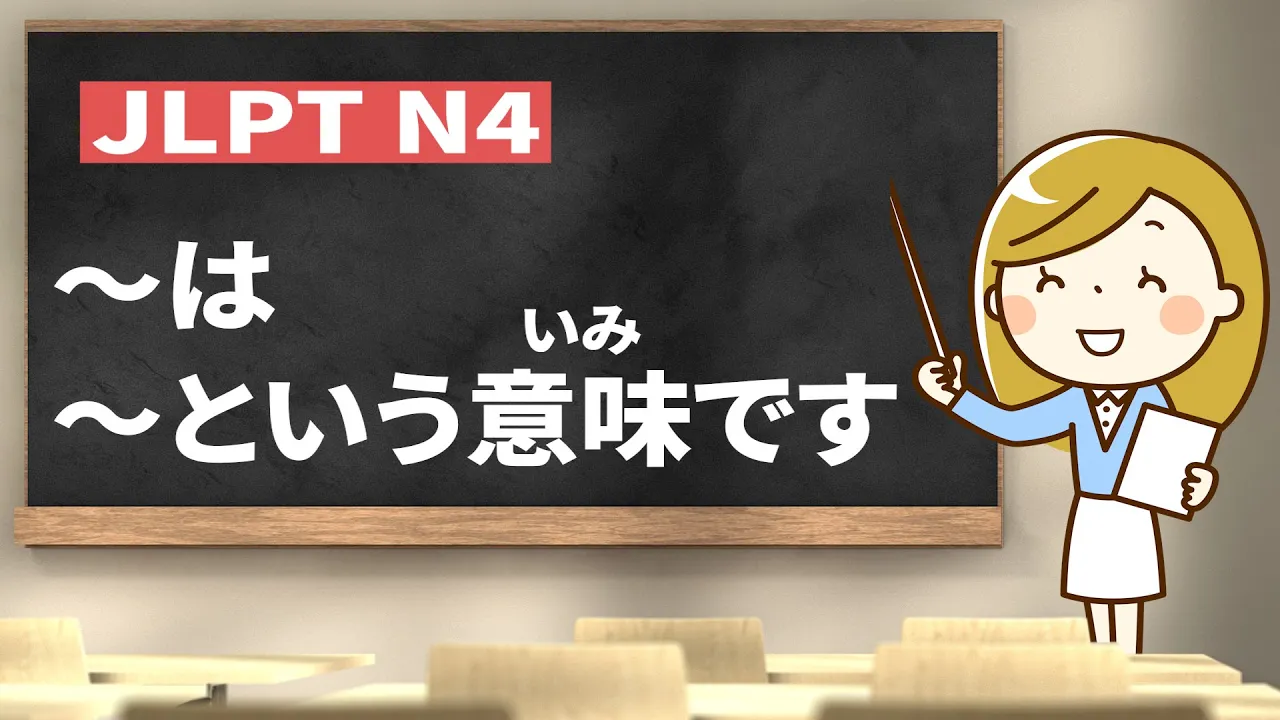
In this guide, you’ll find a full explanation of the ~という意味 (to iu imi desu) grammar pattern : what it means, how it’s structured, and how to use it naturally in conversation.
Whether you’re preparing for the JLPT N4 or simply want to understand grammar more confidently in Japanese, this is one of the most useful forms to master.
Contents

What Does ~という意味です Mean?
The expression 「~という意味です」 literally means “X means Y”.
It’s used when explaining the meaning of a word or phrase in Japanese.
You’ll hear it often in classes or conversations when someone asks, “What does that mean?”
It’s a key pattern for giving definitions and learning vocabulary naturally and it’s one of the grammar points you’ll need to master for the JLPT N4.
To iu imi desu : Grammar Rule
Use 「~という意味です」 when you want to explain what something means.
The word 「意味(いみ, imi)」 means “meaning,” and 「という(to iu)」 connects the phrase being explained.
Altogether, it means “X has the meaning called Y.”
You can ask for a meaning using:
~はどういう意味ですか。 ~wa dou iu imi desu ka → “What does … mean?”
Then answer with:
~は~という意味です。 ~wa ~ to iu imi desu → “… means …”
You may also encounter 「~とはどういう意味ですか」, a slightly more formal version of the question, where とは replaces は. Both are correct and widely used.
See How It’s Used in Conversation
This video will help you understand how ~という意味です is used in everyday Japanese conversations. Watch and repeat to improve your listening and speaking skills!
Sentence Pattern
~は~という意味です
(…wa …to iu imi desu)
Structure : [Word / Phrase / Clause] + は + [Meaning] + という意味です
This pattern works not just with single words but also with full clauses.
In casual speech, you may hear 「~っていう意味。(~te iu imi)」, a softer, everyday version.
To iu imi desu : Examples of Usage
1)「友達(ともだち)」は “friend” という意味です。
Tomodachi wa “friend” to iu imi desu.
→ “Tomodachi” means “friend.”
2) 「努力(どりょく)」は “effort” という意味です。
Doryoku wa “effort” to iu imi desu.
→ “Doryoku” means “effort.”
3) A:「残業(ざんぎょう)」ってどういう意味ですか。
Zangyō tte dō iu imi desu ka?
→ What does “zangyō” mean?
B:「残業」は “overtime work” という意味です。
Zangyō wa “overtime work” to iu imi desu.
→ “Zangyō” means “overtime work.”
4) 「いただきます」は “Let’s eat” や “Thank you for the meal” という意味です。
Itadakimasu wa “Let’s eat” ya “Thank you for the meal” to iu imi desu.
→ “Itadakimasu” means “Let’s eat” or “Thank you for the meal.”
(This example shows that to iu imi desu works equally well to explain signs, instructions, or any full clause.)
In Summary : To iu imi desu, using “It Means” in Japanese
The pattern 「~という意味です」 helps you explain words, phrases, and sentences clearly and politely. It’s a core structure at JLPT N4 level and an essential tool for everyday communication.
- To ask : 「~はどういう意味ですか。(~wa dou iu imi desu ka)」
- To explain : 「~は~という意味です。(~wa ~ to iu imi desu)」
Remember :
X wa Y to iu imi desu = X means Y
The key to this pattern is the particle 「と」, which marks what comes before it as a quotation or definition, making という意味です a precise and natural way to define anything in Japanese.
Enhance Your JLPT N4 Grammar with Nihongo Online School
Mastering to iu imi desu is one step in building solid N4 grammar. To go further, you’ll also need to explore the full JLPT N4 Grammar List, use the right JLPT N4 textbooks, and our JLPT N4 YouTube Playlist will help you understand important grammar patterns easily.
At Nihongo Online School, our JLPT Preparation Course covers grammar and conversation together in a structured format, to help you memorize patterns like という意味です with confidence.