
 English
  Español

Tips for More Effective Studying
Nihongo Online School > Tips for More Effective Studying > How much Japanese should I learn before relocating to Japan?
How much Japanese should I learn before relocating to Japan?

2026/03/03

Director: Kotaro Muramoto
Principal of Nihongo Online School
In September 2019, he founded "Nihongo Online School". Since then, has been teaching Japanese online lessons, with a total of over 1,000 students.
He has designed an individualized curriculum based on student’s needs and study goal. And is conscious of making the classes speech-centered in order to improve students’ speaking skills.
The school asks students to submit homework assignments worth 2 hours per lesson to improve faster. By supporting students with these features, students are able to efficiently improve Japanese language skills.
Relocating to Japan is a process that starts long before you board the plane. From securing your visa to settling your family in, your Japanese level will shape every step of that journey. Here’s what to expect and how to prepare.
Contents
- 1 Is it worth relocating to Japan as a foreigner?
- 2 How to relocate to Japan?
- 3 Is it mandatory to speak Japanese to relocate to Japan?
- 4 Relocating to Japan for a job: the Japanese level you’ll need
- 5 The Japanese you need to settle in smoothly
- 6 Relocate to Japan with Family : integration, school
- 7 Level up your Japanese before relocating to Japan

Is it worth relocating to Japan as a foreigner?
Japan consistently ranks among the safest, most organized, and most culturally rich countries in the world and for good reason. But moving there permanently is a different experience from visiting. Beyond the excitement of the first weeks, what determines whether you truly thrive comes down to one thing: how well you can connect with the country and its people. That connection starts with language.
How to relocate to Japan?
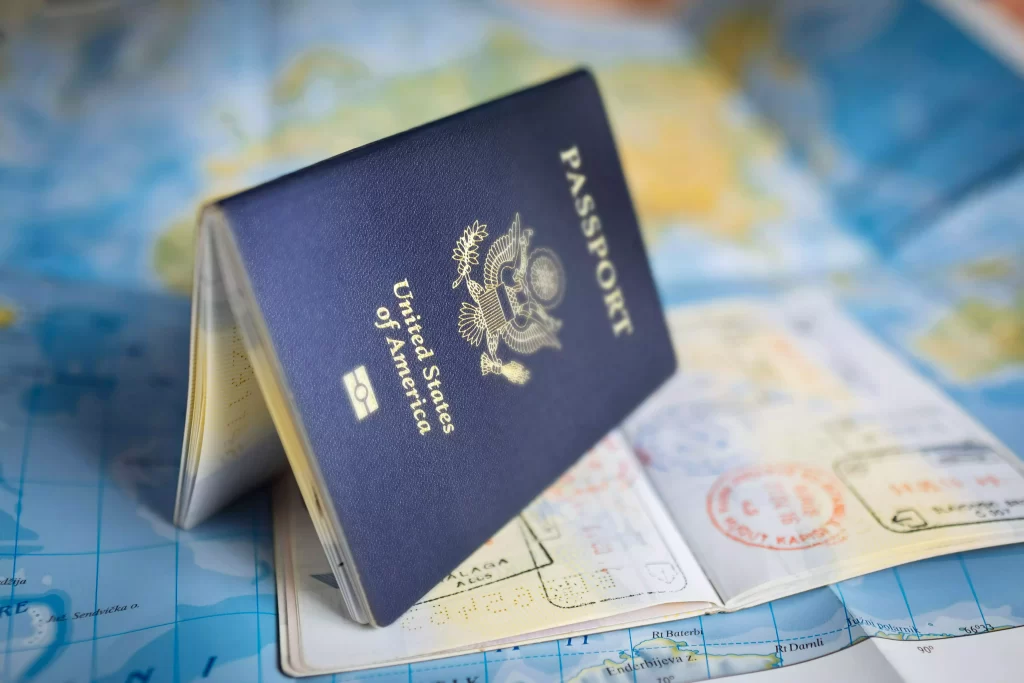
Relocating to Japan doesn’t start when you land, it starts months before. The priority is your visa: most people relocate through a work visa sponsored by a Japanese employer, who files for a Certificate of Eligibility (CoE) on your behalf. While that process runs, use the time wisely: research neighborhoods, explore the rental market, and build a financial buffer.
Key steps before relocate to Japan :
- Secure a job offer and initiate the CoE process
- Research neighborhoods, schools, and commute
- Start your housing search early
- Begin learning Japanese
Once you land, you have a 14-day window to complete the essentials: register your address at city hall, enroll in health insurance, open a bank account, set up a phone plan, … Most steps are manageable with minimal English but even a basic level of Japanese will make the process noticeably smoother, and set the right tone for everything that follows.
Is it mandatory to speak Japanese to relocate to Japan?
It’s not mandatory to speak Japanese to relocate to Japan. In international hubs like Tokyo or near US military bases, it’s possible to get by entirely in English. But “getting by” is exactly what it feels like.
Japan has a deeply layered culture, and language is the key to it. Many foreigners report a growing sense of isolation, not because Japanese people are unwelcoming, but because real connection requires more than pointing at a menu. Understanding the language means understanding the people, and avoiding the daily frustrations that come from misreading cultural signals.
The minimum Japanese to learn before leaving:
- Learn hiragana and katakana
- Pick up essential polite expressions
- Build a basic practical vocabulary
It won’t make you fluent, but it will make you functional, and that changes everything.
Relocating to Japan for a job: the Japanese level you’ll need

When relocating to Japan for work, the level of Japanese you’ll need depends far more on your work environment than on the country itself.
The most accessible path is being transferred by an international company, either as an expat or through a local subsidiary. In that case, the professional environment is often English-speaking, HR usually handles administrative procedures, and daily operations require limited Japanese at first.
If you’re applying independently (via platforms like LinkedIn or GaijinPot), language expectations will vary significantly depending on the company type.
| Work environment | Recommended level | Key priority |
| International company (English-speaking) | Basic (N5/N4) | Japanese business etiquette |
| Mixed environment | N3 minimum | Business Japanese as soon as possible |
| Japanese company | N2 or above | Essential |
If you are starting from scratch, you should build a Japanese foundation (N5/N4) before leaving so that you arrive with basic reading skills and essential polite forms. If you already have some Japanese, you should prioritize Business Japanese, as that is what truly matters in the workplace.
Regardless of your level, learning Japanese business etiquette before arriving is one of the highest-return investments you can make. How you exchange business cards, address colleagues, or navigate hierarchy in meetings will be noticed. These behaviors signal cultural awareness and respect which are highly valued in professional Japan.
The Japanese you need to settle in smoothly

When you relocate to Japan for work, your company may support your visa process, but setting up your daily life often remains your responsibility. This is where your Japanese level starts to matter in very concrete ways.
Finding Housing
As a foreigner, renting can be challenging. Upfront costs often reach four to six months’ rent, guarantors are usually required, and some landlords remain hesitant to rent to non-Japanese tenants. Even a basic level of Japanese can change the interaction. It expands your access to agencies, builds trust with landlords, and signals long-term commitment, which matters in Japan.
Administrative procedures
For banking, insurance, taxes, and residence card renewals, some administrative services are available in limited English, but the process can still be difficult. Being able to read kana and common kanji (names, dates, amounts, entry/exit) prevents unnecessary stress. Japan Post Bank is often the most accessible option for newly relocated professionals, but administrative forms are almost always in Japanese.
Long-term settlement
If you plan to buy property, manage investments, or handle more complex tax matters, reaching JLPT N3 becomes a real advantage. Not necessarily to handle everything on your own, but to understand contracts, identify risks, and ask the right questions. A higher level of Japanese will always make things easier.
Relocate to Japan with Family : integration, school

Relocating to Japan with your family is a system decision. Your housing choice influences your children’s school, the school shapes their daily life, and daily life ultimately determines whether your family feels settled or just temporarily based abroad.
For your partner
If your partner is not relocating with a job already secured, starting to learn Japanese before the move is essential. Daily tasks, grocery shopping, medical appointments, interacting with neighbors, handling local administrative procedures,… all require at least a functional Japanese level.
More importantly, Japan can feel isolating without active social integration, and language is the first bridge. A partner who arrives with even basic Japanese will integrate faster, feel more confident, and find it easier to build a life beyond the home environment.
For your children
Children adapt quickly, especially at a young age. Immersion naturally accelerates their progress. However, learning a few Japanese basics before the move like simple self-introductions and common classroom phrases, significantly reduces first-day anxiety and helps them adjust more smoothly.
If you enroll them in a Japanese public or private school, keep in mind that communication with parents (meetings, written notices, school events) is conducted in Japanese. Being able to exchange a few words with teachers is not just courteous, it allows you to remain informed and actively involved in your child’s education.
Level up your Japanese before relocating to Japan
To prepare for your relocation and your family’s transition to Japan, it is wise to start learning Japanese online with a private teacher before you move. More than traditional language classes, the programs at Nihongo Online School focus primarily on conversation skills.
At the beginning of your life in Japan, being able to speak and understand everyday Japanese is far more important than reading or writing perfectly. Prioritizing spoken communication will help you navigate daily interactions with greater confidence from day one.
A methodology that combines structured conversation lessons with consistent homework is ideal for preparing for real-life situations in Japan. This approach not only builds practical communication skills but also strengthens long-term retention.