
 English
 Español


Tips for More Effective Studying
Nihongo Online School > Tips for More Effective Studying > EJU Science Preparation: Physics, Chemistry & Biology Study Guide
EJU Science Preparation: Physics, Chemistry & Biology Study Guide

2026/11/12
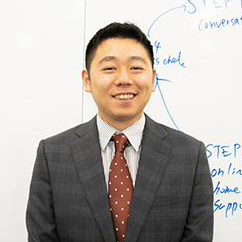
Director: Kotaro Muramoto
Principal of Nihongo Online School
In September 2019, he founded "Nihongo Online School". Since then, has been teaching Japanese online lessons, with a total of over 1,000 students.
He has designed an individualized curriculum based on student’s needs and study goal. And is conscious of making the classes speech-centered in order to improve students’ speaking skills.
The school asks students to submit homework assignments worth 2 hours per lesson to improve faster. By supporting students with these features, students are able to efficiently improve Japanese language skills.
If you want to study science, engineering, medicine or agriculture at a Japanese university, the EJU Science score is often a core part of your application. EJU Science is an 80-minute test in which you answer two of three subjects: physics, chemistry and biology.
This guide is for international students who are still choosing subjects, students coming from IB, A-Level, AP or national curricula, and anyone who wants to prepare in English. It covers how subject selection works, what each subject includes under the revised syllabus that took effect in 2026, how to match your choice to your target universities, where to find official past papers, and how to build a realistic study plan.
All exam rules here follow the latest official information from JASSO (Japan Student Services Organization), checked in November 2026. Rules and dates can change, so always confirm the details on the official JASSO EJU website before you apply.
Contents

Overview of EJU Science and How Subject Selection Works
EJU Science is one 80-minute test, scored 0–200, in which you must answer exactly two of physics, chemistry and biology. Before you open a textbook, it pays to understand four rules: how the two subjects are chosen, why Science cannot be combined with Japan and the World, which language you can test in, and whether your target university uses the EJU at all.
What EJU Science Measures
According to JASSO, the Science test checks whether you have the basic academic ability in science needed to study in a science department at a Japanese university. The content follows the Japanese high school curriculum, so it rewards solid high-school-level understanding rather than university-level knowledge.
EJU Science at a Glance
| Item | Details |
|---|---|
| Subject name | Science 理科 rika |
| Subjects offered | Physics 物理 butsuri, Chemistry 化学 kagaku, Biology 生物 seibutsu |
| What you answer | Exactly two of the three subjects |
| Answering time | 80 minutes for both subjects together |
| Score range | 0–200 (scaled score) |
| Question format | Multiple choice, marked on an answer sheet |
| Test language | Japanese or English (chosen when you apply) |
| Sessions per year | Two: June (1st session) and November (2nd session) |
Source: JASSO Guidelines for 2026 EJU, Examination Subjects
How You Choose Two of Physics, Chemistry and Biology
You select your two science subjects on the examination day, based on what your target universities and programs require. The question booklet contains all three subjects, and you answer only the two you have chosen.
This flexibility is useful, but it also creates a common mistake. If you answer only one subject, JASSO will not grade your Science answers at all. Decide your pair well before exam day, and practice with exactly that pair. JASSO publishes sample answer sheets so you can see in advance how to mark which subject you are answering.
Science or Japan and the World: You Can Take Only One
Science and Japan and the World are held in the same time slot, so you cannot take both in the same session. In practice, science-track applicants take Science, and humanities and social science applicants usually take Japan and the World. If you are applying across both tracks, check every program’s requirements first, because you will have to choose one per session.
Which Language Can You Take It In?
The Science, Mathematics and Japan and the World tests can be taken in Japanese or English. The Japanese as a Foreign Language test is offered only in Japanese, so every EJU candidate who needs it must take that section in Japanese.
You state your preferred language when you apply, because the Japanese and English question booklets are different. The key point is that the language must match what each university designates. Some universities accept either language, while others specify Japanese. An English-language Science score is worthless for a program that requires the Japanese version, so check this before you register.
[Internal link: EJU Japanese as a Foreign Language preparation article]
Schedule, Fees and Score Validity
| Item | 2026 EJU 1st session | 2026 EJU 2nd session |
|---|---|---|
| Application period | February 16 – March 12, 2026 | July 6 – July 30, 2026 |
| Exam date | June 21, 2026 (Sunday) | November 8, 2026 (Sunday) |
| Score announcement (tentative) | July 28, 2026 | December 15, 2026 |
Source: JASSO Examination Schedule
The 2027 dates had not been announced when this article was written. Based on the 2026 pattern, expect the June session’s application window to open around mid-February, and check the JASSO schedule page for the official dates.
For the 2026 EJU taken in Japan, the fee was JPY 12,000 for one subject and JPY 23,000 for two or three subjects, tax included. Fees outside Japan differ by country or region and are set in local currency.
Scores remain valid for two years, so universities may consider results from up to four sessions. JASSO uses score equating, which converts results from different sessions onto a common scale. This means a score from a harder session is not worth less than one from an easier session. Note, however, that each university decides which sessions it accepts. Some accept only specific sessions, such as results from June of the application year onward.
Not Every University Requires the EJU
The EJU is widely used, but it is not mandatory everywhere. As of September 2026, JASSO lists 507 universities that use the EJU in admissions, along with junior colleges, colleges of technology (KOSEN), graduate schools and professional training colleges, for a total of 950 schools.
Many institutions admit international students without the EJU, especially through English-taught degree programs. These programs often accept alternatives such as IB, AP or A-Level results instead. JASSO points students to Japan Study Support (JPSS) to find universities that do not require the EJU.
Even where the EJU is required, requirements differ by university and by department. Many universities also run their own individual exams 個別試験 kobetsu shiken, interviews, essays or English test requirements in addition to EJU scores. Always read each school’s application guidelines before deciding how to prepare.
[Internal link: Universities in Japan that do not require the EJU]
Physics, Chemistry and Biology: What the Syllabus Covers
Each EJU science subject follows the “Basic” and “Advanced” courses of Japan’s high school curriculum, and a revised syllabus has applied since the 2026 EJU 1st session. Content taught in Japanese elementary and junior high schools is treated as already learned, so it can also appear on the test.
The official syllabus pages list every topic and key term. Use them as your master checklist: Physics, Chemistry and Biology.
What Changed in the 2026 Revised Syllabus
JASSO revised the syllabus to reflect Japan’s new high school curriculum guidelines, which took effect in April 2022. The actual changes to the scope are small, but they matter if you study from older past papers.
| Subject | Removed | Added |
|---|---|---|
| Physics 物理 butsuri | None | None (minor wording updates only) |
| Chemistry 化学 kagaku | Thermochemical equations 熱化学方程式 netsukagaku hōteishiki | Solubility product 溶解度積 yōkaidoseki; Enthalpy エンタルピー entarupī |
| Biology 生物 seibutsu | None | Ecosystems and human activities 生態系と人間活動 seitaikei to ningen katsudō |
Source: JASSO Notice on Revised Syllabuses
In chemistry and biology, JASSO also reorganized the structure and order of topics. If you use a study plan built on the old syllabus, re-map it to the new section numbers.
Physics Scope
Physics has five areas. Mechanics and electricity and magnetism are the largest, and both require confident algebra, vector reasoning and graph reading.
| Area | Main topics |
|---|---|
| I. Mechanics 力学 rikigaku | Motion and forces, equilibrium of rigid bodies and torque, Newton’s laws, friction and air resistance, work and energy, momentum and collisions, circular motion, inertial force, simple harmonic motion, universal gravitation and Kepler’s laws |
| II. Thermodynamics 熱力学 netsurikigaku | Heat and temperature, states of matter and latent heat, first and second laws of thermodynamics, heat engines, ideal gas law, kinetic theory of gases, isochoric, isobaric, isothermal and adiabatic changes |
| III. Waves 波動 hadō | Wave properties and propagation, superposition and standing waves, Huygens’ principle, sound and resonance, the Doppler effect, light, refraction, lenses and mirrors, Young’s experiment, diffraction gratings, thin-film interference |
| IV. Electricity and Magnetism 電磁気 denjiki | Coulomb’s law, electric field and potential, capacitors, Ohm’s law and DC circuits, Kirchhoff’s rules, semiconductors and diodes, magnetic fields from currents, Lorentz force, Hall effect, electromagnetic induction, AC circuits, electromagnetic waves |
| V. Atoms 原子 genshi | Cathode rays and electrons, photoelectric effect, X-rays and the Compton effect, matter waves, Bohr’s atomic model, nuclei and radioactivity, half-life, nuclear reactions, mass-energy equivalence, elementary particles |
Chemistry Scope
Chemistry has four areas. Calculation topics such as moles, equilibrium and electrochemistry sit alongside memorization-heavy inorganic and organic chemistry.
| Area | Main topics |
|---|---|
| I. Structure of matter 物質の構成 busshitsu no kōsei | Pure substances and mixtures, separation, elements and allotropes, atomic structure and isotopes, electron configuration and the periodic table, ionic, metallic and covalent bonds, intermolecular forces, amount of substance and concentration, chemical formulas |
| II. States and changes of substances 物質の状態と変化 busshitsu no jōtai to henka | Stoichiometry, acids and bases, pH and titration, oxidation and reduction, vapor pressure and phase diagrams, gas laws and partial pressure, solubility equilibria and solubility product, colligative properties, colloids, crystal structures and unit cells, enthalpy and Hess’s law, cells and electrolysis, reaction rates, chemical equilibrium and Le Chatelier’s principle, buffer solutions |
| III. Inorganic chemistry 無機化学 muki kagaku | Typical elements in groups 1, 2 and 13–18 and their compounds, transition elements such as chromium, manganese, iron, copper, zinc and silver, industrial production of substances such as ammonia, sulfuric acid and nitric acid, separation and analysis of metal ions, widely used metals and ceramics |
| IV. Organic chemistry 有機化学 yūki kagaku | Alkanes, alkenes and alkynes, structural isomers and stereoisomers, alcohols, aldehydes, ketones, carboxylic acids and esters, oils and soaps, aromatic compounds, sugars and amino acids, drugs, dyes and detergents, synthetic and natural polymers, DNA structure, polymer recycling |
Biology Scope
Biology has nine areas. It needs the least math of the three subjects, but it covers a wide range of terms and asks you to interpret experiments and data.
| Area | Main topics |
|---|---|
| I. Evolution of organisms 生物の進化 seibutsu no shinka | Origin of life, evolution of cells and endosymbiosis, mutations, meiosis, linkage and recombination, gene frequency, genetic drift, natural selection, speciation |
| II. Phylogeny and evolution 生物の系統と進化 seibutsu no keitō to shinka | Molecular phylogenetics, phylogenetic trees, domains (bacteria, archaea, eukaryotes), evolution of primates and humans |
| III. Life phenomena and substances 生命現象と物質 seimei genshō to busshitsu | Cell components, biomembranes, organelles, cytoskeleton, protein structure, enzymes, membrane transport, receptors and signal transduction |
| IV. Metabolism 代謝 taisha | ATP, photosynthesis and chloroplasts, bacterial photosynthesis, respiration and mitochondria, lactic acid and alcoholic fermentation |
| V. Genetic information and development 遺伝情報の発現と発生 iden jōhō no hatsugen to hassei | DNA replication, transcription, splicing and translation, gene regulation in prokaryotes and eukaryotes, animal development and induction, gene technology and its applications |
| VI. Human internal environment ヒトの体内環境 hito no tainai kankyō | Body fluids and circulation, blood coagulation, autonomic nervous and endocrine systems, immunity |
| VII. Animal responses and behavior 動物の反応と行動 dōbutsu no hannō to kōdō | Neurons and action potentials, synapses, receptors, brain and spinal cord, reflexes, muscle contraction, innate and learned behavior |
| VIII. Plant growth and responses 植物の成長と環境応答 shokubutsu no seichō to kankyō ōtō | Double fertilization, seed formation and germination, photoreceptors, auxin and tropisms, stomata, photoperiodism, vernalization, the ABC model of flower formation |
| IX. Ecology and environment 生態と環境 seitai to kankyō | Populations and survivorship curves, predation, symbiosis and niches, succession and biomes, energy flow and matter cycles, biodiversity, human impact and conservation |
The Japanese area names above are standard terms for orientation, not quotations from the official syllabus headings.
Key Japanese Science Terms Worth Knowing
Even if you take Science in English, you will meet Japanese terms in university classes and Japanese-language study materials. If you take Science in Japanese, these terms are essential vocabulary.
| English | Japanese |
|---|---|
| Acceleration | 加速度 kasokudo |
| Momentum | 運動量 undōryō |
| Simple harmonic motion | 単振動 tanshindō |
| Electromotive force | 起電力 kidenryoku |
| Electromagnetic induction | 電磁誘導 denji yūdō |
| Amount of substance (moles) | 物質量 busshitsuryō |
| Oxidation and reduction | 酸化還元 sanka kangen |
| Chemical equilibrium | 化学平衡 kagaku heikō |
| Isomer | 異性体 iseitai |
| Polymer | 高分子化合物 kōbunshi kagōbutsu |
| Enzyme | 酵素 kōso |
| Photosynthesis | 光合成 kōgōsei |
| Gene expression | 遺伝子発現 idenshi hatsugen |
| Immunity | 免疫 men’eki |
| Ecosystem | 生態系 seitaikei |
How to Choose Subjects for Your Target University and Faculty
Your target universities, not your personal preference, should decide your two science subjects. JASSO’s own advice is clear: take the subjects your target schools designate, because missing a required subject means you cannot apply. Personal strengths matter only when a program lets you choose freely.
Step 1: Read Each University’s Application Guidelines
Every university publishes application guidelines 募集要項 boshū yōkō for international students. For EJU Science, look for four things in each program you are considering.
- Whether the EJU is required, optional or not used.
- Which science subjects are specified, or whether any two are accepted.
- Which test language is required: Japanese, English or either.
- Which EJU sessions are accepted, and what other exams, interviews or documents are required.
Requirements can differ between departments of the same faculty, so check at the department level, not just the faculty level. Guidelines are updated every year, so use the version for your intended enrollment year.
Typical Subject Patterns by Field
The table below shows patterns that appear often, with real examples from published guidelines. Treat these as illustrations only, and confirm the current rules for your own targets.
| Field | Pattern you will often see | Real example |
|---|---|---|
| Engineering 工学部 kōgakubu | Physics and chemistry specified | Shizuoka University lists physics and chemistry for its engineering departments |
| Physics departments 物理学科 butsuri gakka | Physics required, plus one more | Shizuoka University and Ochanomizu University require physics plus one other subject |
| Chemistry departments 化学科 kagaku-ka | Chemistry required, plus one more | Shizuoka University and Ochanomizu University require chemistry plus one other subject |
| Biology departments 生物学科 seibutsu gakka | Biology required, plus one more | Ochanomizu University requires biology plus one other subject |
| Mathematics and informatics 数学科・情報学部 sūgaku-ka / jōhō gakubu | Any two of the three | Shizuoka University’s mathematics and computer science departments accept any two |
| Agriculture 農学部 nōgakubu | Often any two of the three | Shizuoka University’s agriculture departments accept any two |
| Medicine 医学部 igakubu | Any two, or a specified pair, plus essays or interviews | Yamagata University Medicine accepts any two, plus a Japanese essay and an interview, for April 2027 entry |
| Multi-faculty science universities | Set by each department | Tokyo University of Science asks applicants to check each department’s required sciences, and designates the Japanese test language |
One more pattern to watch for: some departments accept only one fixed pair. For example, one listing on JPSS shows a chemistry department requiring physics and chemistry, while the biology department at the same university requires chemistry and biology. Small details like this can rule out an entire subject plan.
When the Choice Is Yours: Comparing the Three Subjects
If your programs accept any two subjects, choose the pair that gives you the highest combined score with the time you have. This comparison can help.
| Subject | Strengths for test-takers | Common challenges | Good fit if you… |
|---|---|---|---|
| Physics 物理 butsuri | Fewer facts to memorize; one core idea solves many problems; strong scores are possible with practice | Heavy on math and diagrams; electromagnetism and AC circuits feel abstract to many students | Are comfortable with algebra, vectors and graphs, or plan to study engineering |
| Chemistry 化学 kagaku | Required or accepted by most science programs; mixes calculation and recall | Large amount of inorganic and organic content to memorize; mole calculations must be fast | Want the most flexible pairing for applications across many fields |
| Biology 生物 seibutsu | Least math; concepts link well to medicine, agriculture and life sciences | Wide vocabulary; long data and experiment questions; genetics calculations | Read quickly, enjoy life sciences, or plan to study medicine or agriculture |
Chemistry appears in more fixed pairs than the other two subjects in the examples above, so it is often the safest anchor when you are applying to many programs.
Applying to Several Universities: Find the Common Pair
Because you can answer only two subjects per session, list the requirements of all your targets side by side. Then pick the pair that satisfies the strictest program.
For example, if one engineering program requires physics and chemistry while another program accepts any two, physics and chemistry covers both. If two of your programs require incompatible pairs, such as physics and chemistry versus chemistry and biology, you will need to take different pairs in different sessions or adjust your target list.
Choosing Between the English and Japanese Versions
The test language works the same way: match it to every target program. Yamagata University lists the language as “not specified” for many departments, while Tokyo University of Science designates Japanese. Some universities explicitly accept results in either language.
Testing in English helps if your Japanese is still developing, because you can show your science ability without a language barrier. Testing in Japanese, if your targets require it, also builds the vocabulary you will need in lectures. Whichever you choose, decide before the application deadline, because you select the language when you apply.
Think Beyond the Exam
Your EJU subjects often become the foundation of your first-year university courses. An engineering student who skipped physics, or a medical student with weak chemistry, may struggle in early lectures even after being admitted. If the choice is open, consider which subjects your future degree builds on, not only which subject feels easiest today.
Official Past Papers and How to Study in English
Official past questions are the most reliable EJU Science material, and some are free in English on the JASSO website. JASSO itself states that there are no official EJU textbooks and that it does not recommend specific study materials, so past papers plus the syllabus form your official core.
Where to Find Official EJU Science Questions
| Resource | What it includes | How to access it |
|---|---|---|
| JASSO past exam questions | Selected sessions from 2010 to the 2021 1st session; Science booklets combine all three subjects; the 2021 1st session, for example, is available in Japanese and English, with correct answers | Free PDFs on the JASSO website |
| Official EJU question booklets | One session’s questions per volume; one volume per year from 2024; the 2025 edition costs JPY 2,420 | Sold at major bookstores in Japan by the publisher Bonjinsha (凡人社 bonjinsha) |
| Browsing outside Japan | The published booklets | Study in Japan Resource Facilities, EJU overseas representatives and JASSO overseas offices |
| JASSO sample answer sheets | How to mark subjects and answers | Free PDF |
On the free PDFs, all three science subjects come in a single booklet, so one file gives you practice in your chosen pair. JASSO has not published every past session. For example, it did not publish the 2019 2nd session, and the 2020 1st session was cancelled.
Using Older Past Papers After the 2026 Revision
All freely available past papers were written under the old syllabus. They remain excellent practice, because physics did not change in scope and most chemistry and biology topics are the same. Adjust for three differences.
- Thermochemistry notation. Older chemistry questions use thermochemical equations, which were removed. The new syllabus uses enthalpy (ΔH), where an exothermic reaction has a negative ΔH. Re-solve old heat questions in ΔH form so the sign convention becomes automatic.
- Solubility product. This is new to the EJU syllabus, so older papers have few or no questions on it. Practice it separately with a high school chemistry textbook.
- Ecosystems and human activities. This biology topic is new. Study biodiversity, human impact on ecosystems and conservation from current textbooks.
Respect the Copyright Rules
EJU questions are copyrighted by JASSO. You may view and print them for non-commercial personal study, but you may not upload or redistribute them, even for free. If you study in a group, share the official JASSO links instead of copies.
Studying EJU Science in English
If you test in English, you can use English-language science materials, but the EJU follows Japan’s curriculum, not yours. The most efficient method is to treat the JASSO syllabus as a checklist and map each item to a chapter in an English textbook you trust.
IB, A-Level and AP courses overlap heavily with the EJU, but none match it exactly. Free resources such as OpenStax college-level textbooks cover most of the theory. Your own school textbooks are also useful if you studied science in English.
After each topic, switch to official past questions as soon as possible. The EJU tends to test understanding in a compact multiple-choice style, often with diagrams or graphs, and only past papers show you that style accurately.
Common Gaps for Students from Other Curricula
Based on the syllabus, these topics are often thin or missing in non-Japanese high school courses. Check them early so they do not surprise you late in your preparation.
| Subject | Topics to double-check |
|---|---|
| Physics 物理 butsuri | Inertial and centrifugal force, AC circuits with coils and capacitors, the Hall effect, the Compton effect and Bragg reflection, thin-film and air-wedge interference |
| Chemistry 化学 kagaku | Industrial processes (sodium carbonate, ammonia, sulfuric acid, nitric acid), separation of metal ions, unit cell calculations, colligative properties, synthetic polymers such as nylon and PET |
| Biology 生物 seibutsu | The ABC model of flower formation, vernalization and photoperiodism, splicing and gene regulation, synaptic plasticity, molecular phylogenetics |
Why Japanese Still Matters If You Test in English
Taking Science in English removes the language barrier on test day, but it does not remove Japanese from your application. The Japanese as a Foreign Language section must be taken in Japanese, and many science programs taught in Japanese expect you to follow lectures, labs and textbooks in Japanese after admission.
If you want structured support for your Japanese, see how Nihongo Online School can help in the final section of this guide.
[Internal link: EJU Japanese as a Foreign Language preparation article]
Subject-by-Subject Exam Strategies and Study Plan
The most reliable path is to cover the full syllabus once, then switch to timed official past papers, budgeting about 40 minutes per subject. The sections below explain how to manage the 80-minute session, how to prepare for each subject and how to schedule your months of study.
Managing the 80-Minute Science Session
You get 80 minutes for both subjects together, and JASSO does not fix how you split that time. An even 40/40 split is a sensible default. Adjust it once your practice shows where you are faster, for example if long biology data questions take you longer than physics calculations.
Work through each subject in one pass, answering the questions you can solve quickly and marking harder ones to revisit. Leave a few minutes at the end to confirm that you marked the correct subject on each part of the answer sheet. A correct answer recorded under the wrong subject will not help you.
Practice your calculations by hand, and read JASSO’s Cautions regarding the Examination to confirm what you may bring into the exam room.
Physics: How to Prepare
Physics rewards understanding a small number of laws deeply. For every topic, learn where each formula comes from, and practice drawing a clear diagram before writing any equation. A free-body diagram, a circuit sketch or a wave picture often reveals the answer.
For mechanics, practice deciding quickly whether a problem is best solved with forces, energy conservation or momentum conservation. For electricity and magnetism, drill the direction rules for magnetic forces and Lenz’s law until they are automatic, because many questions hinge on a direction. In multiple choice, a quick unit or dimension check can eliminate wrong options in seconds.
Chemistry: How to Prepare
Chemistry splits into calculation and memorization, and you need both. Do short daily drills on moles, concentration, gas laws and stoichiometry until these calculations are fast and accurate.
For inorganic chemistry, build your own tables by group: typical reactions, colors of precipitates and flame tests, and industrial processes. For organic chemistry, draw a reaction map linking functional groups, and practice counting isomers. Finally, rework every heat-of-reaction question in enthalpy form, since the 2026 syllabus uses ΔH instead of thermochemical equations.
Biology: How to Prepare
Biology demands precise vocabulary and careful reading. Build concept maps that connect processes, such as how DNA replication, transcription and translation link, or how hormones and the nervous system work together.
Many questions describe an experiment and ask what the results show. Practice reading the setup slowly, identifying the control and the variable, and then interpreting the graph or table. Do not neglect the calculation types that do appear, such as recombination frequency and gene frequency problems.
A Six-Month Study Plan
This example assumes you already finished high school science and can study several days a week. Adjust the phases if you have more or less time.
| Phase | Timing | Focus | Milestone |
|---|---|---|---|
| 1. Foundations | Months 1–2 | Review basic and junior high content for both subjects; tick off the JASSO syllabus checklist; list your gap topics | First pass of all “Basic” level content completed |
| 2. Advanced content | Months 3–4 | Study “Advanced” topics and your gap topics; do past paper questions topic by topic | Every syllabus item studied at least once |
| 3. Timed practice | Month 5 | Full past paper sets under 80-minute timing; keep an error log by topic | Stable scores across several full sets |
| 4. Final review | Month 6 | Re-solve missed questions; review 2026 revision topics; simulate exam day | Ready to test with a clear time strategy |
If you have only three months, compress phases 1 and 2 into six weeks and focus on your weakest subject. If you have a year or more, consider sitting the June session as a real attempt, which leaves November as a second chance.
Remember that Science is only one part of your EJU. Most science programs also require Japanese as a Foreign Language and Mathematics Course 2, so plan your weekly hours across all three rather than letting Science take everything.
[Internal link: EJU Mathematics Course 1 vs Course 2 article]
Planning Your Attempts: June or November
Because scores stay valid for two years, many students take the EJU more than once. Before you choose a session, check two things in each guideline: which sessions the program accepts, and whether its application deadline falls before the November scores are released. In 2026, November scores were scheduled for release on December 15.
Taking the June session gives you results by late July and a second opportunity in November. Taking only November can work, but it leaves no room to recover from a bad day before many deadlines.
Final Checklist Before You Register
- I confirmed each target program’s required science subjects, test language and accepted sessions.
- I chose a subject pair that satisfies all my targets, or planned separate sessions.
- I selected the correct test language in my application.
- I practiced with exactly my two subjects under 80-minute timing.
- I reviewed the 2026 revision topics: enthalpy, solubility product, and ecosystems and human activities.
- I read JASSO’s exam-day rules.
Build Your Japanese with Nihongo Online School
Strong science scores open the door, but your Japanese decides how comfortably you walk through it. The EJU’s Japanese as a Foreign Language section can be taken only in Japanese, and most science programs run their lectures, labs and textbooks in Japanese. Nihongo Online School helps you build that language foundation alongside your science preparation.
All lessons are private 1-on-1 sessions over Zoom with a qualified Japanese teacher. The same teacher stays with you from your first lesson to your last, so they know your level, goals and weak points. In your first lesson, your teacher checks your level and creates a personalized study plan. Lessons give you as much speaking time as possible, and each 60-minute lesson comes with about two hours of guided homework to lock in grammar and vocabulary.
Scheduling fits around a demanding exam timetable. You choose your own pace, from a couple of lessons a week up to a 3-month intensive pace with as many as five lessons per week. The curriculum takes learners from complete beginner through JLPT N5 and N4 toward N3, and the 150-Hour Kickstart Program (50 private lessons plus 100 hours of self-study) ends with a certificate of completion documenting your study.
Since 2019, more than 1,000 students worldwide have studied with us. Standard fees are JPY 25,000 for registration and JPY 4,800 per 60-minute lesson, with installment payments available.
Please note that our lessons focus on the Japanese language. We do not currently offer dedicated lessons for EJU Science, Mathematics or Japan and the World.
>> Book a free trial lesson and get a personalized plan for your Japanese study.